
Dual Cat Food Dispenser: Installation, Daily Use, and Mistakes to Avoid
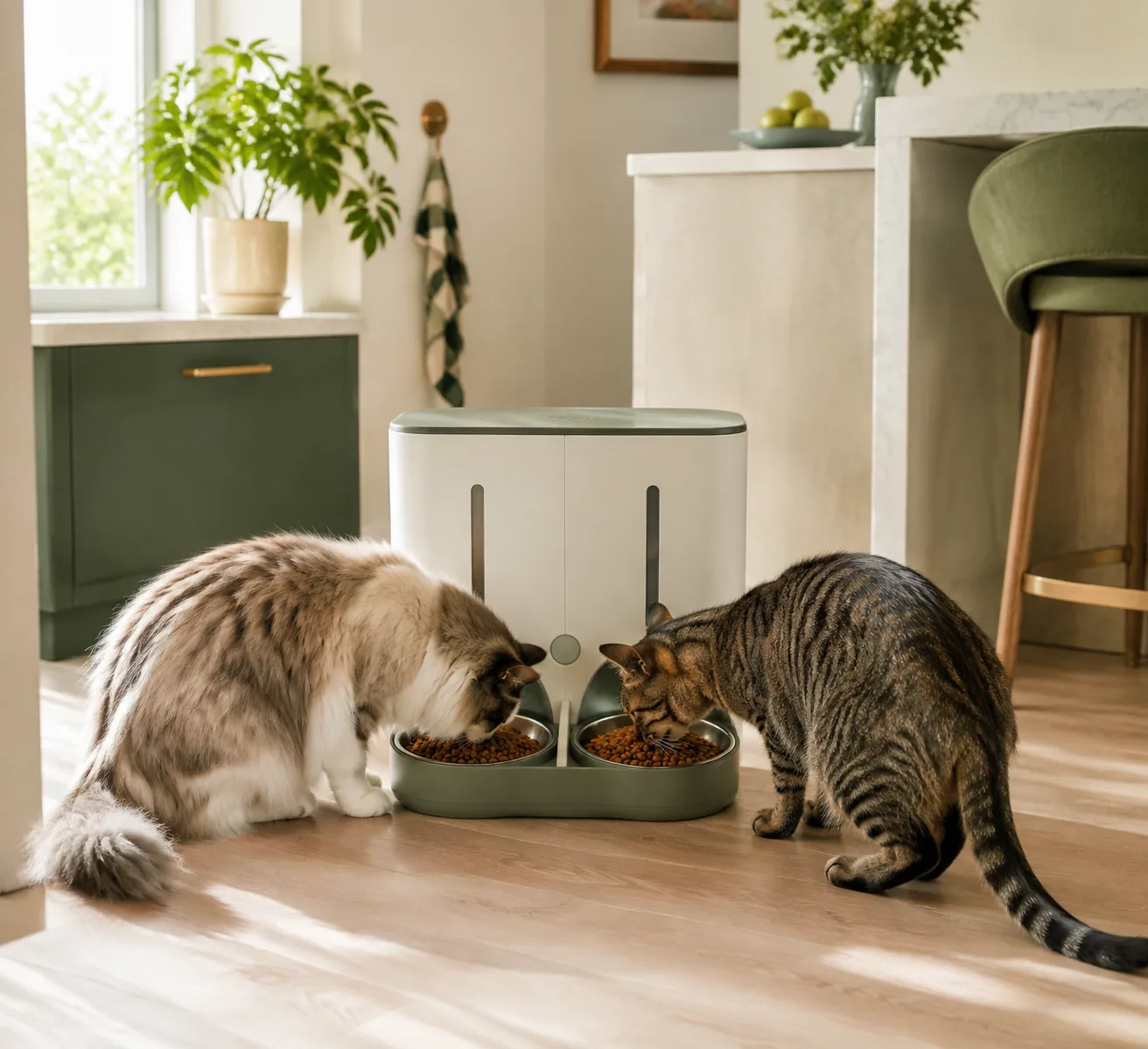
Living with multiple felines demands rigorous daily organization, especially when it comes to serving daily meals. While an automatic dual cat food dispenser promises to simplify dietary management thanks to its shared storage hopper, integrating it into your home should never be left to chance. Domestic cats remain solitary hunters by nature, and their territorial dynamics directly influence how they behave around food. This comprehensive practical guide explains how to properly install your device, carefully observe interactions between your pets, respect their fundamental ethological needs, and prevent tension or confrontation around the shared bowls.
Why Choose a Dual Cat Food Dispenser in a Multi-Cat Household
The primary advantage of a dual cat food dispenser lies in rationally grouping two distinct dining areas into a single centralized feeding station. For any multi-cat home, having one central kibble reservoir avoids multiplying electrical cords, plugs, and bulky bags across the kitchen floor. Two separate bowls positioned on the sides provide direct and simultaneous access, making it simple to establish fixed distribution schedules. This chronological predictability acts as a deeply soothing anchor for anxious cats, who naturally align their internal biological rhythms with consistent, regular acoustic and visual feeding signals throughout the day.
However, feline behavioral science, supported by established guidelines from the ISFM and the AAFP, reminds us that cats do not naturally share their food with conspecifics. A dual feeding station is best suited for bonded companions with genuine mutual affinity, such as siblings adopted together or friendly cats that routinely sleep curled flank-to-flank. Conversely, if your pets display subtle avoidance signs or passive competition, forcing them to dine right next to one another can trigger invisible, lingering stress. Before implementing this feeding system, carefully evaluate your animals' everyday camaraderie to guarantee their emotional peace and genuine well-being at mealtimes.
How to Set Up a Dual Cat Food Dispenser Without Triggering Friction
The physical placement of a dual cat food dispenser represents a decisive factor in preventing territorial friction among your pets. Never position the feeding machine in a narrow corridor, cramped hallway, or dead-end corner where a bolder feline could easily block passage or intimidate another with a simple visual stare. Instead, choose a quiet, spacious area offering at least two clear, unobstructed escape routes. Each animal must be able to monitor the surroundings of the feeding zone while eating, which preserves their sense of safety and eliminates the fear of being cornered by a housemate.
When setting up the hardware, place the equipment on an entirely level floor to avoid vibrations and sudden motor noises that might frighten timid felines. Observe the core ethological principle of resource separation by keeping the feeding station well away from litter trays and water fountains. Throughout the first several days, leave the appliance switched off: let your cats thoroughly sniff the new unit and place high-value treats inside both side bowls. This calm, unhurried familiarization turns an unfamiliar object into a positive territorial fixture long before any automated dispensing schedule actually begins.
Daily Use of a Dual Cat Food Dispenser: Best Practices for Success
Operating a dual cat food dispenser requires ongoing observation of each cat's individual eating pace. Because an appliance equipped with a shared hopper discharges kibble evenly across both bowls without personalizing individual meal sizes, behavioral discrepancies can arise. It is fairly common for a fast eater to inhale their portion within seconds before nudging away a slower companion to finish the second bowl. Be present during initial meal sessions to track consumption rates. If a substantial difference emerges, regular human supervision remains indispensable to prevent one feline from being systematically deprived of their rightful daily ration.
Maintaining impeccable hygiene throughout the feeding unit is equally vital for preserving palatability and protecting feline digestive health. Natural dietary fats contained in dry kibble oxidize rapidly upon continuous contact with air, depositing a stale, rancid film onto the surfaces of the bowls and dispensing chute. Wash both dishes multiple times per week using warm, unscented soapy water, then dry them thoroughly to prevent moisture from compromising the freshness of the main hopper. A clean chute prevents mechanical blockages and protects authentic flavors, guaranteeing an enthusiastic, healthy feeding experience at every meal.
Common Mistakes with Dual Cat Food Dispensers and How to Fix Them
The most widespread mistake cat parents make is abruptly removing traditional food bowls the moment the new appliance is turned on. Such an immediate change destabilizes your cats' established daily routine, frequently triggering digestive troubles, situational anxiety, or outright food refusal. Instead, plan a gradual transition period lasting at least ten days, during which the dual cat food dispenser operates alongside their habitual bowls. Gradually diminish the rations placed in their old dishes as both pets grow fully accustomed to eating their meals side by side from the automated dispensing device.
Finally, never make the mistake of using a single-reservoir station for felines with divergent nutritional or veterinary requirements. If one cat suffers from kidney disease, urinary crystals, or diabetes requiring a strict prescription diet, sharing a communal food container is clinically contraindicated. Similarly, precise weight loss regimens demand exact portion measurements that a shared-hopper unit simply cannot deliver reliably to two distinct animals. In these specific health situations, it is far better to establish separate feeding stations in distinct rooms or invest in individual microchip-activated feeders keyed directly to each cat’s transponder.
At Veyrulis, our dual cat food dispenser (AC-DIST-DOUBLE-6L) features a sleek white finish and is equipped with an advertised 6 L hopper that feeds two side bowls. Please note: smart app connectivity or built-in camera options shown in certain supplier imagery are not confirmed for this specific model. Product photographs remain non-contractual pending the release of official user manuals and finalized technical specifications.
Sources and further reading
This advice is for information only and does not replace your veterinarian's opinion.