
Cat Tree: Buying Guide and Expert Advice for Feline Well-Being
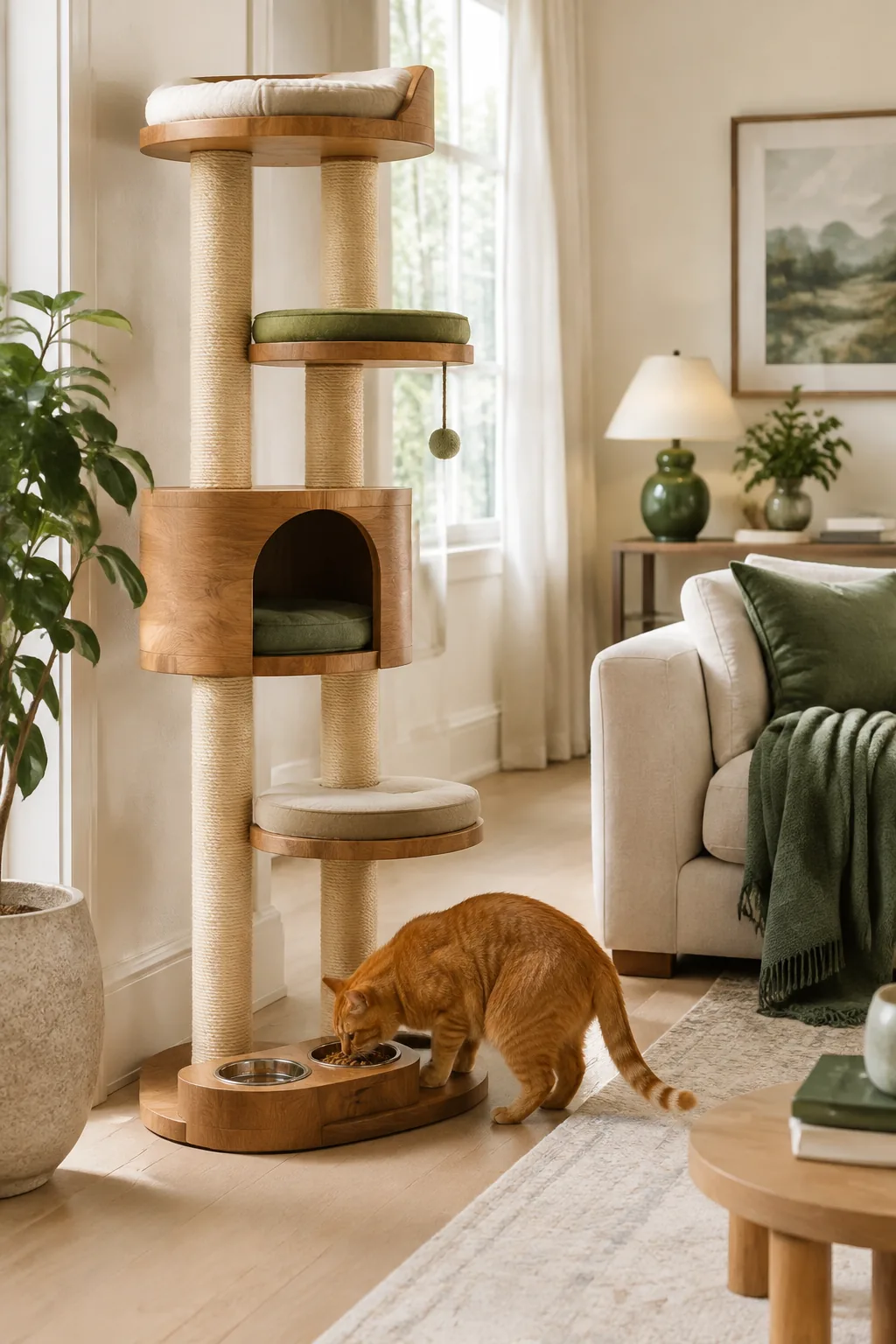
A cat tree represents far more than just a decorative piece of furniture: it serves as the essential cornerstone of an indoor feline's territorial organization. Scientific recommendations from the AAFP and the ISFM emphasize that access to elevated observation posts provides cats with a vital sense of security, soothing their daily anxiety. Whether for an energetic kitten or a calm adult cat, choosing appropriate vertical furniture requires evaluating structural stability, platform distribution, and harmony with natural biological behaviors to protect your companion's long-term well-being.
Why a Cat Tree Is Essential for Feline Well-Being
Both in the wild and inside a domestic home, the cat combines the instincts of an agile predator and a vulnerable prey animal. This instinctive wiring explains its visceral biological need to reach high perches. Setting up a dedicated cat tree gives your pet a broad panoramic view of its domestic domain while keeping it safely removed from ground-level disruptions. This secure vantage point de-escalates territorial stress and satisfies the constant urge to monitor the household environment in complete serenity.
This vertical structure also plays a fundamental motor role in maintaining your companion's overall physical fitness. Jumping between tiers, climbing wrapped pillars, and stretching vigorously engage core muscle groups and sustain joint flexibility. According to certified veterinary behaviorists, this three-dimensional enrichment actively prevents a sedentary lifestyle, excessive weight gain, and destructive behavioral issues frequently seen in indoor cats that lack adequate vertical stimulation.
Finally, dedicated scratching surfaces satisfy the vital need for scent and visual territorial marking. By depositing soothing pheromones secreted beneath their paw pads, felines clearly delineate their personal zone of security. Integrating dedicated scratching posts into your interior channels this instinctive reflex onto designated cat furniture, reliably protecting your wall coverings, trim, and living room sofas from persistent claw damage.
Criteria for Choosing a Stable and Secure Cat Tree
Overall structural stability represents the foremost requirement when selecting a cat tree. Any piece of furniture that wobbles during a jump triggers instant distrust in a cat, prompting it to abandon the structure out of fear of falling. Ensure that the floor footprint is broad and the center of gravity remains low. For taller models, dependable wall anchors are an indispensable prerequisite to eliminate any risk of accidental tipping.
The layout of tiers and sleeping platforms requires careful evaluation. Platforms should offer generous dimensions allowing the animal to recline comfortably without slipping off. The vertical spacing between stages must also accommodate your pet's physical abilities: progressive, well-spaced intervals make climbing effortless for growing kittens or aging cats, preventing excessive joint strain when leaping down.
Material durability and assembly quality should be checked with diligence. The manufacturer's manual must explicitly outline load capacities for every platform to avoid breakages under your pet's weight. You should also inspect the strength of hanging baskets and enclosed hideaways to guarantee safe, long-lasting enjoyment across the months ahead.
Organizing Essential Resources Around Your Cat Tree
Feline ethology, backed by international guidelines from the ISFM, places immense importance on the spatial separation of vital daily resources. In the wild, cats systematically avoid feeding near their elimination areas to prevent health risks and contamination. Certain commercial furniture units combine food dishes placed directly over an enclosed bottom cabinet; such an arrangement is strongly discouraged because it conflicts with clean feline instincts and compromises food hygiene.
Confining a litter box too close to a dining zone can prompt a cat to reject one of the two stations, resulting in sudden house-soiling or a noticeable loss of appetite. A cat tree should remain a sanctuary reserved exclusively for rest, climbing, and surveying the household. You must always position food bowls and clean water fountains in a calm, spotless area far away from litter equipment.
If your cat tree features an enclosed lower cubby, it is preferable to use it for storing cat toys, grooming brushes, or household pet supplies. Only consider repurposing it as a hidden litter box enclosure if its dimensions, ventilation, and manufacturer instructions explicitly allow it, and make certain you move all food and water bowls to a completely separate area in your home.
How to Properly Position and Maintain Your Cat Tree
Location directly dictates how much your companion will enjoy its new cat tree. Cats naturally prefer communal living rooms where the family spends time, provided the tree stands at a comfortable distance from noisy, high-traffic entryways. Placing the structure beside a safe window offers captivating visual enrichment, turning passing outdoor wildlife and neighborhood activity into stimulating daily entertainment.
Consistent cleaning ensures a healthy living space for your whole household. Vacuum fabric perches and cushions regularly to clear away collected pet hair and dust mites. For smooth surfaces, use a damp cloth with mild soap, avoiding harsh cleaning chemicals and strong artificial fragrances that irritate your cat's delicate olfactory system and might repel it.
Carry out a routine mechanical check every three months. Repeated leaps, sharp turns, and energetic climbing sessions can gradually loosen internal screws and threaded rods. Tightening all hardware connections regularly restores overall structural firmness, silences annoying squeaks, and prolongs the lasting safety of your feline's favorite equipment.
To illustrate these design principles, the Veyrulis white multifunctional cat tree incorporates four levels, an enclosed shelter, a hanging sleeping basket, and two metal bowls described as 304 stainless steel. Please note that supplier images remain non-contractual and illustrative. Exact dimensions, maximum weight limits, and hardware specifications must be verified against the official manufacturer manual prior to ordering. Always remember to separate daily feeding dishes completely from any enclosed lower compartment.
Sources and further reading
This advice is for information only and does not replace your veterinarian's opinion.