
Cat Tree with Litter Box Enclosure: Buying Guide and Feline Setup
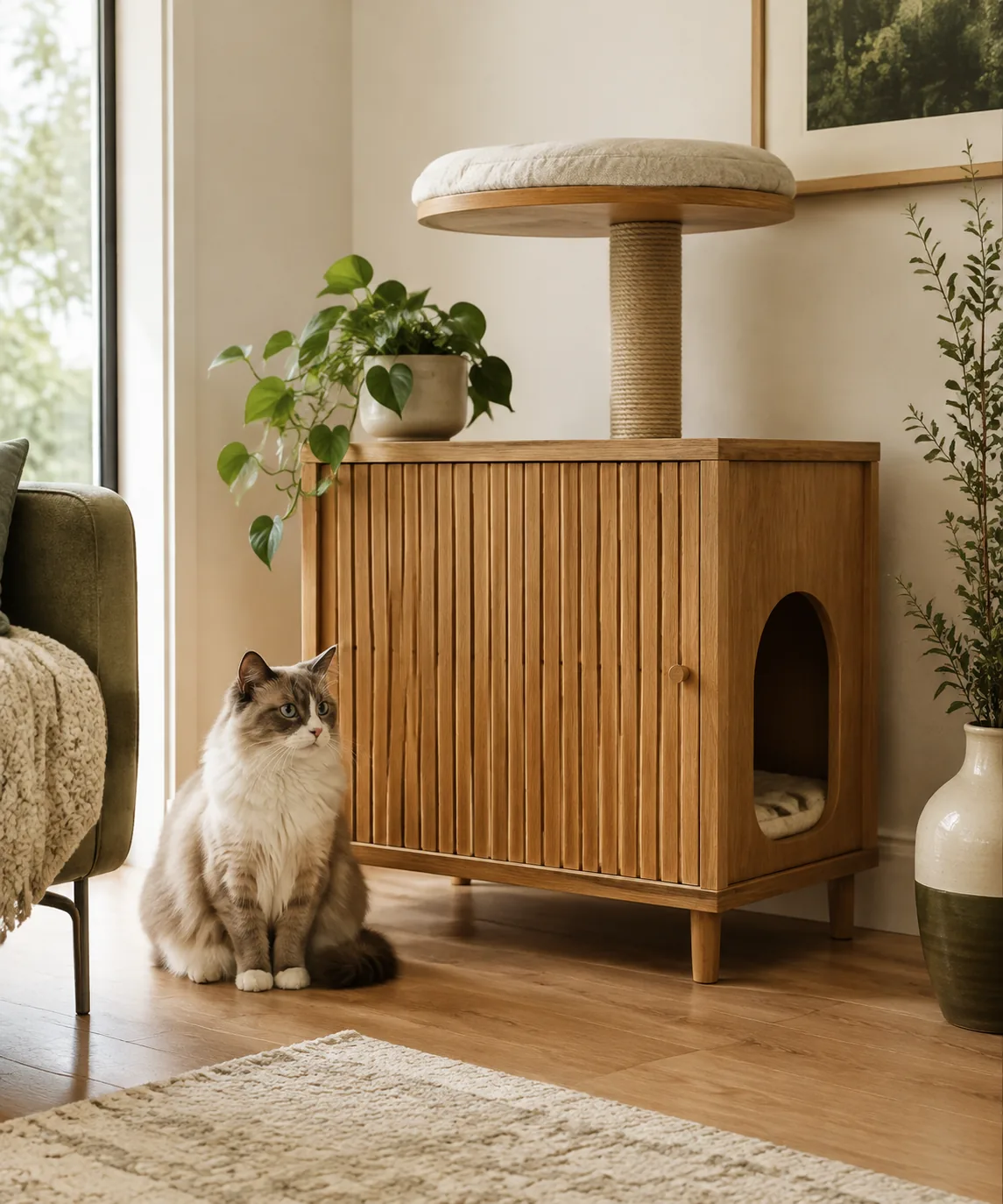
Accommodating the fundamental needs of a cat within a modern living space requires thoughtful planning. According to environmental guidelines from the AAFP and the ISFM, felines require elevated observation perches to feel secure, alongside quiet, accessible, and well-ventilated elimination areas. A cat tree with an integrated litter box enclosure provides an appealing all-in-one setup to optimize interior floor space. However, merging resting areas, scratching posts, and sanitary privacy demands specific checks. This guide reviews the essential criteria for making a functional choice that respects your companion's natural habits and overall welfare.
Why Add a Cat Tree with a Litter Box Enclosure to Your Home?
Feline territorial organization relies on a distinct separation of functional areas: feeding, resting, marking, and waste elimination. A cat tree with a litter box enclosure brings two essential domestic functions together into one vertical structure. Below, the enclosed cabinet hides the litter tray while providing discreet access, significantly reducing litter scatter across your living room floor. Above, tiered platforms and cozy perches offer a reassuring haven where cats can monitor their territory without stress, satisfying their instinct to observe from a high vantage point.
This vertical design is especially beneficial for compact urban homes, where multiple cat items can easily clutter primary living areas and hallways. However, having a sanitary tray and resting perches in close proximity requires rigorous daily hygiene routines. For your cat to accept this hybrid structure without developing behavioral aversion, the bottom cabinet must control odors efficiently while maintaining continuous, unobstructed airflow. Adequate ventilation ensures that upper sleeping cushions remain clean and fresh, helping your feline feel completely safe and relaxed day in and day out.
Technical Criteria for Choosing a Sturdy Cat Tree with Litter Cabinet
When choosing a cat tree with a litter box enclosure, overall structural stability is the primary safety requirement. An adult cat leaping onto or pouncing from an elevated platform exerts significant dynamic force on the entire frame. The lower cabinet must therefore serve as a heavy, dependable counterweight to eliminate any risk of dangerous tipping or wobbling. Check that the panel assembly is entirely rigid and that door hinges and latches remain reliable through the frequent daily opening required for routine scooping and litter tray maintenance.
Beyond solid floor stability, the materials used for climbing, scratching, and resting require careful selection. Scratching posts should be tall enough to let your pet stretch out fully while depositing visual marks and natural territorial scents. In addition, intermediate climbing platforms, cushioned baskets, and dangling toys must support your animal's body weight without flexing, loosening, or sagging over time. Checking the manufacturer's maximum weight capacity and installing an anti-topple wall anchor strap will provide lasting security for playful, active cats.
Dimensions and Hygiene: Sizing Your Cat Tree with Litter Enclosure
The most common mistake when buying a cat tree with an integrated litter enclosure is underestimating the interior space needed for the pan. You must verify the usable inner dimensions of the bottom cabinet before making your choice. Under ISFM guidelines, a litter box should measure at least one and a half times your cat's length from nose to base of the tail. Your pet must be able to turn around comfortably, dig freely, and adopt a natural posture without bumping against the interior walls.
The entrance opening is just as important for preserving smooth, comfortable access. The side entryway should have adequate width and height for your cat's body size, without an elevated threshold that might hinder senior or recovering animals. Cabinet ventilation is equally essential: without steady passive airflow, ammonia fumes and litter dust accumulate rapidly within the enclosed space. This creates an unpleasant, stuffy environment that can repel your cat, significantly increasing the likelihood of inappropriate elimination elsewhere in the house.
Successful Placement and Multi-Cat Living with Combined Cat Furniture
Finding the right location for a cat tree with a litter box enclosure requires a delicate balance between privacy and social inclusion. Cats seek a calm, low-traffic environment to eliminate, well away from constant foot traffic and sudden noise from household appliances. Conversely, for their awake and resting periods, felines prefer communal spaces where they can observe family activities. An open corner of the living room often provides the ideal compromise, offering clear sightlines and an unhindered escape path so your cat never feels trapped upon exiting.
In multi-cat households, resource distribution demands extra care and attention. Even though multifunctional furniture saves valuable space, veterinary behaviorists consistently recommend providing one litter box per cat plus one extra, positioned in separate rooms. A single combined tree cannot meet the elimination needs of several cats if territorial tension, ambushing, or guarding develops around the entrance opening. Incorporating additional vertical scratching posts and independent resting perches throughout your living space remains essential for ensuring lasting harmony among all resident felines.
To illustrate these design setups, our Veyrulis shop features the cat tree with litter box enclosure in grey model 8101. It includes a double-door base cabinet with a side entrance, elevated platforms, a cozy basket, and hanging toys in a grey wood-grain finish. Please note that the image shown is non-contractual; exact interior dimensions, stability, and materials should be confirmed before ordering.
Sources and further reading
This advice is for information only and does not replace your veterinarian's opinion.