
Floor-to-Ceiling Cat Tree with Bubble: Installation and Usage Guide
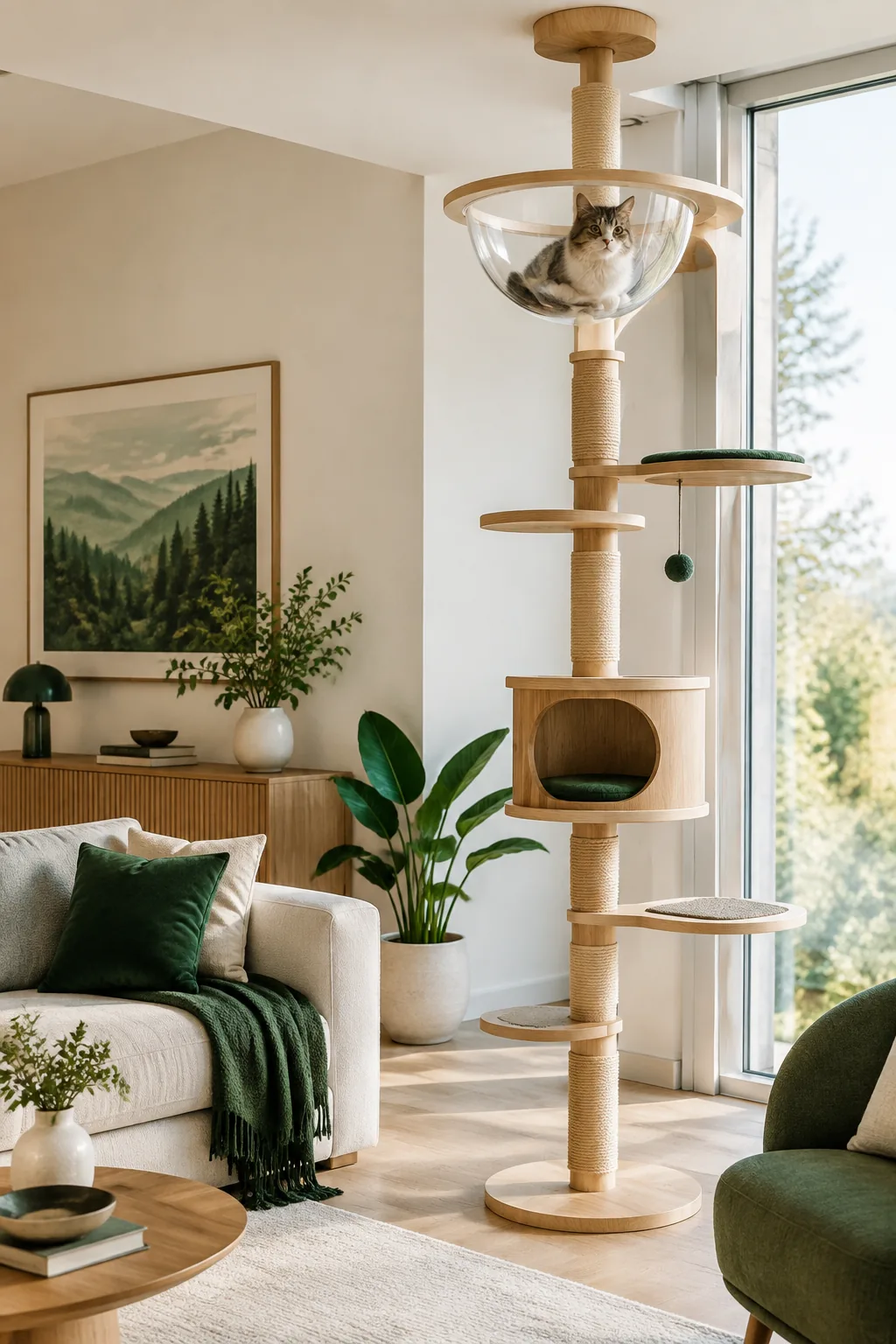
Designing and organizing your cat's vertical territory addresses essential ethological needs recognized by leading veterinary bodies like the AAFP and the ISFM regarding optimal feline welfare. In typical domestic homes, installing a floor-to-ceiling cat tree with a clear bubble optimizes vertical space without cluttering floor surfaces. This tall structure provides a reassuring observation post alongside functional scratching zones adapted to your companion's natural habits. Meticulous installation is essential to guarantee uncompromised stability and everyday safety. Here are our practical recommendations for successful assembly and routine use.
Why Install a Floor-to-Ceiling Cat Tree with a Bubble at Home
The territorial organization of domestic cats relies heavily on access to elevated observation platforms. According to ISFM veterinary recommendations, high perches provide felines with an immediate feeling of calm by letting them survey their territory without household disturbances. A vertical climbing structure rising to the ceiling satisfies this innate behavioral drive. As the cat ascends the central pillar wrapped in scratching rope, it stretches its muscles thoroughly and satisfies its instinctive territorial marking drive without damaging your walls or furniture.
The inclusion of a clear transparent bubble offers an innovative, stimulating resting zone. This curved, enveloping perch enables the cat to rest in peaceful seclusion while preserving full circular visibility over the surrounding room. In multi-pet homes, this exclusive high-altitude perch defuses territorial friction by providing a safe sanctuary well out of reach. Paired with sturdy wooden platforms along the trunk, this furniture maximizes living space while enriching your pet's daily sensory environment.
Steps to Assemble a Floor-to-Ceiling Cat Tree with a Bubble
Ensuring the overall safety of the structure begins with a thorough evaluation of your surfaces. A tension-mounted anchoring system relying on pressure between floor and ceiling must strictly be installed against a solid surface, such as a concrete slab. Plasterboard partitions, drop ceilings, and hollow drywall installations are unsuitable because they cannot handle the sustained upward pressure of the clamping mechanism, nor the repeated physical impacts caused by energetic climbing and jumping.
When starting the assembly, make sure to refer directly to the detailed instructions provided with your particular model. Set the base plate on an even floor and verify the precise vertical plumb of the central pole using a spirit level. Perfect vertical alignment avoids asymmetrical lateral strain that could weaken the internal connecting screws over time. Fasten the wooden tiers securely and adjust the ceiling tensioner with steady pressure to lock the assembly in place.
Before inviting your cat to climb up, manually test the stability of the tree by applying firm lateral force along the column with both hands. You must not detect any play, slipping, or noticeable wobble. We strongly advise adopting a routine monthly maintenance habit to check the tension bolt, tighten fittings, and prevent any gradual loosening caused by regular running, leaping, and vigorous everyday play.
Helping Your Cat Adopt the Floor-to-Ceiling Cat Tree with a Bubble
Every domestic feline approaches changes in its territory with an individual level of sensitivity and innate caution. To promote positive, voluntary adoption, you should never pick up your companion and force it onto the upper platforms. Allow your pet to inspect the climbing tower at its own pace, smelling the natural wooden textures and marking the sisal scratching rope. You can place a few favorite healthy snacks or catnip on the lower levels to stimulate curiosity without provoking anxiety.
The transparent base of the acrylic bubble can sometimes disconcert a cat unfamiliar with clear walking surfaces. Placing a soft blanket or a small textile bearing its familiar scent inside the dome will temporarily mask the visual empty space below. Once your cat has deposited its facial pheromones along the rim and steps inside with complete confidence, simply take away the fabric so it can fully appreciate the panoramic view.
Mistakes to Avoid with a Floor-to-Ceiling Cat Tree with a Bubble
The specific placement of your vertical cat furniture plays a crucial role in its everyday use and long-term safety. You should never set up the tree in a busy central hallway, a tight doorway clearance, or behind an inward-swinging door, which would consistently disrupt your pet's sleep. In addition, place the transparent resting bowl away from large windows receiving direct sunlight to avoid excessive greenhouse heating and uncomfortable temperatures during warm afternoons.
Another common oversight is failing to perform regular preventative checks. Even when installed with adequate initial tension, a climbing tree subjected to energetic daily sprints experiences minor mechanical shifts over time. Overlooking periodic inspections of the ceiling pressure plate and the wooden platform connectors increases the eventual risk of structural failure. Conducting brief, regular inspections remains the true key to safe, trouble-free enjoyment for years to come.
Finally, you should never attempt to mount this pressure-held tree on thick carpet or an unstable area rug without checking the grip of the base. A foundation that moves or compresses unpredictably under carpet fibers will compromise the tension against the ceiling above, significantly raising the danger of the entire tower toppling when your cat launches a powerful leap.
In the Veyrulis boutique, our Wooden Floor-to-Ceiling Cat Tree with Clear Bubble (SKU: AC-ARB-PLAFOND-BULLE) perfectly illustrates this vertical design approach. Please note that the accompanying display visual remains non-contractual: the compatible ceiling height span, the exact clamping mechanism, and the definitive retail price are subject to final confirmation. Always carefully consult the instruction booklet provided with your specific delivered unit prior to assembly and everyday use.
Sources and further reading
This advice is for information only and does not replace your veterinarian's opinion.