
Outdoor Catio for Cats: Complete Guide to Choosing a Safe Enclosure
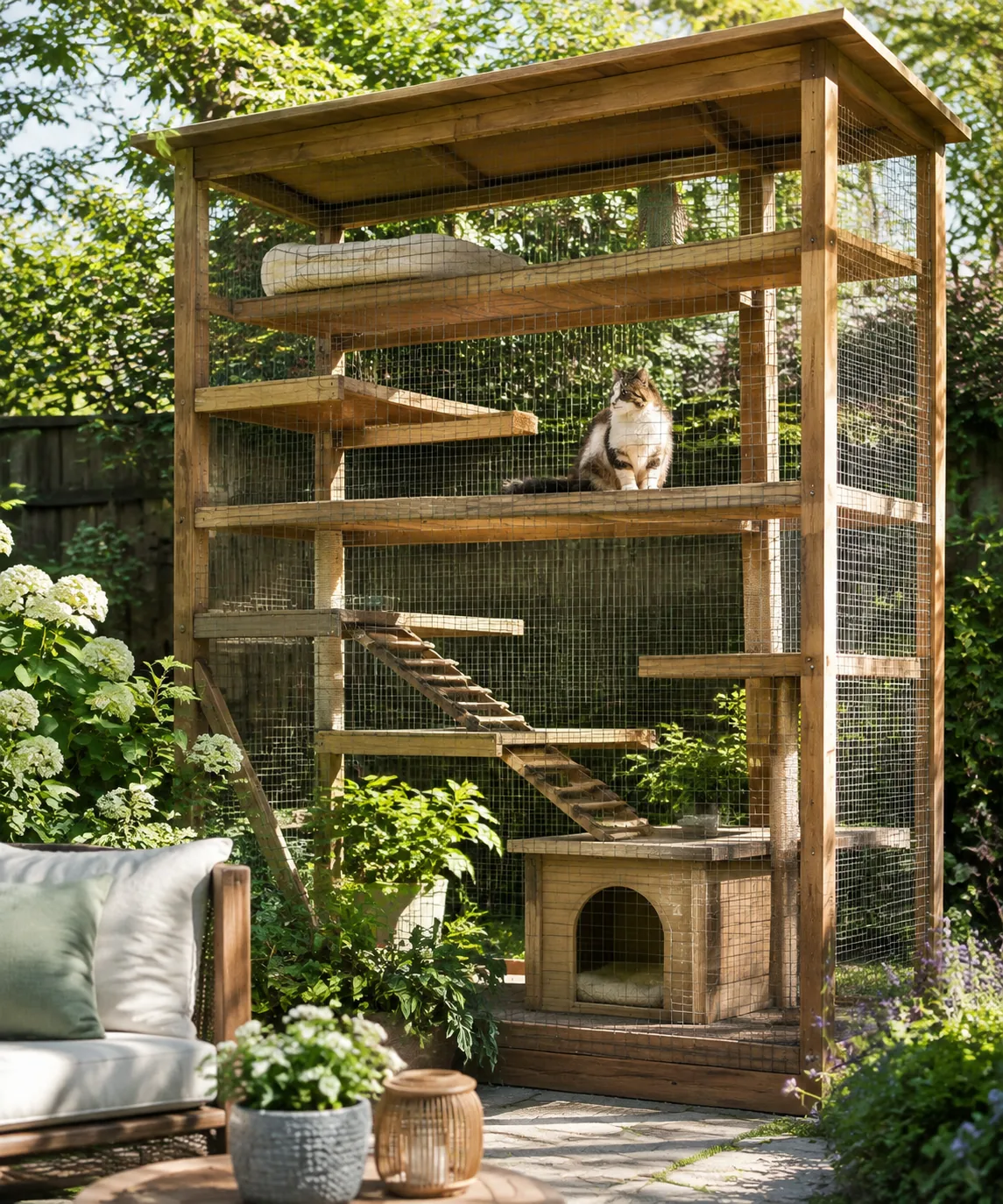
Providing your feline companion with access to the fresh outdoors without exposing them to exterior hazards represents a paramount concern for conscientious pet owners mindful of safety. An outdoor catio for cats has emerged as an ideal alternative for enriching your pet's everyday environment while limiting the dangers of vehicular traffic, fights, or accidental escapes. Recommended in animal welfare frameworks aligned with international veterinary guidelines, this enclosed structure provides a stimulating observation post. This comprehensive guide details the essential technical criteria required to choose a secure, durable, and perfectly tailored installation for your home.
Why Install an Outdoor Catio for Cats in Your Living Space?
Official recommendations from feline medicine committees such as the ISFM and AAFP underline the critical importance of sensory stimulation for an animal's behavioral equilibrium. An outdoor catio for cats addresses this requirement by offering direct, controlled contact with the natural world. Your cat can smell fresh air, listen to ambient sounds, and watch wild birds without facing the mortal peril of road collisions. This protective installation also prevents aggressive territorial disputes with unfamiliar neighborhood cats, which frequently cause severe bite wounds, painful abscesses, and the transmission of serious infectious conditions during unexpected fights.
Furthermore, setting up a dedicated enclosure provides a three-dimensional territorial extension essential for counteracting domestic sedentary lifestyles and unhealthy weight gain. By climbing across multiple vertical tiers, the cat activates its muscular system and rediscovers stalking stances characteristic of its species. Gaining access to an elevated viewpoint provides an immediate feeling of calm and reassuring control over its living environment. Whether installed on a hard terrace, a paved urban courtyard, or garden grass, a secure outdoor space permanently elevates the overall quality of feline life.
Key Criteria for Evaluating an Outdoor Catio for Cats
To select reliable equipment, the general layout of the cage and its practical ergonomics must be assessed thoroughly. A functional outdoor catio for cats must incorporate multiple stepped platforms to facilitate vertical movement and offer varied observation spots. The addition of multiple access doors represents a valuable practical asset: it simplifies the regular cleaning of surfaces, the replenishment of food bowls, and catching the pet quickly if needed. Certain models feature transport wheels, a practical option for altering the enclosure's sun exposure, provided that a dependable braking system firmly locks all movement on the patio.
The resistance of the materials against harsh weather demands heightened vigilance. It is necessary to evaluate the wire gauge, the frame's protective treatment against moisture rot, and overall roof reliability. Even if a roof is described as water-resistant in manufacturer marketing, this does not guarantee full waterproofing during severe, repetitive rainstorms. Structural elements, load capacities per level, and the true nature of the materials must be confirmed directly with the seller to guarantee lasting durability without premature decay or dangerous sagging.
Layout and Well-Being Inside an Outdoor Catio for Cats
The interior layout must be planned according to the five pillars of feline environmental needs defined by veterinary experts. Within an outdoor catio for cats, one should clearly distinguish quiet resting areas from movement pathways. Installing semi-enclosed shelters or high boxes on the upper levels affords a soothing sense of seclusion whenever sensory stimulation becomes overwhelming. Ensure you integrate comfortable resting surfaces insulated from cold floors, while continuously maintaining a clean, fresh water bowl in shaded areas to avoid dehydration on hot sunny days.
Vertical enrichment can be nicely supplemented by suitable occupation items and climbing accessories. Securing natural rope scratching posts or scratching trunks enables paw pheromone marking and supports healthy muscular stretching. You may also arrange a few puzzle feeders to stimulate mental activity during alert phases. Bear in mind, however, that the enclosure must never be cluttered: your cat requires open, unobstructed paths to jump effortlessly from one platform to another without knocking into unstable or sharp objects.
Essential Safety Checks for an Outdoor Catio for Cats
Before your pet's initial entry into the unit, an exhaustive technical safety inspection remains mandatory. An outdoor catio for cats must feature wire mesh free from sharp burrs or jagged points, accompanied by cleanly joined connections. Thoroughly check the latching mechanism on each individual door panel: an inquisitive or persistent cat can push open an unsecured door or compromise a loose latch. Mesh spacing must be small enough to completely rule out any danger of head entrapment or paws reaching outward toward potential hazards.
Proper anchoring is just as crucial to avert potentially disastrous tipping accidents. A lightweight structure may wobble or overturn under violent wind gusts or if a startled cat hurls itself against a wire wall. Solid anchoring to an exterior wall or the ground is indispensable, notably when placed on an elevated balcony or high porch. Lastly, remember that no product substitutes for routine human vigilance: regularly inspect the general condition of the enclosure and avoid leaving your cat unattended during severe weather events.
At Veyrulis, our catalog includes a 4-level outdoor catio for cats in a modern grey and black finish, equipped with multiple doors and caster wheels as advertised by the supplier. Please note that the accompanying product photo is non-contractual, and exact dimensions, materials, and genuine roof weatherproofing should be verified in the product manual before assembly and final setup.
Sources and further reading
This advice is for information only and does not replace your veterinarian's opinion.