
Installing an Outdoor Catio for Cats: Practical Guide and Safety Tips
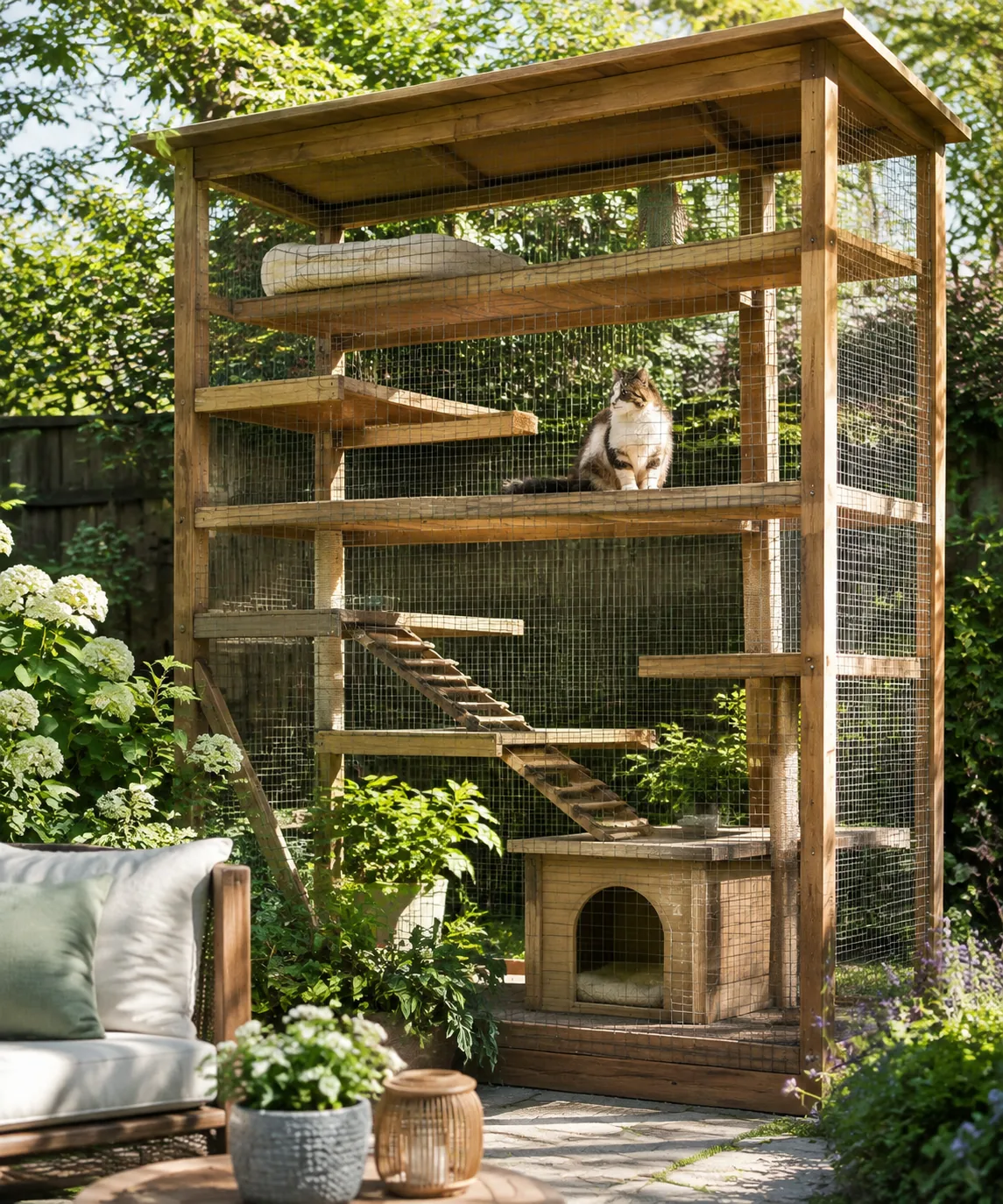
Providing secure access to fresh outdoor air stimulates a cat's natural curiosity without exposing them to the severe hazards of roaming. Veterinary guidelines from the ISFM and AAFP emphasize that sensory enrichment and vertical space actively support behavioral balance in indoor felines. However, transitioning outside demands technical rigor to avoid falls, escapes, or weather-induced stress. Learning how to install an outdoor catio for cats creates a stable intermediate territory tailored to feline ethology while enabling consistent, careful everyday supervision.
Why Installing an Outdoor Catio for Cats Meets Feline Needs
Cats are territorial predators that spend much of their waking time surveying their environment and processing auditory and olfactory stimuli. Choosing to install an outdoor catio for cats addresses this core instinct by offering an elevated lookout post. Under international AAFP guidelines on feline environmental needs, engaging in exploratory behaviors within a secure perimeter substantially reduces stereotypic habits, boredom, and anxiety linked to strict indoor confinement in houses or flats.
Vertical design forms the cornerstone of this enrichment process. Cats naturally favor multi-level structures because height imparts an immediate sense of control and safety from potential ground threats. A thoughtfully tiered layout lets a cat regulate its exposure to outside stimuli on its own terms, choosing whether to climb down to investigate ground scents or retreat up high to relax away from unwanted attention.
Preparing the Ideal Location Before Installing an Outdoor Catio for Cats
Selecting the right site determines the long-term durability and safety of the installation. Whether placed in a garden, paved courtyard, or private patio, the surface must be impeccably level. Before you install an outdoor catio for cats, assess ground stability under load and carefully consider local wind patterns. Excessive wind exposure on a raised terrace or deck can cause a dangerous tip-over unless the entire structure is securely anchored to an exterior wall.
Thermal exposure is another critical factor frequently overlooked by cat owners. Felines are particularly vulnerable to heatstroke since they cannot cool down effectively through sweating. The enclosure should never stand in full sun without constant shade or adequate shelter from chilly drafts. It is equally essential to assess nearby environmental stressors, such as barking neighborhood dogs or heavy vehicle traffic close to the enclosure boundary.
Key Steps to Safely Install an Outdoor Catio for Cats
Assembling an outdoor enclosure calls for a methodical approach before allowing your pet inside. When working to install an outdoor catio for cats, carefully checking all fasteners, panel rigidity, and door latch mechanisms is a top priority. A determined, agile feline can exert surprising force against an ill-fitted door or squeeze through a wire mesh gap that opens by just a few centimeters.
Every connection between modules, perches, and mesh panels must be tested to eliminate any risk of collapse under a jumping cat's weight. If the catio has caster wheels, they must feature reliable locks or sit verified on a stationary base. You should also verify that there are no sharp metal burrs, rough wood splinters, or protruding staples that could injure delicate paw pads or claws during climbing.
Daily Routine: Enriching Space When You Install an Outdoor Catio for Cats
Introducing your cat to the new enclosure should always respect their personal pace without physical force. Never force your pet inside; keep openings back into the house clear so exploration happens naturally. The interior layout should provide essential feline resources: fresh drinking water, a sturdy vertical scratching surface for scent marking, and a sheltered, cozy resting bed shielded from outside views for quiet naps.
To maximize behavioral benefits when you install an outdoor catio for cats, schedule regular supervised sessions rather than leaving the animal outside all day. Even with a protective roof, sudden weather changes like torrential rain or sudden thunderstorms can turn leisure into acute panic. The reassuring presence of a familiar caregiver eases feline apprehension and helps prevent any unexpected accidents or stress.
Critical Mistakes to Avoid When Installing an Outdoor Catio for Cats
A frequent error is placing blind trust in an enclosure's theoretical resistance against weather or outside predators. A recreational catio is not an impenetrable barrier against aggressive strays or the frantic escape efforts of a thoroughly frightened cat. Neglecting routine checks of latches, wire mesh, and timber or metal condition steadily weakens the structure over time and elevates escape risks.
Another common mistake is placing the enclosure on an open balcony or elevated deck without proper fall prevention. Choosing to install an outdoor catio for cats on a high terrace without wall anchors exposes your feline to severe high-rise fall risks if it tips. Finally, never leave your cat shut outside while away from home: direct human oversight remains the only true safety guarantee.
For your home projects, Veyrulis features the 4-tier outdoor catio in grey and black. The supplier listing mentions four doors, caster wheels, a resting box, and a water-resistant roof. Exact dimensions, maximum weight capacities, and materials should be confirmed with the seller for this specific variant. This supplier visual is non-contractual, and daily use requires strict monitoring of all door latches.
Sources and further reading
This advice is for information only and does not replace your veterinarian's opinion.