
Dual Automatic Cat Feeder: Complete Guide to Feeding Two Cats
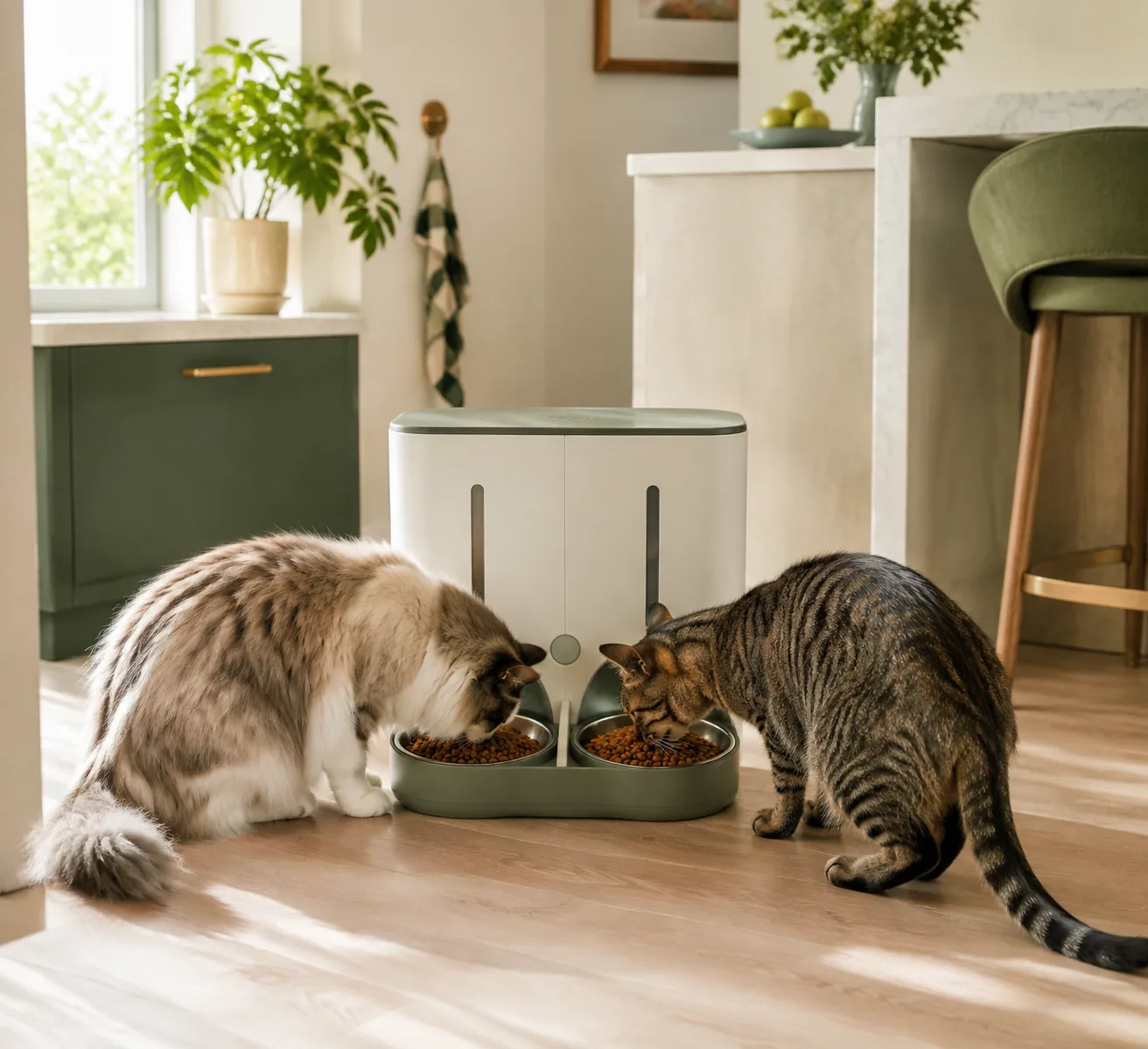
Feeding multiple felines within the same household requires careful organization to avoid territorial friction and safeguard the well-being of each animal. The dual automatic cat feeder has established itself as a practical solution to automate daily meals while reducing the logistical burden on pet owners. Nevertheless, grouping two feeding stations around a single appliance raises meaningful feline ethology questions. This buying guide examines the practical benefits, cohabitation challenges, and key technical criteria to evaluate whether this automated system truly fits your multi-cat home.
Dual automatic cat feeder: operation, mechanics, and portion management
A dual automatic cat feeder is designed around a central storage hopper feeding two separate bowls placed on either side of the main unit. When a scheduled mealtime arrives, the internal motor releases kibble, directing portions through a splitter chute into each bowl. This centralized setup optimizes floor space by consolidating feeding stations instead of plugging in two separate units in a room. For cats that demand breakfast at dawn, the punctuality of automated distributions establishes a calming routine and diminishes anxiety-driven morning behaviors.
However, relying on a shared food hopper entails noticeable technical constraints. The dispensing mechanism cannot adapt kibble recipes to individual cats; the nutritional formula served in both bowls is strictly identical. Furthermore, this equipment provides no physical barrier or selective access control over individual portions consumed. If one cat finishes much faster than their companion, they can easily move to the second dish. This product is therefore exclusively suited for cats on the same diet who show no tendency toward food stealing or mealtime bullying.
Dual automatic cat feeders and feline welfare according to the ISFM
Guidelines published jointly by the ISFM and AAFP emphasize the solitary nature of domestic cats regarding nutrition. In natural settings, felines hunt alone and consume small, frequent meals without interference from other cats. The decision to use a dual automatic feeder must therefore be evaluated based on the genuine social bonds between your pets. Two companion cats sharing a cohesive social group—showing affiliative behaviors like resting together or mutual grooming—will generally accept eating just inches apart without experiencing significant stress or insecurity.
Conversely, in homes where cats merely tolerate each other or experience underlying tension, sharing a single feeding station can cause invisible yet detrimental stress. Passive intimidation, marked by fixed staring, blocking pathways, or subtle physical posturing, is often enough to deter a timid cat from approaching their meal. When such friction occurs, feline behaviorists recommend creating separate, distant feeding locations throughout the home. This provides each cat with an open visual escape route and a reassuring sense of peaceful security while dining.
Key technical criteria for choosing a dual automatic cat feeder
Hopper storage capacity represents the primary deciding factor when choosing your device. A generous capacity, typically holding several liters of dry food, reduces refilling frequency while offering dependable autonomy for busy multi-cat households. It is equally essential that the top lid includes a secure locking mechanism with an airtight seal to maintain kibble freshness and keep opportunistic paws from breaking in. Moreover, the internal splitter chute must distribute kibble evenly so that neither bowl receives a larger share of the meal.
Programming ergonomics and material quality represent the second major selection criteria. While promotional marketing images sometimes highlight advanced digital displays or connected camera features, these options vary across models and are not systematically included on every version. Always verify the manufacturer's exact specifications before buying. In addition, select bowls that detach effortlessly and wash clean in hot water. Straightforward maintenance prevents greasy residue that spoils kibble flavor or triggers feline chin acne caused by bacterial buildup on plastic surfaces.
Installing and setting up a dual automatic cat feeder at home
The physical location of the feeder within your home is crucial for behavioral harmony. The device must be placed in a calm, open space away from busy hallways, sudden household noises, and cold drafts. In keeping with essential feline welfare standards, food bowls should also remain situated well away from litter boxes and water sources. Cats instinctively dislike eating near elimination areas and naturally prefer drinking fresh water in a separate location from where they consume their dry solid meals.
During initial setup, keep the device powered off for several days, placing small kibble portions directly into the bowls to encourage positive curiosity. The abrupt mechanical sound of a dispensing motor can easily frighten an anxious cat if they have not grown familiar with the object beforehand. Finally, monitor each cat's body weight regularly using an appropriate digital pet scale. This ongoing check ensures both pets receive their proper daily calories without unwanted weight gain or deprivation caused by food competition.
In this spirit, the 6L white dual automatic cat feeder from Veyrulis features two side-by-side bowls connected to a shared 6-liter storage hopper. The camera visible in certain supplier visuals remains unconfirmed for this specific reference, and the image is non-contractual. This feeder is ideal for cats living in good harmony who comfortably tolerate eating right next to one another.
Sources and further reading
This advice is for information only and does not replace your veterinarian's opinion.