
Adjustable Cat Flap for Sliding Windows: Installation Guide and Advice
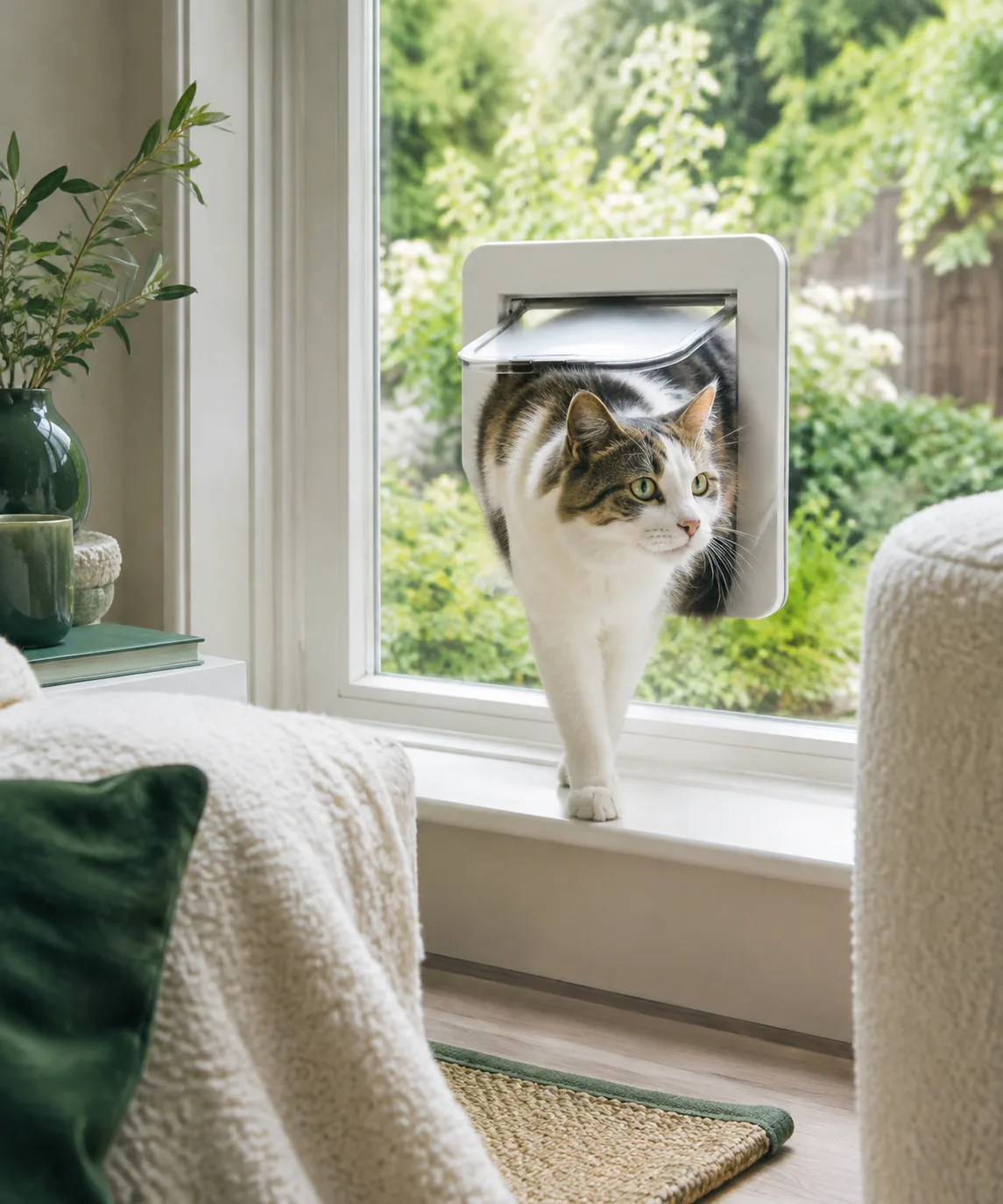
Offering your companion autonomous access to a secure balcony or dedicated room considerably improves their territorial balance. Integrating an adjustable cat flap for sliding windows frequently represents an attractive alternative to preserve the integrity of joinery without drilling through a load-bearing wall. However, this type of technical device demands strict vigilance regarding dimensions, mechanical stability, and thermal insulation. Before taking the step, it is essential to understand the adjustment criteria, structural constraints, and safety rules required to protect your feline's daily well-being.
Why Choose an Adjustable Cat Flap for Sliding Windows for Your Cat
According to ISFM and AAFP recommendations on feline environmental needs, controlling access to resources and exploration areas significantly reduces stress in indoor cats. An adjustable cat flap for sliding windows allows you to smoothly define or expand their territory, particularly to reach an outdoor screened enclosure or a secured terrace. The clear opening encourages a reassuring visual approach, enabling the cat to observe the other side before stepping calmly through the passage.
This removable or adjustable system particularly meets the needs of tenants or homeowners eager to avoid permanently altering their glazing. Designed to fit into the sliding track of specific window openings, the expandable frame adapts to varying heights or widths depending on manufacturer specifications. However, this practical compromise must never sacrifice the structural rigidity of the panel nor the animal's peace of mind during its daily comings and goings.
Measurement Precautions for an Adjustable Cat Flap for Sliding Windows
The primary cause of failure lies in an approximate assessment of the window joinery dimensions. To install an adjustable cat flap for sliding windows, measure precisely the total height available in the track, the thickness of the metal or PVC profile, and the remaining width once the panel is positioned. Never assume universal compatibility: certain windows have narrow ledges or built-in stops that prevent the vertical upright from sliding in.
Also ensure there are no obstacles in the travel path of the moving sash. As an example, panel models such as the SKT-04 indicate dimensions of 914 × 388 × 40 mm with an advertised adjustable width between 31 and 36 inches, which differs sharply from other variations like the 711 mm formats. Each technical version requires careful verification of your frame's tolerances to prevent mechanical play or risks of dislodgement under wind pressure.
How to Safely Install an Adjustable Cat Flap for Sliding Windows
Installing an adjustable cat flap for sliding windows requires a methodical approach and strict compliance with the manufacturer's guidelines. Begin by thoroughly cleaning the sliding tracks to eliminate dust and debris that could compromise profile adhesion. Place the expandable frame into the open space, adjust the mechanical extension according to the required width, and check the perfect vertical alignment of the structure before tightening the retaining stops firmly in place.
Never assume a drill-free installation is completely reliable without testing its resistance to lateral pressure. Carefully insert the provided weatherstripping seals to limit air drafts and stabilize the entire unit against the sliding sash. If the device is installed on an upper floor, make sure the flap does not open onto an unprotected drop or dangerous ledge: protective mesh or a certified cat safety net is mandatory to prevent accidental falls.
Mistakes to Avoid with an Adjustable Cat Flap for Sliding Windows
The most common mistake is forcing the cat through the flap on the very first day. Feline behavior experts emphasize that physical coercion generates lasting aversion toward the accessory. Keep the transparent door taped or wedged open for several days, placing treats on both sides of the frame. Let your pet sniff the opening at their own pace without ever forcing them through or letting the flap slam behind them.
Another technical mistake is failing to validate the locking mechanism. Even if a four-position system is advertised by the manufacturer to manage entry and exit directions, this feature must strictly be verified in the user instructions and tested manually before use. A poorly engaged latch can trap a paw or let your cat slip outside into an unsupervised area at an inopportune moment.
Regular Maintenance for an Adjustable Cat Flap for Sliding Windows
To guarantee long-term operation, an adjustable cat flap for sliding windows requires simple but regular maintenance. Clean the transparent flap periodically using a soft cloth and a non-abrasive cleaner free from substances that could irritate feline airways. Inspect the flap's pivot hinge to clear away hair or dirt that might hinder its natural swinging movement and startle a hesitant cat.
Finally, check the condition of all weather seals and the tightness of removable fittings with every seasonal change. Temperature shifts can loosen materials or diminish the elasticity of rubber seals. If you notice any warping of the panel or suspicious looseness, immediately suspend use of the cat flap until the frame is fully inspected, removing any hazard of unexpected collapse onto your pet.
To put these practical solutions into place, the SKT-04 white adjustable window cat flap features a 914 × 388 × 40 mm panel with an advertised width of 31 to 36 inches and an advertised four-way lock. Currently, supplier images remain non-contractual, and the French manual as well as exact joinery compatibility must be confirmed prior to retail purchase.
Sources and further reading
This advice is for information only and does not replace your veterinarian's opinion.