
Ceiling Cat Tree: Complete Buying Guide to Enrich Your Feline's Space
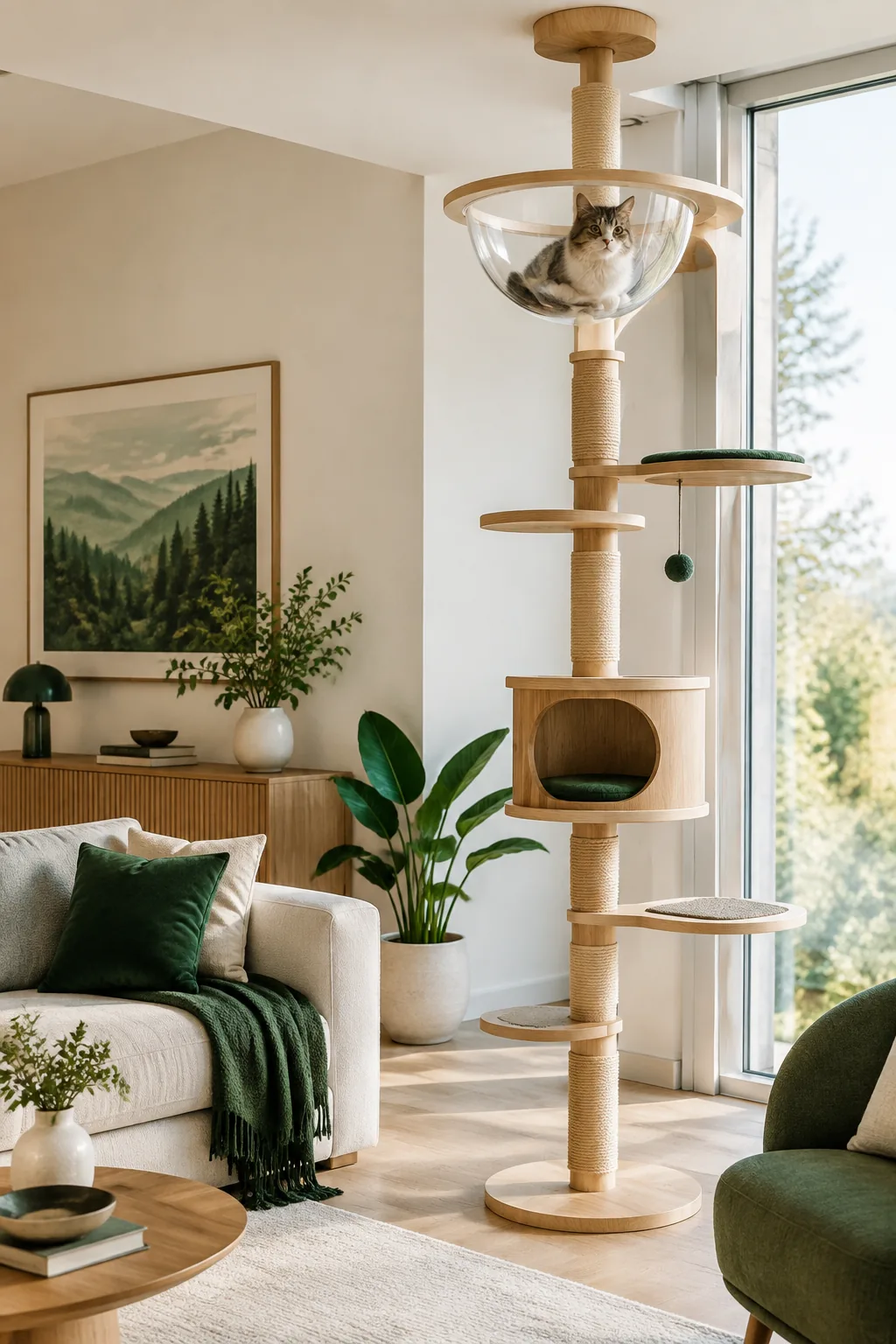
Cats instinctively perceive their environment in three dimensions. According to international feline welfare guidelines from the ISFM and the AAFP, access to elevated vantage points is essential for reducing environmental stress and fostering long-term emotional well-being. A floor-to-ceiling cat tree represents a particularly relevant solution for modern living spaces by fully exploiting vertical height without cluttering valuable floor space. Selecting a suitable installation, however, requires examining tension mount stability, platform modularity, and the overall structural safety of the vertical assembly.
Why Install a Floor-to-Ceiling Cat Tree in Your Living Space?
In both wild environments and domestic homes, cats naturally seek elevated observation spots to visually supervise their territory while keeping clear of sudden disturbances. A floor-to-ceiling cat tree directly satisfies this fundamental ethological need. Unlike standard models with broad bases that occupy significant floor area, this vertically elongated configuration creates an engaging climbing route that respects the feline's innate exploratory behavior and natural movement patterns.
Optimizing vertical territory proves particularly beneficial for compact apartments and narrower rooms. By using the entire ceiling height, this specialized furniture frees up human walking corridors while offering the animal an exclusive sanctuary. This pronounced verticality also helps establish a reassuring spatial hierarchy for your cat, who can choose to withdraw into quiet isolation or observe daily household activities from a secure, comfortable distance.
Finally, climbing a continuous vertical column actively exercises the animal's musculoskeletal system. Ascending upward, stretching along a tall post to limber the spine, and maintaining claws on textured surfaces all contribute to regular daily activity. This consistent routine plays a central role in preventing excess weight gain and joint stiffness in sedentary house cats.
Floor-to-Ceiling Cat Tree: Key Safety Checks and Stability
Installing a floor-to-ceiling cat tree relies on tension clamping or mechanical fasteners between the floor and ceiling. Before buying, assessing the nature of your ceiling is essential. A solid concrete slab or sturdy wooden beams offer ideal resistance to clamping pressure, whereas a plasterboard or drywall ceiling may require special precautions to avoid surface cracking or deformation under tension.
The tensioning mechanism demands careful oversight. You must systematically verify that the manufacturer's adjustment range matches your room's precise floor-to-ceiling measurement. Clear assembly instructions should guide every stage of installation. In addition, checking the clamping tension regularly during the first few weeks of use is indispensable to counteract any initial mechanical settling over time.
The structural framework must also absorb the kinetic force generated by an energetic cat mid-sprint. Intermediate platforms need to be firmly anchored to the central post to eliminate mechanical play. Excessive wobbling could unbalance the column during a dynamic leap or frighten the cat to the point that it refuses to use the tree entirely.
Designing a Floor-to-Ceiling Cat Tree Around Feline Needs
The location of a floor-to-ceiling cat tree largely determines how often your feline uses it. In keeping with feline welfare principles, this furniture belongs in a central living area, ideally near a window to provide visual enrichment from the outside world. However, it is advisable to avoid drafty spots or noisy corridors that could disturb resting periods.
Providing a variety of resting spots enriches the animal's daily experience. Modern designs often include distinctive elements like transparent observation capsules or suspended hammocks. Placed at the top, these perches offer a dual benefit: they give a comforting sense of enclosure while preserving complete visual oversight of the immediate indoor environment below.
To ensure smooth navigation, the vertical spacing between platforms should be tailored to your cat's size, age, and agility. Arranging perches in a spiral configuration enables an effortless ascent and, crucially, a controlled descent without excessive jumps, thereby protecting the delicate joints of growing kittens and senior cats alike.
Key Technical Criteria to Evaluate Before Buying a Ceiling Cat Tree
The primary technical parameter to examine is the quality of materials making up the structure. Solid wood shelves paired with a sturdy post wrapped in natural scratching rope provide a durable, functional balance. The rope texture must allow clean, satisfying claw sharpening, giving your cat an effective grooming surface without fraying prematurely under repeated daily scratching.
Ease of maintenance is another vital factor. Smooth wooden surfaces are easily wiped clean with a soft damp cloth, preventing the buildup of shed hair and dust far better than plush carpeting. Specialized resting spots, such as transparent dome capsules, must also remain accessible so they can be disinfected easily using mild, pet-safe products.
Finally, verify product compliance and the inclusion of clear safety warnings and guidelines. A tall vertical feline fixture must feature comprehensive technical documentation detailing its designated ceiling anchoring method, ensuring the ongoing safety of your pets, your family, and your home interior on a daily basis.
To illustrate this category of furniture, the Veyrulis shop features the "Wooden ceiling cat tree with transparent bubble" (SKU: AC-ARB-PLAFOND-BULLE). This vertical model combines a rope-wrapped column with an elevated clear observation bowl. Please note that supplier imagery is non-contractual, and compatible ceiling heights along with final pricing remain subject to confirmation prior to official commercial release.
Sources and further reading
This advice is for information only and does not replace your veterinarian's opinion.