
Cheap cat tree: save money without buying twice
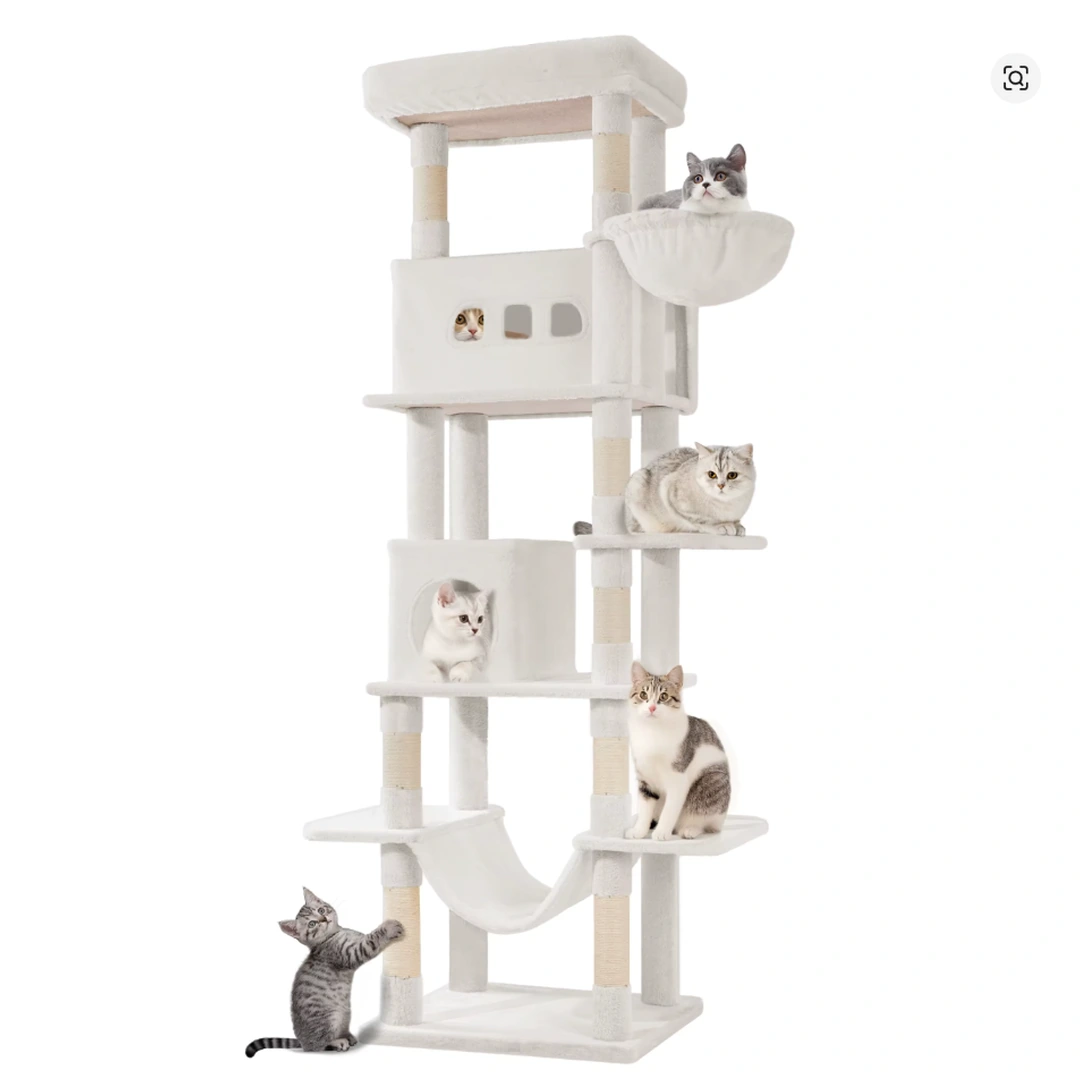
Buying a cheap cat tree can be a sensible decision, provided you do not confuse a low price with keeping spending under control. An affordable model that remains usable is better than a special offer followed by a complete replacement. On a limited budget, the aim is to pay for useful functions, identify hidden expenses and check what can be replaced. You do not need to find the perfect product. Instead, compare offers using one simple rule: safety must never be something you compromise to balance the budget.
Cheap cat tree: decide what matters
Before looking at discounts, write down what this purchase should offer your cat and what your cat already has. Are you mainly looking for an elevated resting place, somewhere to scratch or a secluded retreat? Setting this priority helps you avoid paying for a collection of features whose usefulness remains uncertain.
The AAFP and ISFM guidelines on feline environmental needs (2013) recommend hiding places, elevated perches, separate resources and scratching opportunities, among other things. They also stress the importance of familiar smells and respectful interactions. They do not prescribe an impressive cat tree or a single piece of equipment that provides everything.
Your budget can therefore prioritise a missing function rather than an elaborate set-up. Leave decorative accessories out of your initial reasoning, then ask whether you would still choose this model without them. A generous-looking package cannot make up for inadequate documentation or conditions of use that do not suit your cat.
Compare the total expense, not the discount
For each shortlisted offer, record the delivered price, any compulsory accessories and the return conditions together in one note. In particular, check who pays for return transport and what restrictions apply to the parcel. A bulky purchase can be awkward to send back, even when a returns procedure is available.
Next, distinguish the immediate expense from costs you might face during use. A cover or scratching component sold separately offers a maintenance option, but also represents a cost to check before buying. Do not invent a lifespan to produce an appealing value-for-money calculation: it will depend, among other things, on actual use.
A useful comparison considers simple scenarios: keeping the product as it is, replacing a part subject to wear, or having to buy the whole thing again because no alternative exists. If the seller cannot clarify the options, write down ‘information unknown’. This uncertainty deserves as much consideration as an advertised discount.
Look for evidence rather than promises
Expressions such as ‘sturdy’ or ‘premium quality’ cannot, on their own, tell you how durable a product will be. Look instead for accessible instructions, clearly described materials, detailed views and an identifiable model reference. Every technical point must be checked in the manufacturer’s instructions, not inferred from a flattering photograph.
Reviews can help you formulate questions, but they offer no guarantee. A comment written during unboxing tells you little about long-term performance. Give preference to accounts describing actual use and the customer service response, while remembering that individual experiences cannot predict how things will turn out for you.
Ask the seller how defects are handled, which supporting documents you need to keep and which contact channel to use. Precise answers do not make a product indestructible, but they reduce the risk of being left alone with a problem. Keep copies of the product listing, instructions and proof of purchase.
Establish the real value of replaceable parts
The phrase ‘replaceable parts’ becomes useful when those parts can actually be identified and ordered. Ask which components are covered, where they are sold and whether they are currently available or merely announced. A catalogue you can consult contributes more to your comparison than a general promise of repairability.
Without going into compatibility details, check that the seller links the proposed part references to the model you are considering. Also ask whether replacement is intended to be carried out by the user and under which manufacturer’s instructions. A spare part is not necessarily something you can freely substitute with a similar-looking component.
Do not automatically give the repairable model a decisive advantage. If its parts are expensive to have delivered or difficult to obtain, its financial appeal may diminish. Conversely, paying more initially may be justified if a commonly worn part remains available separately. Compare documented possibilities, not options you have simply imagined.
Set your limits before ordering
Define the reasons that would make you reject an offer: missing instructions, contradictory information, a seller unable to identify the model or technical requirements you cannot meet at home. These limits protect your budget. Above all, they prevent a supposed bargain from becoming an unexpected adaptation project.
Do not achieve savings through improvised alterations that were not intended to compensate for a defect. If the delivered product appears damaged or does not match its description, stop using it and contact the seller. Technical checks and any work must follow the manufacturer’s instructions, without assuming that a modification will be acceptable.
Finally, leave some room in your budget rather than spending it all on an urgent promotion. Waiting for a better-documented offer may be the sensible choice. For any signs of pain, limping, a fall, parasites or a change in behaviour, consult a vet: the price of equipment must never delay this step.
VEYRULIS is preparing a 210 cm tall, multi-level tower cat tree. It is still a draft product and is not yet for sale; its price has not been approved and the colour variant remains to be confirmed. Its specifications must be checked against the instructions for the model delivered. To assess its value for money, wait for the final information, particularly details of replaceable parts.
Sources and further reading
This advice is for information only and does not replace your veterinarian's opinion.