
How to clean an automatic litter tray without guessing what to do
How do you clean an automatic litter tray without confusing washing a tray with maintaining an appliance? There cannot be a single set of dismantling instructions that answers this question for every model. Veterinary recommendations provide hygiene principles; only the manual for the particular model can specify which handling procedures apply and which parts are washable. Reading these two kinds of guidance together helps you prepare for maintenance without inventing technical steps, special cleaning products or intervals supposedly suitable for every automatic litter tray.
Read the instructions before preparing to wash anything
First, gather the sections of the manual covering maintenance, preliminary procedures and returning the appliance to use. Which parts can be removed? Which can be washed, using what methods and following which procedure? Check the manual for the exact model to answer these questions. None of the veterinary sources used here provides operating instructions for motorised components, connections or any electronic detection equipment that the appliance might contain.
If a passage is missing or seems unclear, ask for clarification before you begin. Do not adapt a video about another model or infer a cleaning method from the appearance of a part. This guide aims to help you distinguish between types of instructions, not replace the manual. A checklist of areas to inspect, based on that document, is more useful than a series of generic actions presented as universally applicable.
Understand what regular maintenance actually means
The AAFP/ISFM guidelines call for waste to be removed at least daily and litter to be topped up when necessary. They explicitly state that no product eliminates the need to clean and maintain litter facilities. This reminder encourages you to keep actively checking their condition. However, it does not define an emptying schedule for a particular component or specify what to do with a device whose manual we have not seen.
In practice, match general cleanliness requirements with the checks set out in the technical documentation. Ask how you should assess the condition of the cat's toileting area and which tasks are needed to keep it clean. If this information is missing, do not assume that the advertised operation is sufficient. The essential distinction is this: a function marketed as “cleaning” does not, on its own, tell you everything you will need to maintain.
Put advice about water and cleaning products in context
For the litter tray, the AAFP/ISFM text recommends washing every one to four weeks, while reporting differing opinions about the ideal interval within that range. It recommends soap and hot water and advises against strong chemicals and products containing ammonia. These guidelines concern the tray described in the recommendations. They do not give permission to wet any part of an automatic appliance simply because it belongs to the litter system.
The right question, therefore, is where the manufacturer allows this method to be used. For temperatures, permitted products and any drying or reassembly steps, look for instructions specific to the model. Do not add a soaking time or a disinfection recipe here: the available texts do not provide them. It is better to identify information that still needs to be obtained than turn a feline hygiene principle into an undocumented technical procedure.
Observe your cat's reactions rather than masking smells
The AAFP/ISFM recommendations explain that a dirty tray can lead to aversion. They also note that some cats avoid a covered tray containing odours, then use it again after cleaning once it smells neutral. Refusal may therefore warrant another look at cleanliness, without proving that cleanliness is the only cause. Record what you observe and the circumstances rather than drawing a conclusion from a single occasion when the tray was not used.
Adding fragrance is not the response these authors suggest. They report that scented litter substrates and deodorisers are often unpleasant for cats and advise against deodorising powders. When considering maintenance, therefore, separate your own perception of smell from the animal's acceptance of the tray. Trying to cover an odour replaces neither checking the tray, nor carrying out the tasks specified in its documentation, nor considering other factors that could explain avoidance.
Make cleanliness one part of the wider picture
The MSD Veterinary Manual includes litter tray management among the components of managing idiopathic cystitis, alongside reducing stress and paying attention to relationships between cats. This does not mean that washing a tray treats the condition. Maintenance contributes to thinking about the environment; medical assessment and decisions remain separate matters. Avoid attributing any preventive or curative effectiveness to a cleaning method when that effectiveness is not described in the source.
If your cat urinates frequently, appears to strain, has blood in its urine or toilets outside the tray, these are urinary signs reported by MSD. Tell your vet about these observations rather than simply looking for a different cleaning product. When organising care, keep maintenance schedules, manufacturer instructions and behavioural changes clearly separate. Although all three relate to the same place, they do not thereby become one and the same explanation.
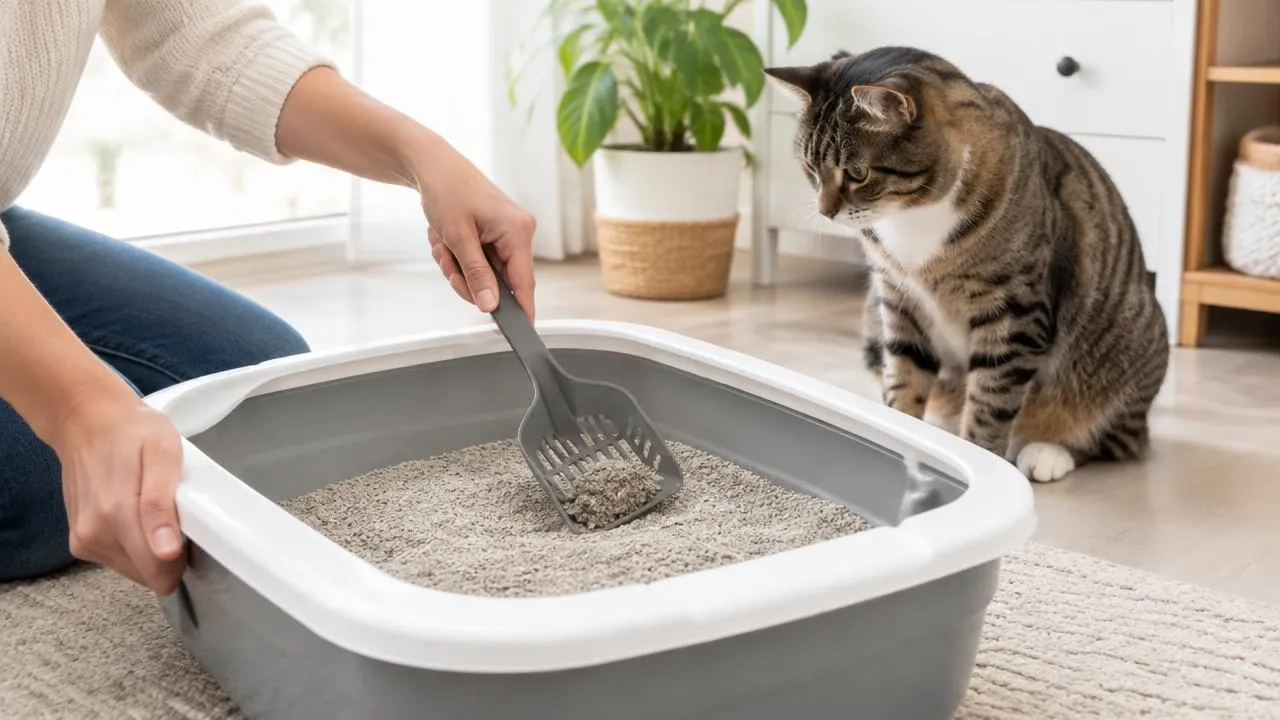
Accessoires Chat is preparing a round, connected automatic litter tray. This project is still in preparation and is not available for sale. The price has not yet been approved, and the image is for illustrative purposes only. The specifications, including those relating to maintenance, will need to be confirmed by the manual supplied with the delivered model. This visual does not establish which parts are washable or how any of them should be cleaned.
Sources and further reading
- AAFP and ISFM Guidelines for diagnosing and solving house-soiling behavior in cats (Journal of Feline Medicine and Surgery, 2014)
- Manuel vétérinaire MSD — Lower Urinary Tract Disease in Cats
This advice is for information only and does not replace your veterinarian's opinion.