
Automatic cat litter trays: what they really change and what to check
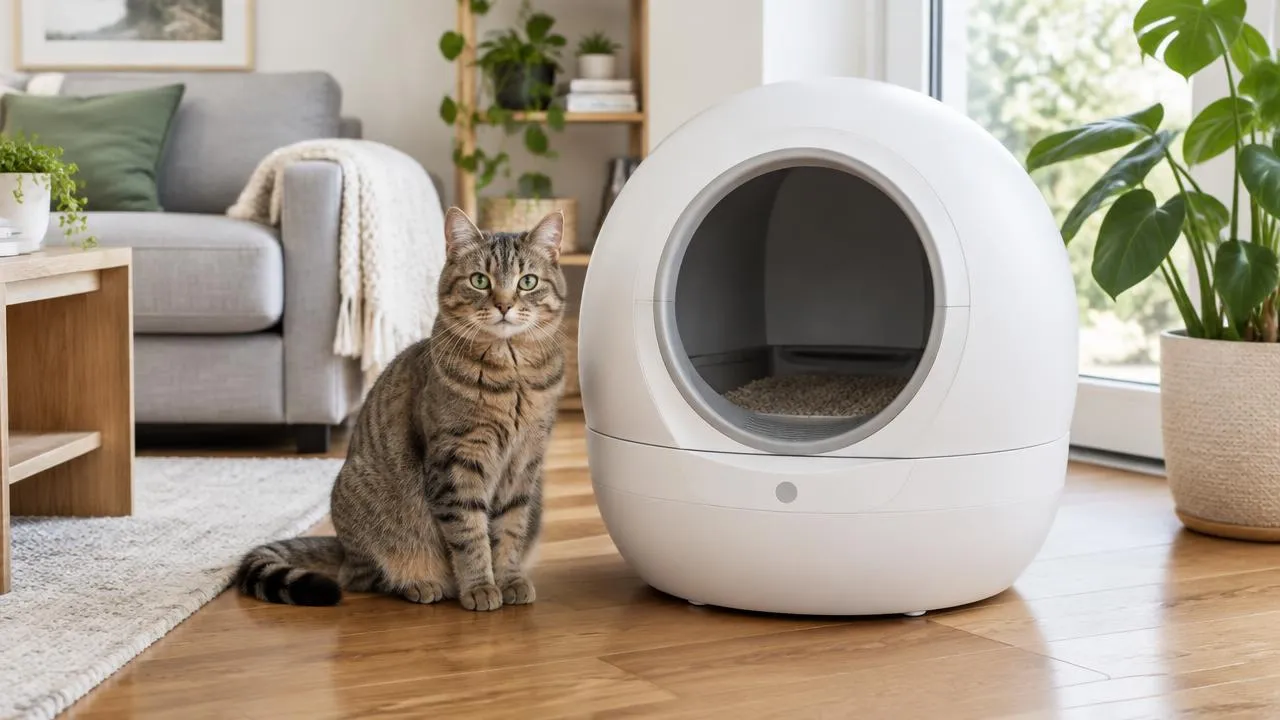
An automatic litter tray promises less daily scooping and, on some models, a way to track your cat’s visits through an app. These devices can genuinely make maintenance easier, provided you understand what they cannot do for you. This guide separates the mechanics, which vary between models, from the precautions relevant to every cat. Details of the model we are preparing still need to be confirmed.
What an automatic litter tray does, and what it does not
The basic principle is the same across models: a motorised cycle separates soiled litter and deposits it in a waste compartment, often after the cat has left. Some devices run on a schedule, others start after detecting a presence, and some offer monitoring through an app.
This does not remove the need for checks. The waste compartment fills up, surfaces become dirty and litter runs low. You still need to empty, wash and top up the tray at the intervals specified by the manufacturer. An automatic device is a daily aid, not a tray you can forget about.
Above all, there is something the mechanism cannot replace: what your cat leaves in the tray is among the earliest clues to its health. This is often where the first warning signs appear.
Monitoring urine: the most important point to watch
The MSD Veterinary Manual describes blood in the urine, frequent urges to urinate, straining and urinating outside the tray as characteristic signs of feline lower urinary tract disease. The 2025 iCatCare consensus adds that urinating outside the tray is a common sign of these diseases and that a medical cause must be ruled out first.
The same guidance recommends noting urine colour and volume. With clumping litter, you can assess volume by looking at the size of the clumps. An automatic cycle that removes waste quickly can make those clumps harder to see. A useful habit is to inspect the waste compartment, not just the clean tray.
These recommendations highlight another pitfall: unsuccessful straining in the tray can be mistaken for constipation. A cat straining without producing urine must be examined without delay. More than 24 hours without urinating constitutes a veterinary emergency.
Hygiene, stress and preferences: what the recommendations say
Litter tray management forms part of caring for lower urinary tract disease, alongside reducing stress, considering relationships between cats, diet and sometimes pheromones. A device that keeps the tray clean contributes to this overall approach, but it does not address the other aspects of care.
Reported risk factors for feline idiopathic cystitis mainly concern the environment: indoor living, multi-cat households, household instability, inactivity, obesity, frequent changes of diet, non-clumping litter and a lack of elevated places. These are all reasons not to change everything at once.
Cats also have preferences for litter material and trays, and may avoid a tray that is too small or unsuitable. If your cat already has established habits, initially keep the same litter and a conventional tray beside the device. Let your cat decide when to try it.
Before buying: what to check on the exact model
The following checklist applies regardless of brand. Check it against the manual for the version actually delivered, rather than a sales listing: the cat’s minimum weight and age; explicitly compatible litters; entrance size and height; safety sensors and their settings; cycle noise; waste compartment capacity and emptying; power supply and behaviour during a power cut; cleaning intervals; consumables and spare parts; dimensions and space required; the app and the data it collects.
Two misunderstandings recur in product listings. An advertised volume is not an amount of litter: it often refers to the appliance’s volume, including its casing. Similarly, a feature shown in a photograph is not guaranteed on the version delivered. Check the app’s language, any accounts required and which functions remain usable without a network connection.
Finally, an electrical device installed in a corner of the home must be stable, positioned with cables out of reach and compatible with the litter you already use. If even one of these points remains unclear, ask for the manual before placing an order.
The first few days: do not rush your cat
Set up the device somewhere quiet and accessible, avoid moving it afterwards and leave the familiar tray beside it throughout the trial period. Start cleaning cycles while you are present, then observe: does your cat go inside, leave straight away or start toileting elsewhere again?
Also note any changes relevant to health: smaller or larger clumps, unusual colour, very frequent visits, a lingering smell or a cat avoiding the tray. These signs are not matters to debate with sellers; they should be shown to your vet.
With several cats, monitor who uses which tray. A shared device does not always identify which cat has visited, and a cat whose access is blocked by another may start urinating elsewhere. Keep a water source away from the litter area and replace the water every day.
At Accessoires Chat, a rounded, connected automatic litter tray is being prepared: it is not yet available for sale, its price has not been approved and its image is illustrative. The seller’s stated volume of 65 litres refers to the appliance, not an amount of litter. Dimensions, compatible litter, minimum cat weight and app functions still require confirmation in the manual for the model actually delivered.
Sources and further reading
- Manuel vétérinaire MSD — Lower Urinary Tract Disease in Cats
- 2025 iCatCare consensus guidelines on the diagnosis and management of lower urinary tract diseases in cats — Journal of Feline Medicine and Surgery
This advice is for information only and does not replace your veterinarian's opinion.