
How to Measure Your Cat's Water Intake: A Step-by-Step Guide
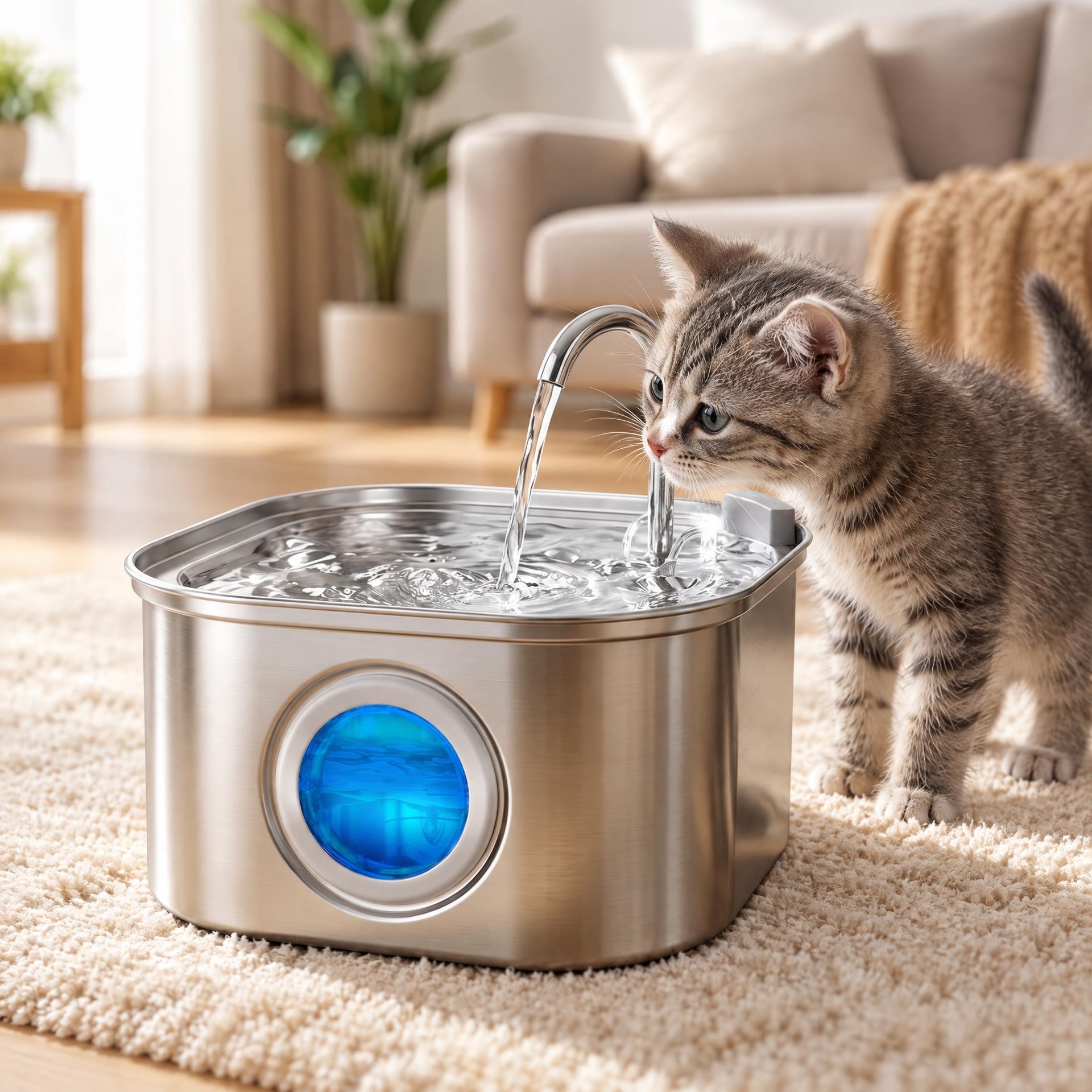
Is your cat drinking enough, or noticeably more than before? A simple impression is rarely enough: cats drink discreetly, often at night, so shifts easily go unnoticed. Knowing how to measure your cat's water intake is a simple habit that provides invaluable information for your veterinarian. Here is a reliable method you can carry out over a few days. This article is practical; daily volume benchmarks are detailed in our guide on how much water a cat needs daily.
Why Measuring Water Intake Matters More Than Estimating
Many pet owners notice a shift in drinking habits only after it has become significant. Regular measurement, even twice a year, helps you detect the slow progression typical of several senior cat diseases much earlier.
A change in water intake is among the earliest signs of common feline conditions, such as chronic kidney disease, diabetes, or hyperthyroidism, all of which often cause cats to drink noticeably more.
Conversely, a cat that drinks too little, particularly on a dry kibble diet, faces an increased risk of developing painful urinary tract issues.
Your veterinarian will often ask if your cat drinks more or less than before. Concrete figures recorded over several days are significantly more useful than a vague guess.
Knowing your cat's standard intake while they are healthy also gives you an indispensable baseline for comparison in the future.
The Necessary Equipment
You will also want to jot down the date, time, and room temperature, as these details often explain day-to-day fluctuations in thirst.
You will need a graduated measuring cup or kitchen dosing syringe, a notebook or phone app, and a second bowl identical to your cat's dish.
This secondary dish serves as an evaporation control. Place it nearby under identical temperature conditions, but entirely out of reach of any household pets.
If your cat drinks from several water bowls throughout the home, you will need to monitor and measure each station individually.
If you use a pet fountain, the process is identical: simply measure the volume added and the remaining volume at the end.
A Step-by-Step Measurement Method
Here is a simple example: you pour 300 ml in the morning, 120 ml remains the next day, and the control lost 20 ml. Your cat drank roughly 160 ml over 24 hours.
Each morning at the same hour, pour a precise volume—such as 300 ml—measured with your cup into each bowl. Pour the exact same amount into the control dish.
The next day at that same hour, measure the water remaining in each dish by pouring it back into your measuring cup. Write down the numbers.
Calculate the evaporated water from the control bowl, then subtract that amount from the water gone from your cat's dish. This gives their true 24-hour intake.
Repeat this process for three to seven consecutive days to obtain a reliable average, as daily water intake naturally fluctuates from day to day.
How to Interpret the Results
A cat's total daily water requirement is often estimated at roughly 40 to 60 ml per kilogram of body weight, including moisture from food. A cat fed wet food naturally drinks much less from a bowl than a kibble-fed cat, which is completely normal.
Drinking volume that consistently exceeds approximately 100 ml per kilogram per day is generally considered excessive and should be reported to your veterinarian.
The overall trend is what matters most: a distinct increase or decrease compared to normal habits warrants veterinary advice, even if the figures seem within typical limits.
These benchmarks do not establish a formal medical diagnosis; they simply serve as practical indicators to help you decide when to consult a vet.
Common Pitfalls to Avoid
In a multi-pet home, measuring records the entire group's intake. Isolating one cat in a separate room with their water is not always practical or desirable, so be sure to observe their behavior closely as well.
Do not forget alternative water sources: dripping taps, toilets, unattended drinking glasses, plant saucers, or puddles found outdoors during garden trips.
Avoid changing your cat's food or moving water bowls during the measurement period, as doing so will skew your final results.
A fountain with a water level window makes visual monitoring easier every day, but measuring with a graduated cup remains far more accurate.
Combining Measurement with Direct Observation
Check the litter box regularly: note the count and size of urine clumps, any presence of blood, or frequent visits yielding little urine. These observations provide crucial context to your water measurements.
Weigh your cat if possible, and take note of changes in their daily appetite, energy levels, and general behavior.
Bring your recorded notes to your veterinarian: they will help guide the clinical examination and determine any appropriate tests.
Remember that a cat making repeated trips to the litter box without passing urine is a veterinary emergency that requires immediate care, without waiting to finish your tracking.
If you want to provide running water, the Veyrulis fountain features a 3.2-liter SUS 304 stainless steel reservoir, filtration that captures hair and impurities, quiet operation, and an illuminated window to monitor the water level. It does not replace an appropriate diet or advice from your veterinarian.
Sources and further reading
- Cornell Feline Health Center — Hydration (besoins en eau, signes et causes de déshydratation)
- International Cat Care — Encouraging your cat to drink: a guide for caregivers (PDF)
This advice is for information only and does not replace your veterinarian's opinion.