
Kitten Hydration: How Much Water Do Kittens Need and How to Help
A growing kitten is full of energy, but young felines are also far more delicate than adult cats when facing fluid loss. Their small bodies contain proportionally more water, and their physical reserves are minimal. A brief bout of diarrhoea or summer heat can dehydrate them quickly. Guiding your kitten's hydration from the very start gives them healthy drinking habits for their entire life.
From Nursing to Water: The Weaning Stage
Until around four weeks of age, kittens receive all their required moisture directly from their mother's milk and do not need drinking water. During weaning, usually between four and eight weeks, they discover solid food and start lapping fresh water, often by closely imitating their mother.
Offer fresh water in a very shallow, stable container that is easy to reach so the kitten cannot drown or tip it over. Some kittens step into the bowl or splash their paws, which is a normal part of their discovery.
Cow's milk is unsuitable because many cats cannot digest lactose properly, which can cause diarrhoea and worsen dehydration risks. If an orphaned kitten must be fed, only use a veterinary-recommended kitten milk replacer designed specifically for their nutritional needs.
A Kitten's Daily Water Needs
A growing kitten has proportionally higher moisture needs than an adult cat due to active play and a rapid metabolism. There is no simple figure for home use; what matters is providing constant fresh water and confirming normal urination throughout the day.
Diet plays a major role in hydration. Wet kitten food contains roughly seventy to eighty percent water, compared to around ten percent in dry kibble. A kitten eating wet food meets a substantial portion of their fluid needs through meals.
If you feed dry kibble, be especially attentive to offering multiple clean drinking stations throughout your home. Take time to observe your kitten each day to verify that they are visiting their bowls and drinking clean water regularly.
Setting Up Effective Water Stations
Place at least two water stations in rooms where your kitten spends time, well away from the litter tray and separate from food bowls. An exploring kitten must find water easily, without crossing the entire house or confronting other pets.
Choose heavy, wide, and shallow bowls made of ceramic or stainless steel that are easy to clean thoroughly. Change the water daily and wash the bowls regularly, as an inquisitive kitten often leaves stray food crumbs or loose fur floating behind.
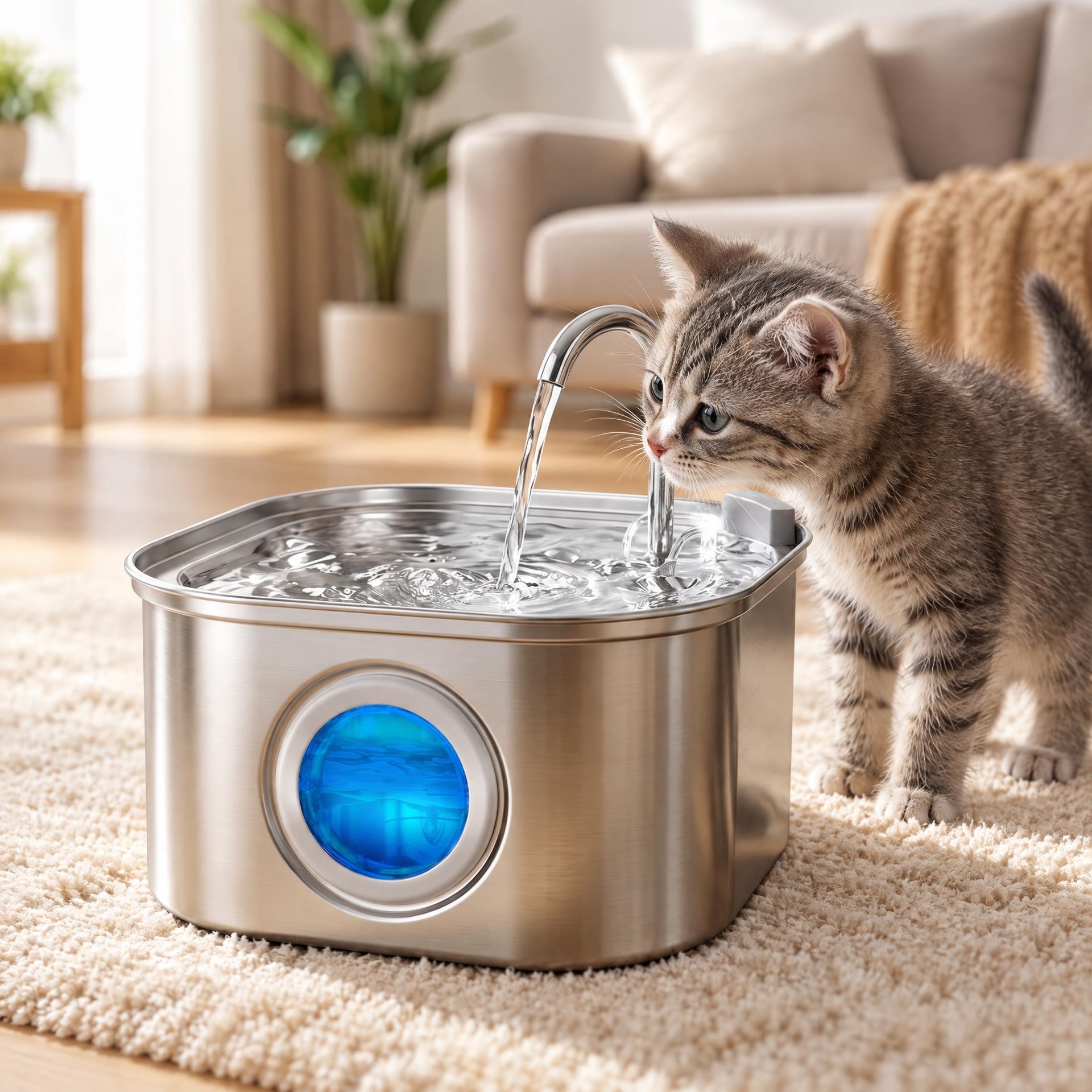
Many kittens are naturally drawn to moving water. A stable fountain with a well-protected power cord can spark their curiosity. Supervise initial use, however, as a playful kitten might chew the cable or knock over a lightweight model.
High-Risk Situations for Dehydration
Diarrhoea and vomiting are the primary causes of dehydration in young kittens. These digestive complications often stem from an overly abrupt diet change, an intestinal parasite infestation, or an underlying infection that rapidly depletes the kitten's fragile fluid reserves.
Excessive heat is another serious danger. A kitten left in an overheated room, sunroom, or car can suffer distress very quickly. In summer, keep your pet in ventilated, shaded spaces and ensure multiple water points remain easily accessible.
The stress of arriving in a new home can also reduce a kitten's appetite and thirst for a day or two. Provide a calm corner, maintain a gentle routine, and quietly monitor whether they are eating and drinking.
Warning Signs That Require a Vet
A kitten who stops eating, refuses to drink, sleeps noticeably more than usual, or seems unusually weak must be examined promptly by a veterinarian. With small kittens, you should never wait several days hoping their condition improves on its own.
Diarrhoea lasting over twenty-four hours, repeated vomiting, dry or tacky gums, and an abnormally cold body temperature are clear signs of an emergency. These symptoms indicate significant fluid loss and require immediate clinical assessment rather than passive home observation.
Never give human medications to a kitten, and do not force them to drink with a syringe without veterinary advice. Syringing water improperly can cause the liquid to enter their lungs, leading to severe respiratory complications or aspiration.
Healthy Habits for Adult Life
Routines established during early kittenhood often last a lifetime. A kitten accustomed to regular wet food and multiple clean water sources will generally encounter fewer difficulties staying well hydrated as an adult, supporting their long-term health and well-being.
Use routine vaccination visits to discuss nutrition and drinking habits directly with your vet. Your veterinary team can guide you through the eventual transition to adult food and share practical advice for preventing common feline urinary issues over time.
Finally, make cleaning and refreshing water points a daily habit. Maintaining spotless, fresh bowls is the simplest and most effective step you can take to encourage your growing companion to drink willingly throughout their life.
If you want to offer moving water, the Veyrulis fountain combines a 3.2-litre SUS 304 stainless steel reservoir, filtration that traps hair and debris, quiet operation, and an illuminated window to monitor the water level. It does not replace a suitable diet or the advice of your veterinarian.
Sources and further reading
- Cornell Feline Health Center — Hydration (besoins en eau, signes et causes de déshydratation)
- International Cat Care — Encouraging your cat to drink: a guide for caregivers (PDF)
This advice is for information only and does not replace your veterinarian's opinion.