
Large Multi-Platform Cat Tree: Installation Guide, Uses, and Mistakes to Avoid
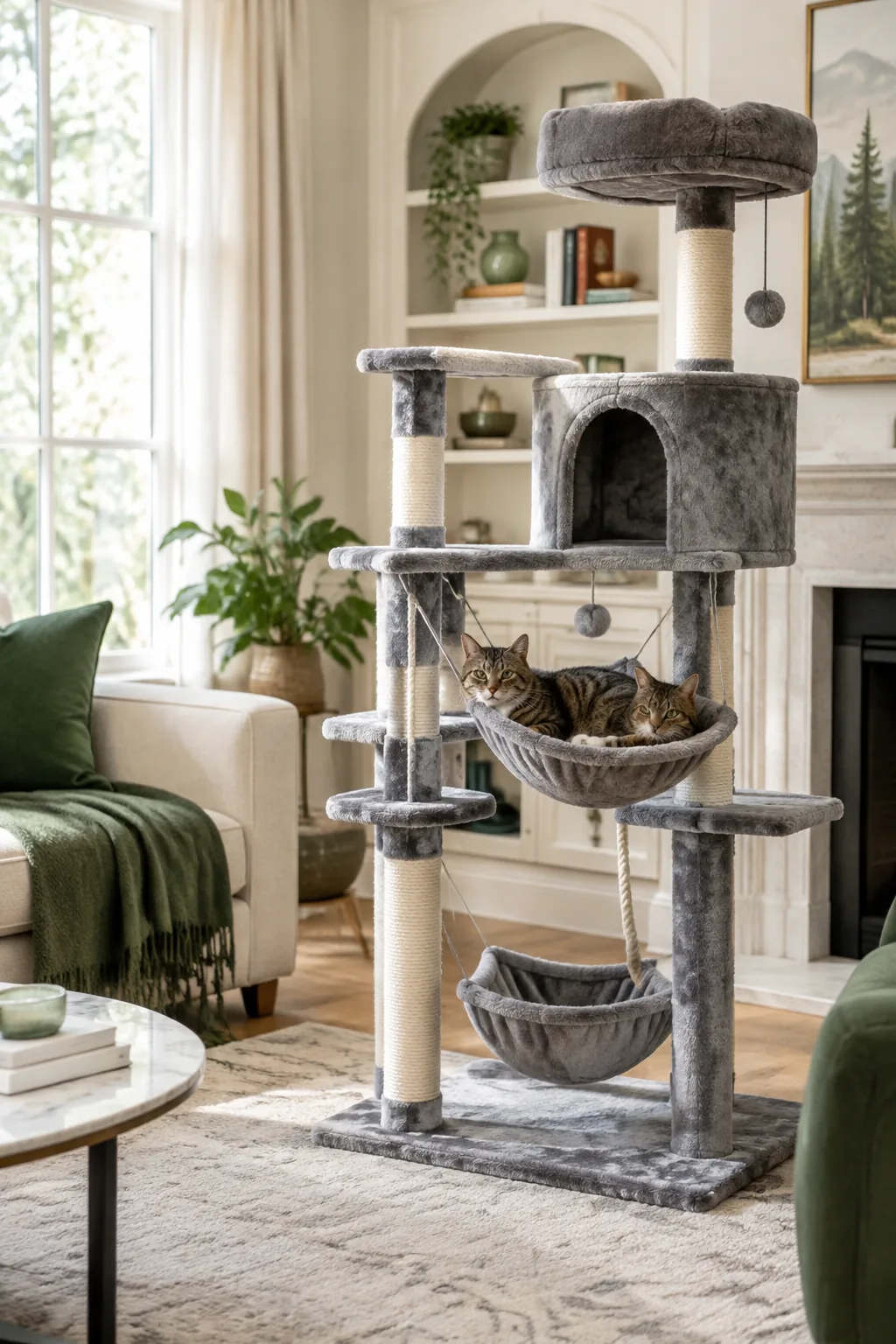
The intentional design of a vertical environment addresses a major biological necessity for the domestic feline. In accordance with ethological recommendations established by the ISFM and the AAFP, gaining elevation provides cats with an immediate sense of control over their territory while proactively defusing potential tension between cohabiting pets. Introducing a large multi-platform cat tree into a living area cannot simply be improvised, however. Between structural anchoring guidelines, strategic positioning relative to doors and windows, and the functional organization of different resting levels, rigorous layout planning proves absolutely indispensable to ensure an experience that remains both thoroughly secure and behaviorally stimulating for your companions.
Strategic Placement for a Large Multi-Platform Cat Tree
The precise selection of the location directly determines whether your animal will embrace the new equipment. Contrary to widespread belief, banishing a climbing structure to an isolated room or a dark hallway frequently leads to marked disinterest. Domestic cats instinctively seek out strategic observation posts that allow them to survey household movements without finding themselves continuously exposed to heavy foot traffic. A quiet corner in the main living room, offering an unobstructed visual perspective across central living spaces, generally provides an ideal setting to satisfy curiosity and stimulate exploratory climbing behaviors.
Proximity to an outdoor opening represents another key factor in providing ongoing sensory enrichment. Setting up the equipment near a window enables your feline to observe stimulating outdoor sights, such as moving leaves or passing birds, which effectively helps prevent boredom in an indoor environment. However, ensure that you maintain a safe distance from active radiators or persistent drafts, and avoid completely blocking the natural jumping paths your companion instinctively uses to reach other elevated vantage points across the room.
Assembly and Secure Wall Anchoring for a Multi-Platform Cat Tree
Mechanical stability remains the absolute safety criterion when assembling any elevated pet installation. During assembly, follow the manufacturer's instructions scrupulously, making sure every threaded rod is fully tightened and that all load-bearing columns rest securely on their bases. A wobbly structure causes immediate apprehension in the animal, which may categorically refuse to use the upper tiers after feeling an unexpected loss of balance when landing from a jump.
For large-scale structures, using a supplementary wall anchor is strongly recommended, particularly if multiple cats share the home or if your feline has a robust build. A bracket solidly anchored into the wall neutralizes the inertial forces generated during vigorous climbing sprints and active play. Remember to establish a regular inspection routine as well: periodically verify the absence of play in mechanical joints and inspect the sisal coverings on the scratching posts to prevent premature deterioration.
Organizing Rest Areas on a Large Multi-Platform Cat Tree
Within a complex vertical structure, the distribution of functional modules must respect the fundamental principles of feline environmental management. Cats instinctively divide their daily activities according to available height: lower platforms often serve as transit steps or scratching posts, while intermediate tiers with enclosed condos meet the need for withdrawal during light rest. These sheltered dens allow the animal to isolate itself visually from ambient household movement while maintaining an easy, unimpeded escape route.
The highest perches and suspended hammocks are naturally favored for deep sleep and territorial surveillance. When several cats live together, having separate beds at different heights limits direct competition by giving each individual a dedicated observation post. Carefully observe how your companions use the structure to confirm that everyone enjoys a peaceful spot without creating territorial bottlenecks or intimidation along main vertical access routes.
Common Mistakes When Using a Large Multi-Platform Cat Tree
The most common mistake consists in forcing the animal onto its new structure immediately after assembly. Placing a reluctant cat against its will on an unfamiliar tier generates stress and immediately associates the equipment with an unpleasant constraint. Instead, let your feline inspect the base at its own unhurried pace, perhaps rubbing a cloth carrying its own facial scents onto the uprights to encourage soothing, natural territorial marking.
A second misstep involves failing to check load limits and mechanical wear on a regular basis. Even though a design includes multiple platforms, each component has specific weight thresholds that must be rigorously respected. If you notice an abnormal tilt in a hammock or loose attachments after several weeks of daily use, readjust the entire assembly immediately before allowing further access.
Finally, neglecting initial supervision is an entirely avoidable mistake. Every pet has physical capabilities shaped by its age, size, and athletic confidence. Watching early climbing sessions carefully allows you to confirm that the jumping distances between tiers suit your companion comfortably and that no awkward transitions or trapping hazards compromise its day-to-day safety.
Currently under review in the Veyrulis catalog under reference AC-ARB-GRIS-MULTI, the Large grey cat tree with platforms and hammocks features several tiers, enclosed condos, and side baskets shown on non-contractual supplier visuals. With exact dimensions, retail pricing, and maximum load capacity still awaiting formal confirmation from the manufacturer, this model remains at the project stage and is not commercially available at present.
Sources and further reading
This advice is for information only and does not replace your veterinarian's opinion.