
Clumping or Non-clumping Litter: Thinking from the Cat's View
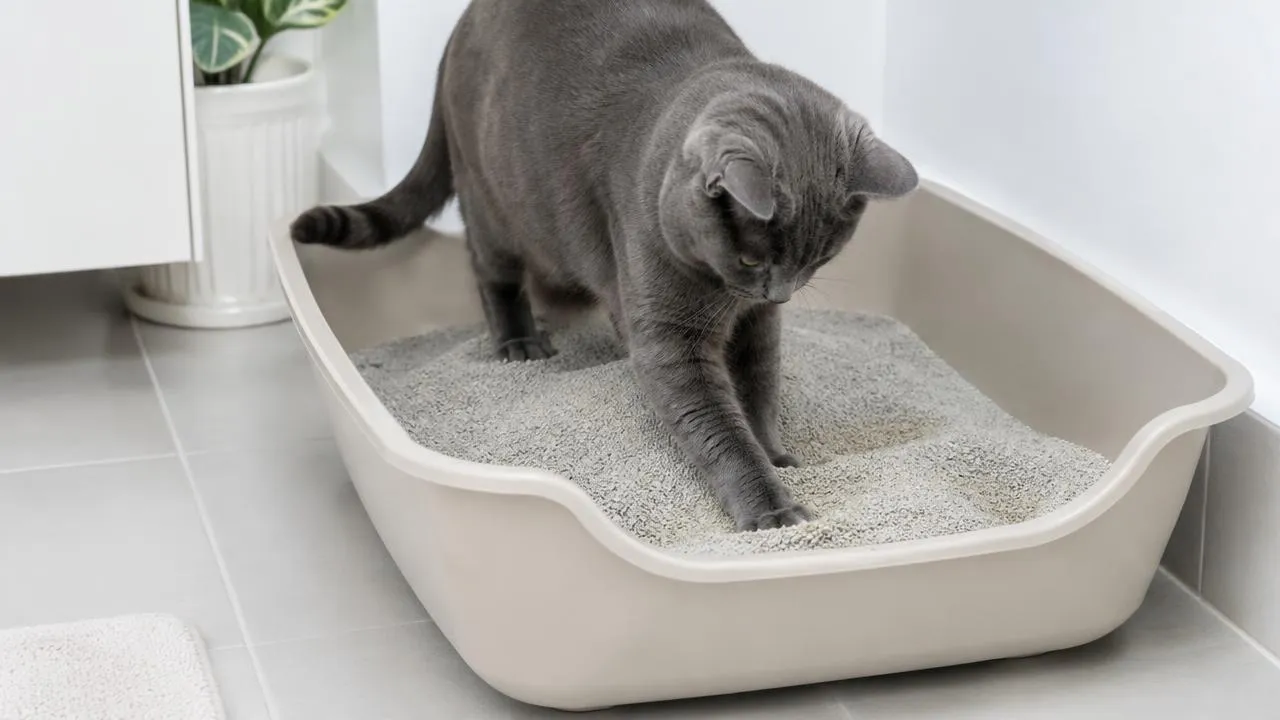
Clumping or non-clumping litter: this question often invites looking for an absolute winner. However, the veterinary sources selected here provide a direction, not a ranking of all materials. The AAFP/ISFM guidelines generally recommend a fine-grained, unscented clumping material, while reminding us of the diversity of feline preferences. The correct reasoning consists of considering several characteristics together and observing tray usage. This framework avoids attributing health or practical qualities to a simple label.
What the reference document actually recommends
In the section dedicated to substrate, AAFP/ISFM most often advocates for a fine material, similar to sand, without scent and clumping. The indicated depth is at least three centimetres. Clumping thus appears within a set of criteria; the recommendation does not consist of saying that this single property would make any litter suitable, regardless of its texture or presentation. These veterinary guidelines focus on the overall sensory experience of the animal.
The guide also specifies that cats vary in their preferences for depth and material. Its general orientation therefore does not erase individual choices. If your animal willingly uses an installation, the reflection must start from this concrete usage, rather than from a desire to follow a leaderboard. These texts do not provide a quantified comparison of performance between all categories offered for sale. Respecting the individual cat remains the primary clinical recommendation for feline welfare.
Comparing without inventing additional properties
The sources used provide neither a dust ranking, nor an environmental impact table, nor a comparative budget according to the substrate. It would not be rigorous to declare here that one family is always less expensive or better tolerated. To remain useful, the comparison can concentrate on the criteria actually documented: fineness, absence of scent, proposed depth and the behaviour of the animal in the different boxes. Avoid assumptions not found in veterinary manuals.
The fact that a presentation mentions natural usage or suitability for multiple cats does not prove its preference by the cats concerned. AAFP/ISFM specifically emphasises that litter marketing targets owners. Therefore, avoid replacing observation with a seductive word on the packet. A commercial category does not alone summarise the experience of your companion nor all the conditions in which they eliminate. Focus instead on the objective signs of comfort shown by your pet.
Making room for a preference trial
The authors suggest making several containers available with various litters and depths to explore preferences. You can thus look at which proposal is used, instead of concluding in advance that the option chosen on paper will necessarily be adopted. This observation serves to better understand the cat; it does not measure a universal superiority applicable to all its peers. Every feline exhibits unique tactile sensitivities that guide their choice of a specific elimination site.
The guide signals a possible aversion when a cat remains balanced on the edges with only one or two paws in the material. Soiling can also contribute to this behaviour. If you notice it, do not immediately attribute it to the clumping or non-clumping nature: check the state of the tray as well. A choice of substrate is not judged independently of the maintenance that accompanies it. Cleanliness is as vital as the material itself.
Maintaining the same cleanliness requirements
The AAFP/ISFM recommendations require removing waste at least daily and adding substrate as needed. They also indicate that no product exempts one from regular maintenance. Choosing one category rather than another does not allow for the removal of this monitoring. For automatic devices, check the manual of the exact model for compatible materials; the two sources do not provide a rule valid for all appliances. Consult your specific device documentation for safety guidelines.
The container must be washed every one to four weeks according to the guide's benchmarks, using soap and hot water. Strong chemical agents and those based on ammonia should be avoided. The differences in rhythm reported between professionals do not justify inventing a particular schedule for each material: no such table is proposed in the texts selected for this article. Consistency in hygiene remains the cornerstone of feline health regardless of the specific clumping technology used.
Not making the substrate a sole medical explanation
The MSD Veterinary Manual links lower urinary tract diseases to several possible causes and presents the diagnosis of idiopathic cystitis as a diagnosis of exclusion. It cites straining to urinate, blood in the urine, frequent urination and urinating outside the box among the characteristic manifestations. These signs call for a veterinary discussion, not just a new comparison between two bags of litter. Clinical signs require professional diagnosis before assuming the litter is the primary problem.
Box management intervenes in MSD within a broader management plan, including notably stress reduction and attention to interactions between cats. One cannot therefore promise that a clumping substrate will prevent a disease, nor make a non-clumping option responsible for a disorder observed without a check-up. Choosing an accepted material and taking symptoms seriously are two complementary steps, without replacing one another. Health management must remain holistic and based on professional veterinary medical advice.
Accessoires Chat has a connected automatic litter box in a round format currently in preparation. It is not yet for sale, its price is not validated and the image is for illustrative purposes only. Specifications must be confirmed on the manual of the delivered model, without deducing them from the visual. For compatibility or other technical data, check the manual of the exact model you have received.
Sources and further reading
- AAFP and ISFM Guidelines for diagnosing and solving house-soiling behavior in cats (Journal of Feline Medicine and Surgery, 2014)
- Manuel vétérinaire MSD — Lower Urinary Tract Disease in Cats
This advice is for information only and does not replace your veterinarian's opinion.