
Automatic litter trays and kittens: what to check before use
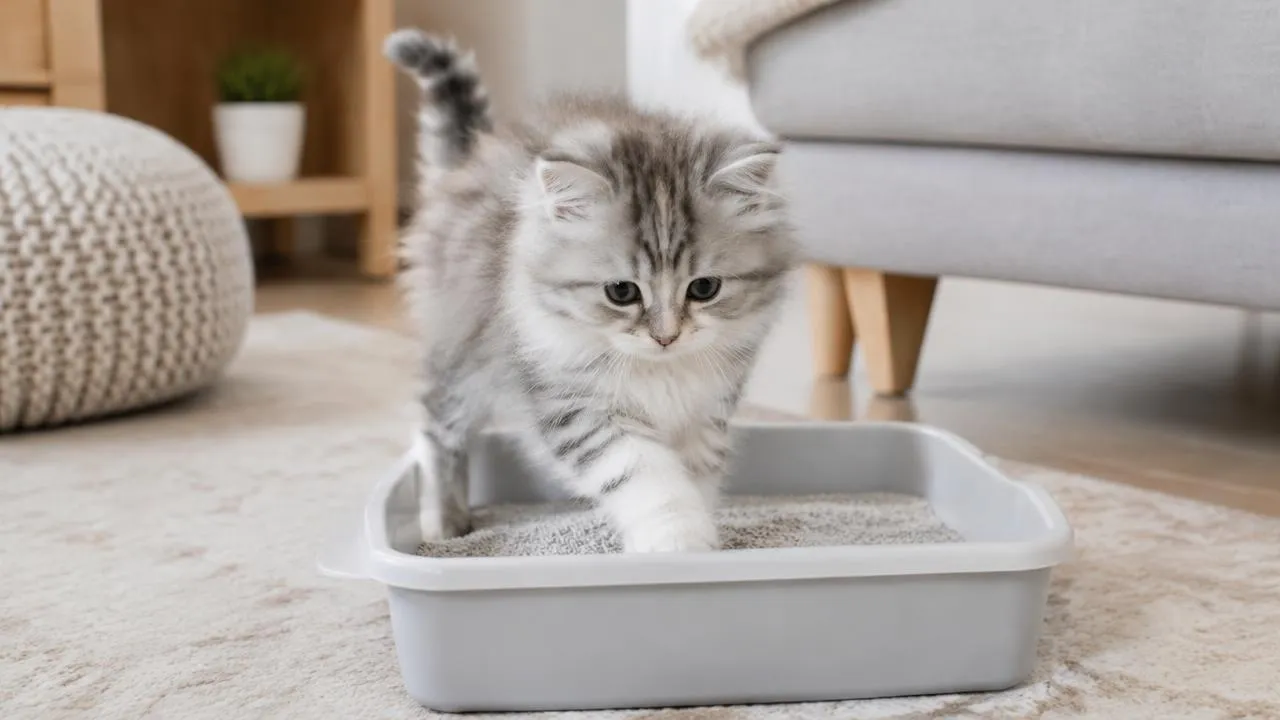
Considering an automatic litter tray for a kitten starts with recognising what the available sources actually allow us to say. The veterinary texts supplied give neither a universal minimum age nor a weight that permits the use of every device. Inventing a reassuring threshold would therefore be unwise. This guide helps you prepare technical questions and consider your young cat’s toileting needs, without confusing growth, access to the tray and a safety assessment that applies to one particular model.
Look for written restrictions rather than a generic age
Before considering using any equipment, check the exact model’s manual for conditions relating to the animal and any restrictions that apply. If information about age, weight or another condition seems necessary but is not documented, ask for an explicit answer. Silence in a product description does not amount to permission. General recommendations about litter trays cannot be turned into authorisation to use a device whose limits remain unknown.
The same caution applies to functions presented as protective: consult their description and conditions of use in the manual, without assuming that they exist, what they cover or whether they suit your kitten. The AAFP/ISFM and MSD texts do not test automatic devices. Neither the appearance of the equipment nor a picture of a young cat therefore provides technical evidence that a particular model is suitable for your animal.
Treat access as a need in its own right
The AAFP/ISFM guidelines state that a litter tray’s opening should allow easy access, whatever its design. This is a useful principle when considering the route to the tray and its entrance, but it does not establish a universal entrance height for kittens. Note the documented dimensions and ask whether they are appropriate for your companion. For device-specific details, return to its manual rather than inferring compatibility from a photograph.
These recommendations also emphasise the importance of litter tray size. For rectangular trays, they suggest a length one and a half times the cat’s length, measured from the nose to the base of the tail. This reference helps you consider room for posture; it is not a formula validating every shape of device. Avoid confusing an advertised external volume with the toileting space that your animal actually has available inside.
Do not let equipment plans dictate the litter material
Regarding litter material, the AAFP/ISFM authors generally describe a preference for fine, unscented, clumping litter. However, they acknowledge individual variation and suggest comparisons between trays to explore cats’ preferences. The text does not provide a specific recommendation here that applies to all kittens. Present this as general guidance, without concluding that a particular material automatically suits every young animal or every device you might be considering.
The technical question needs to be addressed separately: which litter materials are permitted for the model under consideration? Check this in its own instructions. If the overlap between observed preferences and permitted materials remains unclear, do not force a conclusion. The guidelines also note that cats may dislike fragrances and deodorisers. A material that appeals to a person is therefore no substitute for reading the manual or observing how the tray is actually used.
Make litter trays available throughout the home
For a single cat, the AAFP/ISFM document recommends two litter trays in separate locations. It also recommends at least one tray on each level of a home with several floors. This guidance concerns the availability of resources; it does not imply choosing a particular technology. Consider the arrangement of your home independently of your interest in a device, rather than treating a planned purchase as the sole answer to every toileting need.
When discussing location, the authors advise against placing trays close to food and water, and highlight the possible effects of noisy or busy surroundings. They also describe avoidance associated with negative experiences around the tray. These points are not a kitten-specific training programme. They simply help you check that installation requirements do not take priority over access, quiet surroundings and the resources your cat has available.
Distinguish assumed learning needs from a problem requiring assessment
According to the AAFP/ISFM recommendations, assessing house-soiling includes a physical examination and investigating medical, behavioural, environmental or social causes. If your young cat eliminates elsewhere, do not simply conclude that it needs to ‘learn the machine’. Prepare a description of the circumstances and recent changes for your vet. This approach is more rigorous than immediately attributing the behaviour to age or to an adjustment period that the sources do not define.
The MSD Veterinary Manual lists straining to urinate, frequent visits, blood in the urine and urinating outside the litter tray among signs of lower urinary tract disease. The appearance of these signs warrants contacting a vet, regardless of any equipment plans. Your final decision therefore remains conditional on precise model instructions, accessible toileting facilities and attentive observation, without an invented age, a blanket guarantee or confusion between advertised operation and your cat’s health.
A round, connected automatic litter tray is currently being prepared at Accessoires Chat. It is not available for sale, and its price has not been approved. The image remains illustrative. Specifications will need to be confirmed in the manual for the model supplied. In particular, this presentation cannot establish any minimum age or weight, or claim that this product under development will be suitable for kittens.
Sources and further reading
- AAFP and ISFM Guidelines for diagnosing and solving house-soiling behavior in cats (Journal of Feline Medicine and Surgery, 2014)
- Manuel vétérinaire MSD — Lower Urinary Tract Disease in Cats
This advice is for information only and does not replace your veterinarian's opinion.