
Cat tree for an older cat: adapting the existing model
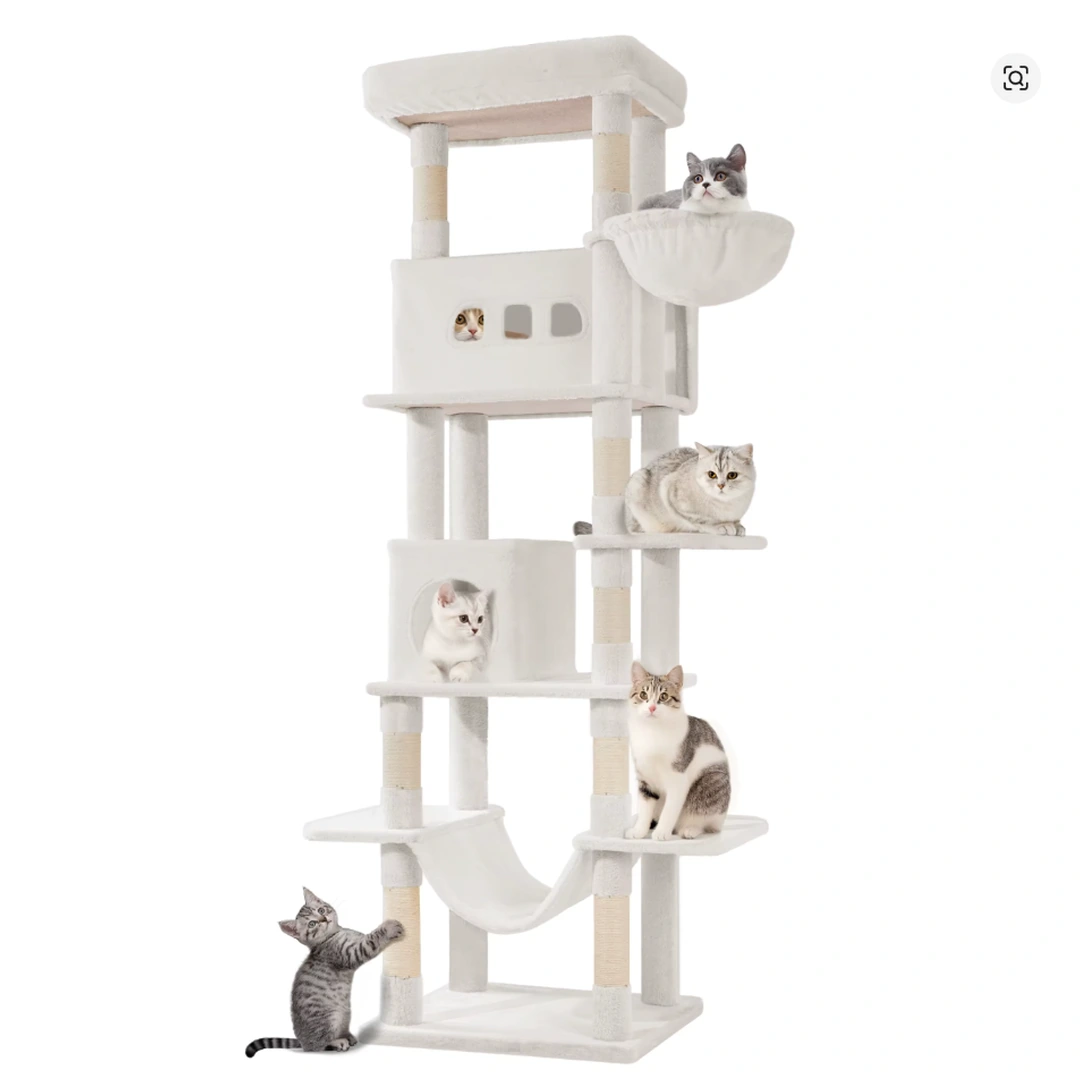
Does your cat still love its lookout spot, but now hesitate before heading up? Adapting the setup does not necessarily mean replacing everything. A cat tree for an older cat can start with the model it already knows, making routes less demanding and resting places more accessible. The aim is not to restore past performance: it is to preserve choices and familiar reference points. Before changing anything, observe your cat’s spontaneous movements, without encouraging jumps or placing it on a level it no longer reaches independently.
Observe habits before changing access routes
Identify the places still used and the routes now avoided. Does your cat pause before a platform? Look for another foothold when coming down? Prefer the lower bed while still looking towards its former perch? These observations help you target a particular route rather than transform the whole tree. Watch the return to the floor too: a route used for climbing is not necessarily comfortable on the way down. Do not prompt a trial just to obtain an answer.
Ageing alone does not explain a new difficulty. Consult a vet for any signs of pain, limping, falls, parasites or behavioural changes. Physical adaptations do not replace this consultation. The AAFP and ISFM guidelines on feline environmental needs (2013) highlight the importance of hiding places, elevated perches, separate resources, scratching, familiar scents and respectful interactions. Keep these needs in mind without insisting on the old route.
Adapting a cat tree for an older cat, step by step
First, look at breaking up the section that causes difficulty. An intermediate step must provide a genuine stopping place, not merely somewhere to put a paw briefly. Your cat should be able to stand there, look at the next stage and move on without immediately having to make another jump. Favour a clear route that does not require twisting between levels. No universal spacing suits every cat: work from what yours uses spontaneously and comfortably, without testing its limits.
Before adding anything, check the manufacturer’s instructions for the options provided for that model, approved accessories and installation requirements. An improvised step using a cardboard box or stacked cushions does not provide reliable support. If the instructions do not allow the intended adaptation, ask the manufacturer rather than drilling or altering the assembly. The added step must not block a familiar bed or force your cat around an obstacle on the return journey.
Improve grip without creating an obstacle
Focus on the areas where paws need support: setting off from the floor, arriving on the intermediate step and moving towards the chosen resting place. A non-slip surface can make these transitions easier to negotiate, provided it stays firmly in position. Look for an even texture, without loops that might catch a claw, raised edges or loose sections. Very thick or soft material can actually make footing less predictable, even if it feels cosy to the touch.
Check the manufacturer’s instructions to find out which coverings and securing methods are compatible with the existing supports. Do not assume an adhesive or fastening suits every surface. The covering must not conceal any inspection point identified by the manufacturer. After installation, regularly examine the edges and how securely it stays in place, then observe spontaneous use. If your cat avoids the new texture, reconsider your choice rather than persistently coaxing it onto the surface or forcing contact.
Provide accessible resting places that retain familiar features
The top need not remain the main destination. A lower resting place can retain some of the appeal of the usual perch: watching the room, retreating or simply sleeping near you. Make it accessible from the adapted route, with a clear arrival area and an easy-to-identify exit. Avoid filling the entire level with a soft addition: your cat still needs a foothold to enter, settle down and leave at its own pace.
Preserve familiar features your cat already enjoys wherever possible. If its usual fabric suits the new location and the manufacturer’s guidance, it can accompany the change without disrupting all its familiar scent cues. Maintain easy access to a scratching surface it uses as well. However, the aim is not to turn the tree into a single station combining bed, food, water and litter tray: keep these resources separate, with accessible routes, so your cat can choose according to its needs.
Introduce changes without demanding a demonstration
Make limited changes so you can understand what genuinely makes everyday life easier. Once you have adapted an access route, let your cat explore it freely. Do not place it high up to check the descent, or put a treat out of reach to provoke a jump. You can stay nearby if it seeks your company, while still allowing it to decide not to continue.
Judge success by ease of movement, not the height reached. A cat choosing a lower resting place can still enjoy its setup fully. Review adaptations as its habits change, making the same checks in the instructions. If a level remains difficult to reach, do not try to maintain its use at any cost: preserving a pleasant routine matters more than keeping every level in service.
VEYRULIS is preparing a 210 cm tall, multi-level cat tower, still a draft product and not yet for sale. Its price has not been approved, and its colour variant remains to be confirmed. For an older cat, height alone is not enough: access, resting places and adaptation options will need assessing, with specifications checked against the instructions for the model delivered.
Sources and further reading
This advice is for information only and does not replace your veterinarian's opinion.