
Cat tree for several cats: sharing without tension
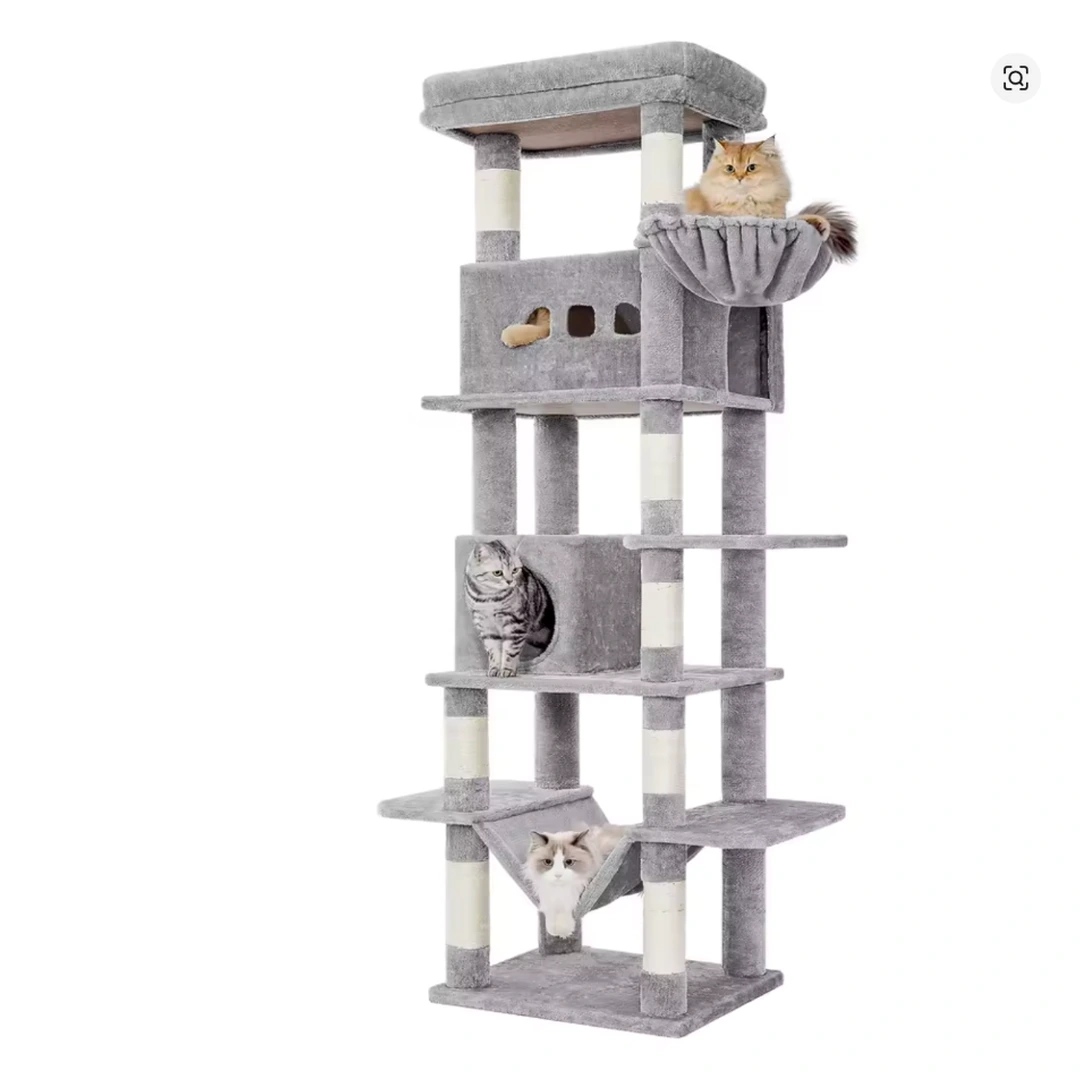
A shared cat tree does not become welcoming simply because it has plenty of platforms. Some cats sleep together; others prefer to watch their companions from a distance. When choosing a cat tree for several cats, it is therefore worth considering opportunities to retreat, routes through the structure and the places genuinely available. The aim is not for everyone to occupy the tree simultaneously, but for each cat to settle down, leave or choose somewhere else without having to negotiate every passage.
Cat tree for several cats: observe actual use
Before comparing models, watch how your cats share their resting places. Who willingly joins a companion? Who waits until a spot becomes free? A cat that gives up its place when another arrives is not necessarily happy with sharing. Note how places are used at different times, too: a bed occupied by one cat in the morning and another in the evening can work, provided each has a comfortable alternative whenever they want to rest.
The AAFP and ISFM guidelines on feline environmental needs (2013) recommend, among other things, hiding places, elevated perches, separate resources, opportunities to scratch, familiar scents and respectful interactions. Applied to a home with several cats, this approach encourages you to offer choices rather than compulsory closeness. A shared cat tree can complement these arrangements, but it should not bring together every opportunity for rest and retreat in the home in one place.
Spread sleeping spots out rather than stacking them
Counting sleeping spots is not enough: you need to consider how they relate to one another. Places close together, all reached through the same platform, may function as a single shared space. By contrast, staggered beds sometimes allow cats to rest without direct contact. Ask yourself whether a settled cat naturally extends into the route, or whether another has to cross its sleeping area to reach its own spot. This reveals more than the number of levels.
Try to offer options that are similarly appealing, too. If just one place provides a view over the room while all the others are very exposed to passing traffic, it may become everyone's favourite. That does not mean the beds must be identical: some cats want more privacy. Keep familiar resting places outside the tree so that an animal can choose some distance without losing access to a place it enjoys spending time.
Keep independent routes available
Now imagine the structure in use. A cat is asleep on the middle platform: can its companion get down without stepping over it? Another stays at the base: does it block every exit? An unavoidable shared passage needs attention, particularly when the cats already avoid crossing paths. Look for a layout that offers several genuinely usable ways to move around, without assuming the animals will make large jumps to bypass a neighbour or cross an uncomfortable gap.
Observe cats passing one another at different times, without using a treat to draw them together to test their relationship. A pause may be harmless; repeated waiting, turning back or persistent watching warrant reconsidering the arrangement. Keep the surrounding area clear so cats can move away in different directions. Every access option, accessory and technical detail must be checked against the manufacturer's instructions: a commercial photograph cannot confirm which uses are permitted.
When several cat trees become the better choice
Several cat trees are often better than one large structure when cats want the same places but struggle with being close together. They are also worth considering if one cat regularly occupies the shared access route, or if each spends its resting periods in a different part of the home. However, two structures side by side do not necessarily create independent spaces: one cat may still watch both entrances from one spot. Separation must provide a genuine choice.
Conversely, a large structure may suit companions that spontaneously seek each other out and already have other places to retreat. What matters most is each cat's freedom, not the appealing picture of a group gathered together. Before replacing what you have, identify favourite places and consider a second tree in another area the cats use. Also retain separate scratching opportunities and other separate resources: adding sleeping spots does not resolve competition across every activity.
Support sharing without forcing encounters
When a new tree arrives, let the cats explore at their own pace and keep their familiar surroundings and reference points. Do not place one animal beside another already settled there to get them used to sharing. Instead, offer individual interactions away from routes through the space, always leaving the option to walk away. A tree can be shared over time, with different occupants at different hours; this is not a failure if nobody seems forced to wait.
Then reassess the whole arrangement: can each cat find a favourite resting spot, move freely and leave an encounter? If tensions persist, avoid provoking further confrontations and seek advice from a vet. Also consult a vet for any sign of pain, limping, a fall, parasites or a change in behaviour. Altering the surroundings is no substitute for this step. The useful measure remains each cat's freedom to enter and retreat, rather than their simultaneous presence on the structure.
VEYRULIS is preparing a 210 cm tall, multi-level cat tower, to be considered according to how sleeping spots and routes are shared between your cats. It is not yet for sale: the price has not been approved, and the colour variant remains to be confirmed. Specifications will need checking in the instructions for the model delivered; a large tower does not always replace several separate spaces.
Sources and further reading
This advice is for information only and does not replace your veterinarian's opinion.