
Cat tree hammock: choosing a compatible replacement
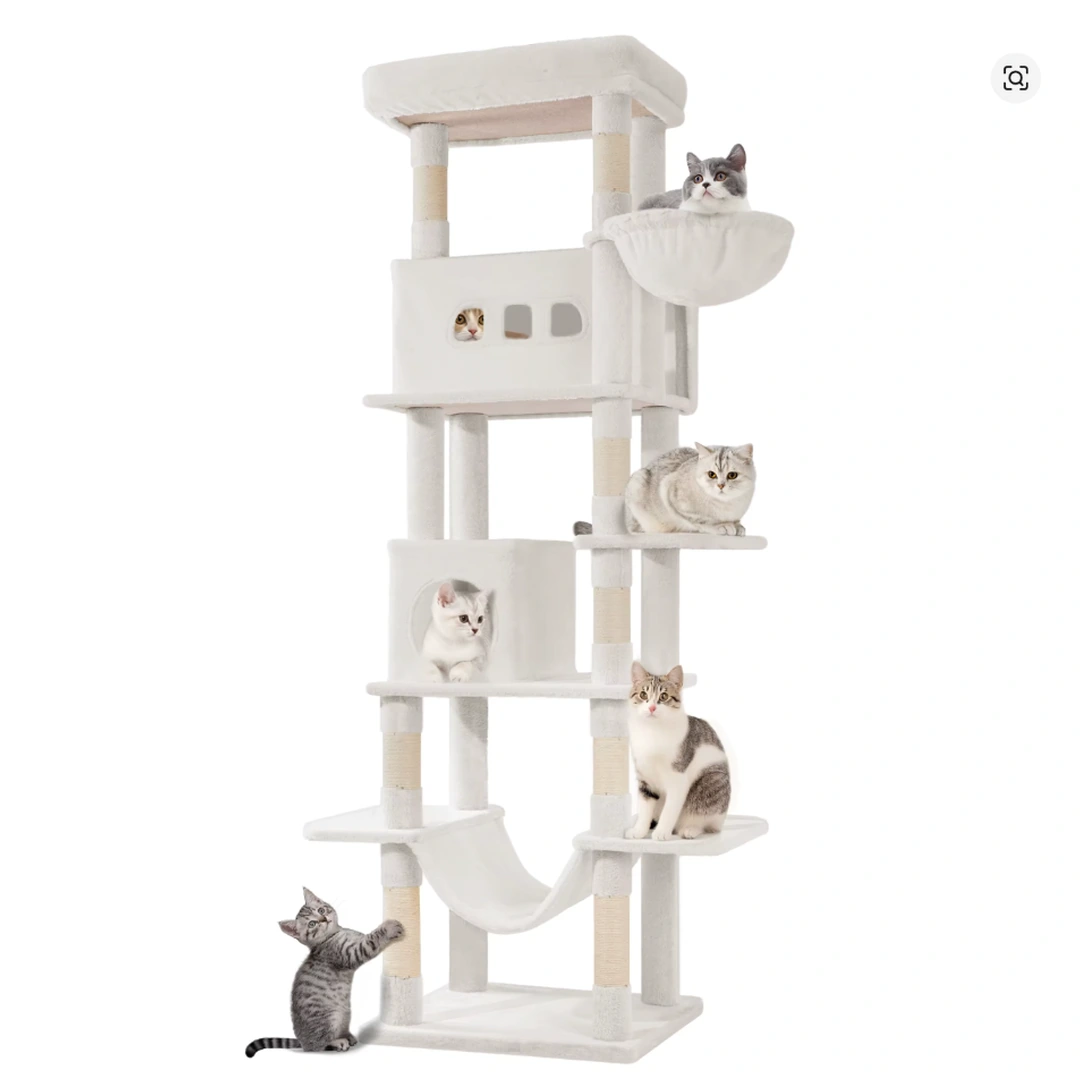
Has your cat’s favourite bed stretched or torn, but you want to keep the cat tree? Finding a compatible cat tree hammock involves more than spotting a similar shape in a photograph. A round fabric pocket may conceal a different fixing, while an identical diameter does not guarantee the same resting space. Before ordering, gather the tree’s model reference, its instructions and the measurements of the existing hammock. Three criteria must match: the type of fixing, the dimensions and the stated load for the replacement part in the configuration authorised by its manufacturer.
Identify the cat tree hammock’s fixings
Start by examining the connection between the hammock and the tree, without dismantling any part that still supports a component above it. Is the bed supported by a ring with a bracket held between two posts, attached at the side, or suspended from several fixings? These arrangements are not automatically interchangeable. Take a close-up photograph of the fixing, then look for its diagram in the manufacturer’s instructions so that you can identify the intended system precisely.
Where a fixing includes a screw, appearance alone is not enough: its diameter, thread, usable length and any washers must match the manufacturer’s instructions. For a bracket with a hole, also note its shape and position in relation to the bed. Do not improvise a connection using randomly chosen parts. If this information is missing, send your photographs and the tree’s model reference to the seller before making any purchase, then request written confirmation of compatibility.
Measure the bed and the space it occupies
Distinguish the external dimensions from the space actually available for lying down. A thick edge or a narrow fabric pocket can reduce the usable area, even when two hammocks have the same stated diameter. Measure the existing model using the reference points in its instructions: frame, opening and depth, where these measurements are relevant. Fabric that has already stretched is an imperfect guide; give preference to the original dimensions if the manufacturer supplies them.
Next, check the space occupied around the fixing. The new hammock might extend further towards a post or beneath a platform, despite having a similar sleeping area. Compare its projection and orientation with the positions authorised in the instructions. Also consider the fabric pocket when occupied: its stated depth must remain compatible with the space below. If the manufacturer does not specify these details, ask for a dimensioned drawing rather than estimating them from a photograph.
Read the stated load in context
A load specified for the whole cat tree does not automatically tell you what its hammock can support. Look for information specifically covering the replacement bed and check the associated conditions: compatible support, position and prescribed assembly. Never infer a part’s capacity from its apparent thickness or a photograph showing a cat. Only explicit information from the manufacturer allows you to compare the stated load with the intended use in the configuration you have selected.
If the sales information and the instructions appear to contradict each other, have this point clarified before ordering. A vague description such as “sturdy” is no substitute for a stated load. Also remember that the cat’s weight alone is not enough to validate an adaptation: the combination of fixing, support and hammock must be authorised. Do not assume an additional margin of capacity, and do not use your pet to test the hammock’s strength.
Distinguish a cover from a complete hammock
The term “replacement hammock” may refer only to the fabric, to the frame with its fabric pocket, or to a set that includes the fixing. Read the package contents before comparing offers. A cover alone is an option only if the manufacturer allows it to be replaced on your frame. Its loops, fastenings or retaining areas must match the original assembly as described in the instructions, rather than simply having a similar shape.
Examine the detailed photographs to understand how the fabric is held in place and which parts are supplied. If the frame is misshapen or the fixing shows an irregularity, replacing only the fabric pocket is not enough to confirm that the bed can be used again: ask the manufacturer for advice. Avoid drilling, restitching a load-bearing attachment or altering a ring to accommodate an incompatible model. Instead, choose a reference expressly authorised for your tree.
Prepare your order and the bed’s return to use
Before confirming your basket, bring your checks together in a short record: tree reference, fixing system, usable dimensions, overall space occupied, stated load and package contents. Keep the seller’s reply and read the returns conditions. On delivery, compare the part with the documents before installing it. Then follow only the manufacturer’s instructions; if any component differs or is missing, keep the hammock inaccessible to your cat while you wait for clarification.
The AAFP and ISFM guidelines on feline environmental needs (2013) highlight, among other things, the importance of hiding places, raised perches and familiar scents. This context encourages preserving familiar reference points during replacement, without forcing your cat to try the new bed. Let your cat explore it at their own pace once the assembly has been confirmed as correct. For any sign of pain, limping, a fall, parasites or a change in behaviour, consult a vet.
VEYRULIS is preparing a 210 cm tall, multi-level tower cat tree, still in draft and not yet for sale. Its price has not been approved, and its colour variant remains to be confirmed. When considering a future hammock replacement, the specifications, fixings and dimensions will need to be checked against the instructions for the model delivered, without assuming that any particular replacement part is compatible.
Sources and further reading
This advice is for information only and does not replace your veterinarian's opinion.