
Wooden or cardboard cat tree: what are the differences?
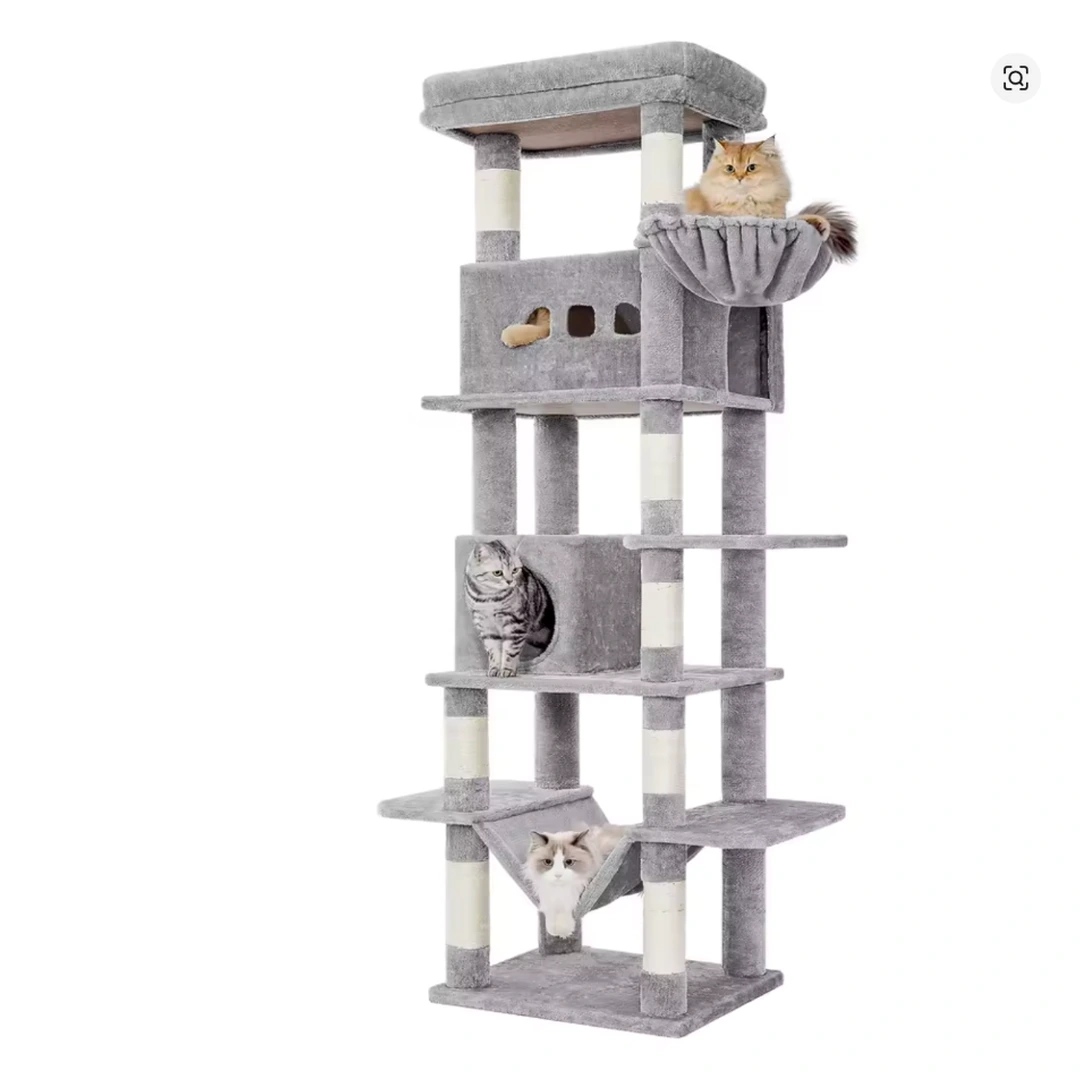
Choosing a wooden or cardboard cat tree is not simply a matter of preferring a natural material or a lightweight structure. These descriptions can cover different compositions, which affect everyday use and how long the product remains usable. The AAFP and ISFM guidelines on feline environmental needs (2013) highlight, among other things, the importance of hiding places, elevated perches and scratching opportunities. The material should support those needs rather than becoming the only consideration when you make your choice.
Wooden or cardboard cat tree: understand the composition
A model described as “wooden” may combine solid wood, plywood or particleboard, with very different coverings and methods of assembly. These material groups do not all respond in the same way to stress and water. Similarly, a cardboard model may use honeycomb sheets, thick stacked components or a mixed structure. The commercial description alone is therefore not enough to predict how well it will withstand use in your home.
Before comparing models, identify the materials used for the platforms, supports and exposed surfaces, then consult the manufacturer's instructions for the stated technical properties. A finish may protect one face without protecting the edges or joints. For cardboard, ask whether the parts subject to wear can be replaced. The aim is to understand what you are actually buying, rather than automatically assuming that wood is stronger or that all cardboard is equally fragile.
Moisture: two sensitive materials that react differently
Unprotected cardboard readily absorbs liquids: it may soften, change shape or lose its cohesion. A small splash on a decorative surface does not have the same consequences as a soaked support. However, wood is not naturally waterproof either. Depending on its composition and finish, it may develop marks, swell or warp. Wood-based panels can be particularly vulnerable when moisture reaches their edges or the joints where separate components are connected.
In a room that is regularly damp, neither material should be chosen on the strength of a photograph alone. Check the intended conditions of use and the restrictions given in the instructions. After contact with liquid, a surface that feels dry does not prove that its original strength has been retained. If a load-bearing part has changed shape or consistency, stop using it and ask the manufacturer what action to take.
Maintenance: compare tolerance rather than apparent ease
For routine care, a smooth, protected wooden surface may be more tolerant than untreated cardboard, but this depends on the covering. Some panels cope poorly with water at their joints; some finishes may be damaged by an unsuitable cleaning product. Cardboard generally calls for limiting the use of liquids. Before buying, compare the methods expressly permitted by the manufacturer rather than relying on a vague promise of easy cleaning in the sales description.
The practical difference also concerns what happens when an area can no longer be maintained properly. On a cardboard model, a removable wear layer may make renewal simpler; on a wooden model, a detachable covering may preserve the structure. Check that the product really has this design. Keeping familiar components that are still clean and usable can also respect the cat's scent cues, highlighted in the cited guidelines, without keeping a deteriorated part.
Weight and repairability: consider the whole period of use
Cardboard is often easier to move, whereas a wooden structure may require more effort to handle. This contrast is relative, however: volume, density and the other materials used also matter. Do not infer either safety or strength from weight alone. Compare the stated weight, the options for taking the product apart and the handling instructions, especially if you regularly need to move it to gain access to the surrounding area.
In terms of repairability, wood sometimes offers screwed components that can be separated, but a panel damaged around a joint does not automatically regain its properties after an improvised repair. Cardboard can be worth considering when complete modules are designed for replacement. Conversely, glued construction can limit repairs in either case. Ask which spare parts are available and which repairs are permitted, without treating a simple repair with household glue as a guarantee of strength.
End of life: favour components that can be separated
Cardboard immediately brings recycling to mind, but a cat tree is not necessarily made of cardboard alone. Adhesives, textiles, treatments and other components can complicate disposal. Wood presents the same variety: a removable solid piece and a covered panel do not necessarily follow the same route. The useful question is therefore less “which material seems environmentally friendly?” and more “which components can I separate, keep or send to a suitable local collection scheme?”
Check the manufacturer's information and your local collection service's rules before deciding where the parts should go. No material alone guarantees a better environmental outcome: the actual length of use and replacing only worn parts also matter when choosing. Finally, for any signs of pain, limping, any fall, the presence of parasites or any change in behaviour, consult a vet rather than attributing the cause to the material used in the cat tree.
VEYRULIS is preparing a 210 cm tall, multi-level tower cat tree, still at the draft stage and not yet for sale. Its price has not been approved, and the colour variant remains to be confirmed. To compare it with wooden or cardboard alternatives, the materials, maintenance options and other specifications will need to be checked in the instructions for the model actually delivered.
Sources and further reading
This advice is for information only and does not replace your veterinarian's opinion.