
Removing hair from a cat tree: useful tools
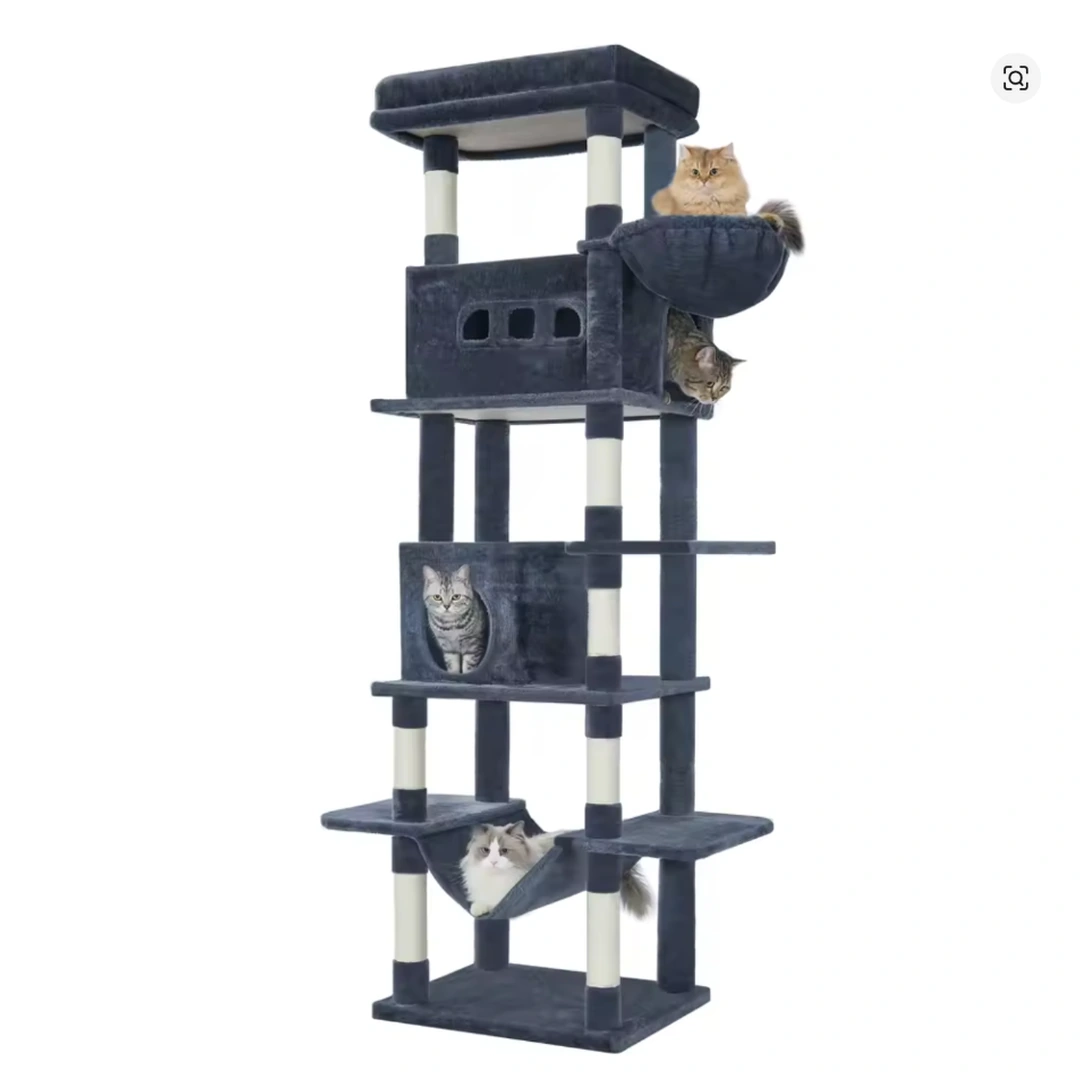
Hair comes off the sofa throw easily, yet sometimes seems stitched into the platforms of a cat tree. It clings to the fibres, collects in corners and resists a quick once-over. If you are searching for how to remove hair from a cat tree, stronger suction is not necessarily the answer. Vacuuming, fabric brushes and rubber tools each have different roles. Here is how to compare them, then combine them according to the covering, without turning every session into a major cleaning job.
Removing hair from a cat tree: look before you rub
Start by looking at where the hair has gathered. On a short-pile surface, it often remains accessible; in long faux fur, it can form a layer at the base of the fibres. Seams and edges also trap small clumps. Gently run your hand over the surface to distinguish loose hair from hair caught in the fabric. This helps you choose a targeted action rather than repeatedly going over the whole platform unnecessarily.
Before trying anything, consult the manufacturer's manual to find out which tools are permitted on each material. Also check the instructions for the accessory you intend to use. Test a small, inconspicuous area with light pressure, then inspect the fibres: they should neither pull out nor become misshapen. Wait until your cat has left of its own accord. Do not tug at a tuft that could be part of the covering rather than collected hair.
Vacuuming to remove loose hair and clumps
A vacuum cleaner is most useful for collecting material that is already loose: surface hair, small clumps and debris lifted by another tool. Choose an attachment compatible with the fabric and the manufacturers' recommendations. Move slowly in strips, without pressing down and flattening the fabric. A narrow nozzle can help in corners if its use is permitted. Keep it away from fringes, ties and anything that might get drawn into it as you work.
Its limitations become apparent when hair is intertwined with the fibres: going over the same spot is not always enough. Increasing suction is not necessarily the right response. If the fabric lifts or gets pulled against the nozzle, stop and review the setting in accordance with the manual. A motorised brush is not automatically suitable for long plush fabric. With embedded hair, it is better to loosen it manually first, then vacuum up the resulting clumps.
A fabric brush for lifting trapped hair
A fabric brush picks up hair through contact with its surface. Some models work in a particular direction: follow their instructions rather than brushing at random. On a compatible short-pile covering, use short, even strokes, following the direction of the fabric. Remove accumulated hair from the brush before continuing; a saturated tool may simply redistribute it. This brush is particularly handy when you want to work on an easily accessible seat or backrest.
A brush needs greater care on looped fabrics, raised seams and long faux fur. If it catches, do not force it; change tools instead. Avoid replacing a brush designed for fabrics with a rigid-toothed accessory intended for another purpose. The aim is to catch the hair, not to comb deep into the covering. Compared with vacuuming, this method targets certain areas more effectively, but you still need to collect the hair it gathers afterwards.
Rubber tools to gather hair without straining the fibres
A soft brush or rubber squeegee intended for fabrics can draw hair together into little rolls that are easy to pick up. Its usefulness becomes clear when vacuuming leaves a thin layer clinging to the surface. Work on a small area using short movements and minimal pressure. Collect the rolls regularly to avoid spreading them elsewhere. An ordinary household glove does not necessarily offer the same compatibility with the fabric you are working on.
Rubber is not a universal solution, however: depending on its texture and that of the covering, it may grip too strongly or achieve very little. Always carry out the recommended discreet test and stop if the fibres move with the tool. Do not routinely dampen the accessory; this depends on the instructions for both the tool and the cat tree. Compared with a fabric brush, it may be handier on flat surfaces but less precise around small folds or edges.
Combining tools while respecting your cat's habits
The best sequence depends on what you observe. Vacuum up loose hair first, then use a fabric brush or rubber tool only where hair remains, and finally collect the clumps. There is no need to use all three tools everywhere. On plush fabric that traps little hair, vacuuming may suffice; on a heavily covered short-pile seat, manual work becomes more useful. Stop once the result is satisfactory rather than pursuing an absolutely spotless surface.
The AAFP and ISFM guidelines on feline environmental needs (2013) highlight, among other things, the importance of familiar smells and respectful interactions. Removing hair therefore does not require scenting the cat tree or driving its occupant away. Choose short sessions while your cat is elsewhere, then put the accessories away. For any sign of pain, limping, a fall, parasites or behavioural changes, consult a vet: caring for the covering does not address these situations.
VEYRULIS is preparing a tall, multi-level cat tree measuring 210 cm, still at the draft stage and not yet for sale. Its price has not been approved, and its colour variant remains to be confirmed. To plan hair removal from its different areas, the covering specifications and care instructions will need checking in the manual for the model delivered.
Sources and further reading
This advice is for information only and does not replace your veterinarian's opinion.