
Urine smell on a cat tree: how can you remove it for good?
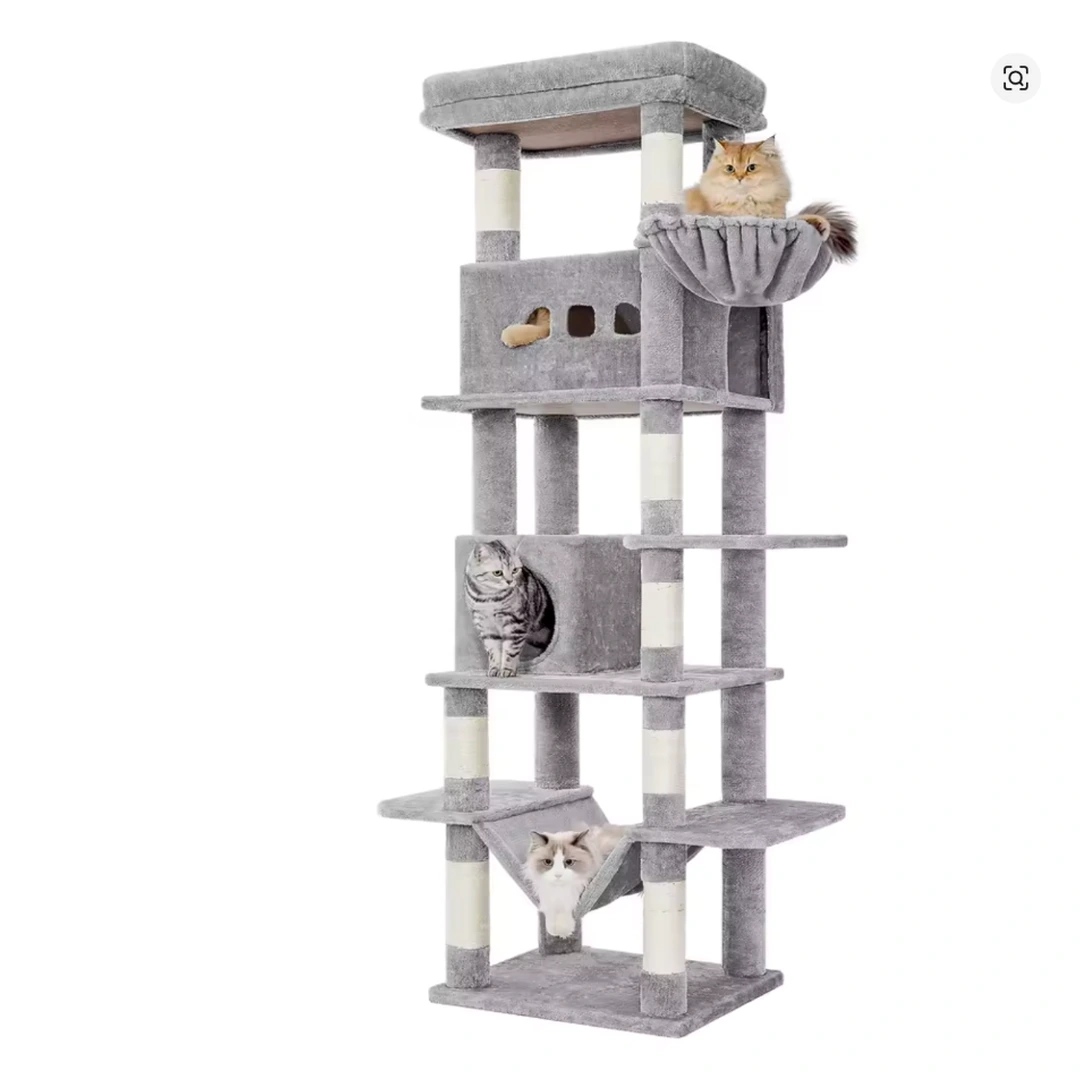
A persistent smell does not necessarily mean the whole cat tree needs to be thrown away. Urine can remain in a cover, pass through foam or reach the board beneath a bed: treatment depends on where it has travelled. When tackling a urine smell on a cat tree, first locate the contamination rather than immediately spraying a deodoriser. The aim is to treat whatever can be cleaned with a suitable product, then set aside parts whose level of saturation prevents satisfactory cleaning.
1. Urine smell on a cat tree: locate the contamination
Temporarily keep your cat away from the area and absorb any urine that is still wet with an absorbent cloth, blotting without rubbing. Press gently so you do not push liquid into lower layers. Wear gloves and ventilate the room. Before starting, consult the cat tree instructions: some coverings are removable, while others are glued to materials that tolerate moisture poorly. Only dismantle parts designed to be taken apart.
Next, examine the top, seams, edges and underside of the affected bed. A small visible mark can conceal a much larger soaked area. If the cover is removable, inspect the fabric, filling and platform separately. Note which parts are damp, stained or smelly, without bringing your face close to a contaminated surface. This inspection helps distinguish a surface incident from seepage that may require a replacement part.
2. Choose a compatible product, not a fragrance
Look for a cleaner intended for animal urine contamination, with a label confirming compatibility with the affected material. An enzymatic product may be suitable, but that description alone guarantees neither suitability for the fabric nor safety under all conditions. Check the approved materials, animal precautions, any dilution requirements, contact time and rinsing instructions. If information is missing, ask the manufacturer to confirm it before applying the product.
First test the product on an inconspicuous area, following its instructions, then check for discolouration or damage. Avoid fragrances that merely hide the problem and improvised recipes containing essential oils. Do not use bleach on urine contamination, and never mix cleaning products. If another product has already been applied, tell the manufacturer so they can advise how to proceed. Keep the packaging available throughout the cleaning process.
3. Treat the area without soaking the structure
For a removable cover, follow both the textile care instructions and the cleaner instructions: prewashing or machine washing is appropriate only when permitted. On a fixed covering, apply the product as directed, right to the edges of the contaminated area. A light mist may not reach urine that has seeped in; conversely, generous soaking risks damaging the board or joints. If the requirements are incompatible, do not treat that part.
Observe the stated contact time, then remove residues or rinse only if the instructions require it. Do not add steam, intense heat or mechanical extraction unless approved for both the product and the material. Leave to dry in a ventilated space, keeping the cat out for the prescribed period. Never put a cover back over foam that is still damp: a surface that feels dry does not confirm that every layer is dry.
4. Recognise parts that are too deeply soaked
Assess the result after everything has dried completely, without room fragrance obscuring the assessment. If the smell persists, look for an overlooked layer rather than automatically repeating applications. Filling that still smells deep inside, cardboard penetrated by urine or a swelling board are reasons to consider replacement. Before another application, first check that the manufacturer allows it and that the material has not begun to deteriorate.
A clean cover does not make the contaminated material underneath salvageable. If the soaked component is inaccessible or cannot be treated without saturating the structure, stop trying. Ask the seller whether that part can be replaced separately. Do not conceal contamination beneath fresh fabric or a waterproof layer. If a load-bearing part is distorted or damaged, prevent access to the cat tree until the manufacturer confirms what action to take.
5. Preserve familiar cues and watch for recurrence
While the cat tree is unavailable, offer a clean, familiar bed and another scratching surface. The AAFP and ISFM guidelines on feline environmental needs (2013) particularly highlight hiding places, elevated perches, separate resources, scratching, familiar smells and respectful interactions. This does not mean keeping urine contamination: instead, avoid scenting the entire environment or washing every object carrying the cat's familiar scent cues at the same time.
Do not punish your cat or force it onto the treated area. Once all conditions for reuse have been met, let it return freely. If urine incidents recur, record their location and context to discuss with your vet, rather than deciding for yourself that the problem is territorial. Any sign of pain, limping, a fall, parasites or a change in behaviour warrants a veterinary consultation. Cleaning cannot replace that assessment.
VEYRULIS is preparing a 210 cm tall, multi-level tower cat tree, still at the draft stage and not yet for sale. Its price has not been approved, and the colour variant remains to be confirmed. To prepare for possible urine contamination, check the materials and their care requirements in the instructions for the model delivered before choosing any cleaning product or treatment.
Sources and further reading
This advice is for information only and does not replace your veterinarian's opinion.