
Cat tree with a hideaway: a genuinely usable retreat
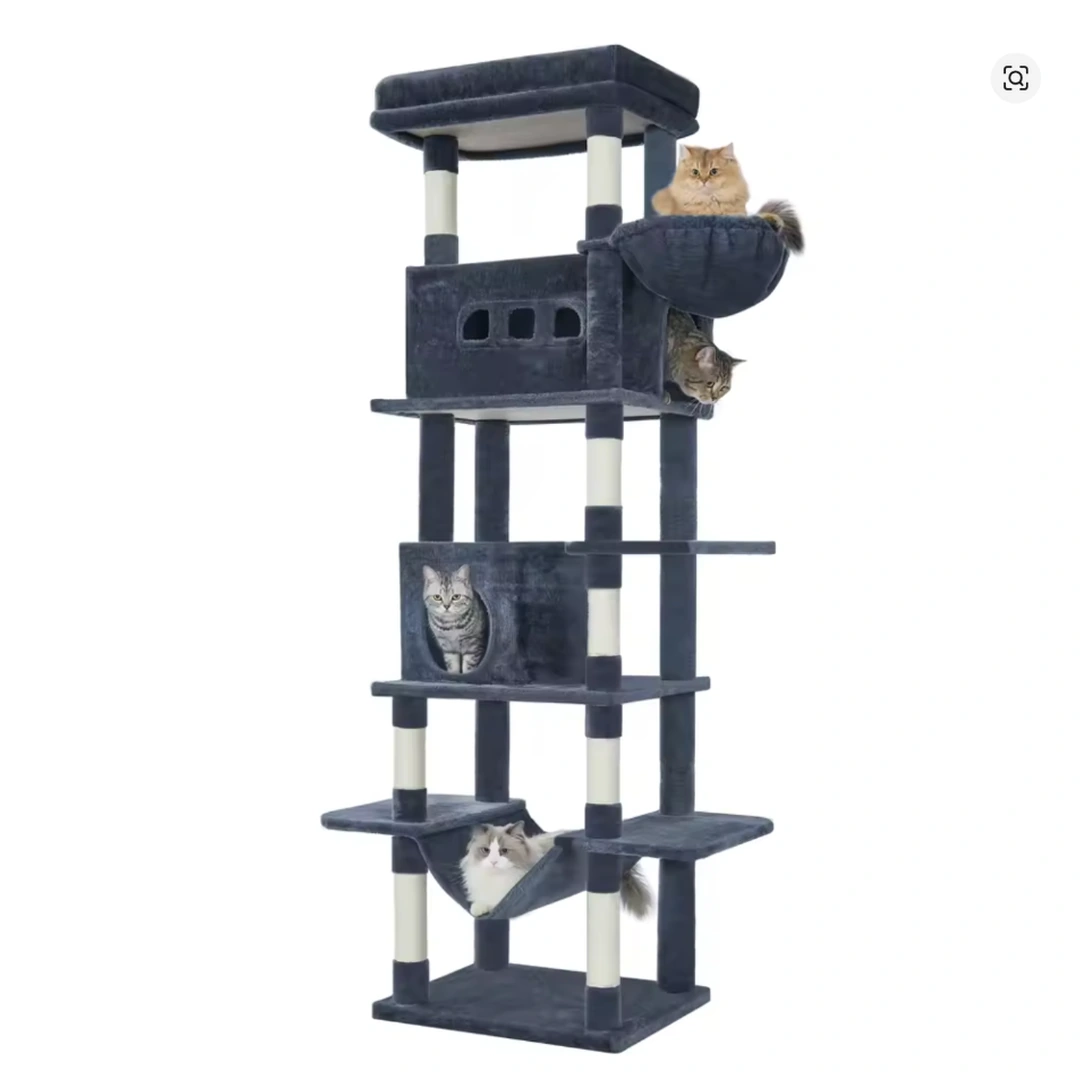
In a photograph, a little fabric-covered cabin inevitably looks inviting. Yet an appealing entrance can conceal a cluttered interior or an awkward way out. Choosing a cat tree with a hideaway therefore means looking beyond its façade. A suitable retreat lets your cat withdraw from view while retaining some control over what is happening around them. Here is how to examine its usable space, openings and ventilation before deciding whether it is the right choice.
Cat tree with a hideaway: look inside
External dimensions do not always describe the space available inside. Wall thickness, the interior covering and any cushion reduce the usable volume. Look for interior views and request internal measurements if they are missing. A broad front can conceal a shallow compartment. Also check whether a post, fixing or change in the wall profile encroaches on the floor: the area actually left clear matters more than the cabin’s advertised overall dimensions.
To picture this space, watch your cat in a bed they already enjoy, without handling them to take measurements. Do they sleep curled up, on their side or with their legs stretched out? The hideaway should allow them to enter, turn around and change position without twisting awkwardly. An outline drawn on paper helps you visualise the available floor area, but does not replace checking the internal height in the manufacturer’s instructions.
An entrance that allows genuine freedom of movement
A round, square or silhouette-shaped opening cannot be judged on appearance alone. Examine the usable passage at its narrowest point rather than its maximum width. Your cat should not have to squeeze their body or rub their sides heavily against the edges to enter. A high lower lip can also make crossing the threshold difficult. Ask for a front view and precise measurements, then check the information provided in the instructions.
Next, look at what sits immediately outside the doorway. Can your cat pause, look out and leave without encountering an obstacle? A platform or decorative feature must not obscure the passage. Inside, the covering around the entrance also needs inspecting: there should be no harsh edges, accessible loops or protruding parts. If the photographs leave any doubt, it is better to ask the seller than to assume the hideaway is safe from its appearance alone.
Hiding without losing control of the exits
The AAFP and ISFM guidelines on feline environmental needs (2013) emphasise the importance of retreats and respectful interactions. A hideaway serves this purpose if your cat can choose to withdraw into it and leave again. It does not need to be completely opaque to fulfil that role. A side opening may allow your cat to watch their surroundings without exposing their whole body, provided that a genuinely sheltered area remains available inside.
A second exit can be useful where one passage might be occupied, but only if it genuinely allows the cat to get out. A small viewing window is not equivalent to a door. Conversely, adding more openings can leave a hiding place too exposed for some cats. Look for a balance between privacy and visibility. Do not block an opening provided by the manufacturer or cut a new one: check the design in the instructions.
Check ventilation without compromising the retreat
A hideaway enclosed on almost every side deserves careful examination of its airflow. Identify the permanent openings and check that a thick cushion, flap or accessory does not obstruct them. Marketing images sometimes show an arrangement that differs from the intended use. The model’s instructions should specify compatible accessories and their positioning. Do not add a blanket across the entrance simply to make the whole arrangement look a little more cosy and inviting.
There is no universal ratio of walls to openings to apply here. Nor does fabric visible in a photograph prove that air circulates properly. Ask how the hideaway is designed and which openings remain clear once it is fitted out. During use, notice whether the interior seems stuffy or retains moisture. If so, stop offering that arrangement and seek advice from the manufacturer, rather than making your own alterations to the walls.
Observe use without forcing the hiding place
Once the hideaway is available, let your cat explore at their own pace. Do not push them inside to check whether they fit, and never prevent them from leaving. If they already like a small, familiar piece of fabric, it can provide a familiar reference, but only if adding it follows the instructions and obstructs neither the floor nor the openings. The aim is to offer a choice, not make the retreat somewhere they must enter to earn a reward.
The most useful observations concern movement: can your cat turn, settle down and then leave easily? A quick look inside does not mean the hideaway is suitable, but a brief exploration does not prove otherwise either. Avoid moving their belongings whenever they hesitate. If you notice signs of pain, limping, a fall, parasites or a change in behaviour, consult a vet. Do not try to explain these signs solely by the shape of the retreat.
VEYRULIS is preparing a 210 cm tall, multi-level tower cat tree, not yet for sale. Its price has not been approved and the colour variant remains to be confirmed. To assess its hideaway as a retreat, specifications, particularly interior space, openings and ventilation, will need checking in the instructions for the model supplied.
Sources and further reading
This advice is for information only and does not replace your veterinarian's opinion.