
Free-feeding your cat: managing ad libitum feeding with discernment
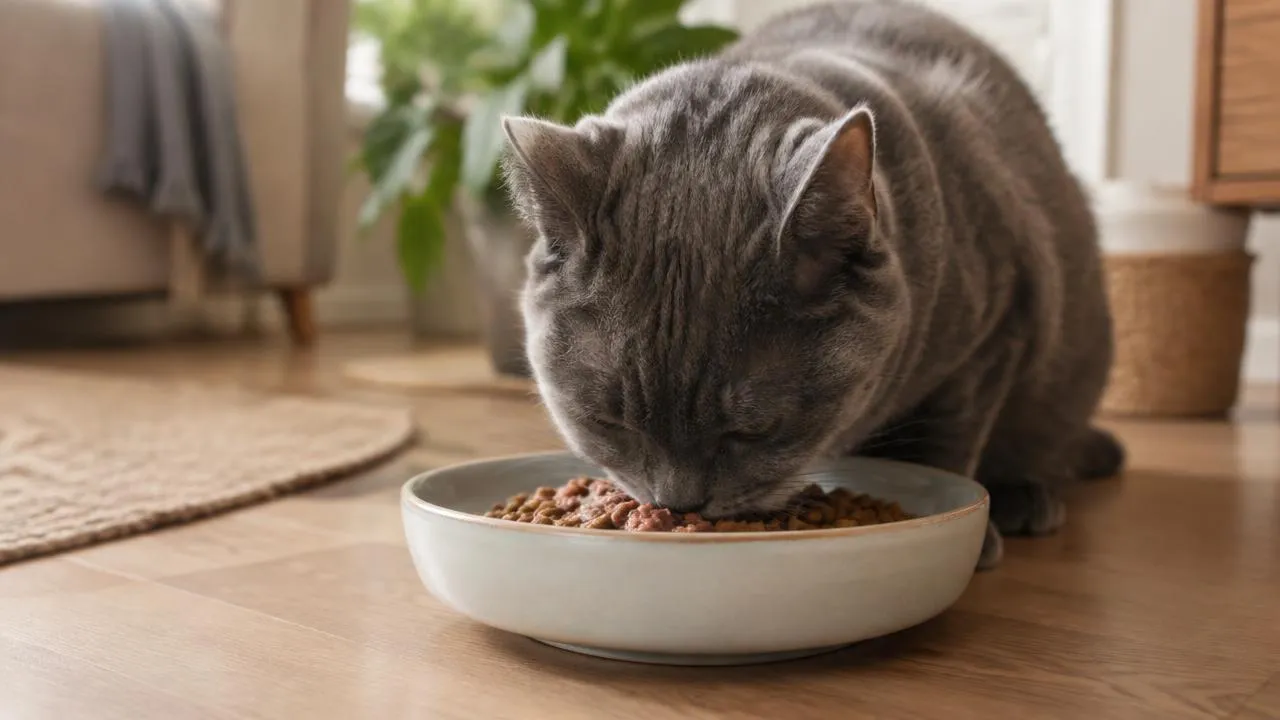
Leaving food permanently available may appear to satisfy a domestic cat’s natural inclination to eat frequent, small meals throughout the day. However, constant availability alone guarantees neither an appropriate dietary intake nor peaceful access to food. The AAFP consensus statement on feline feeding programmes reminds us that the way food is offered is equally important. Observing your companion’s habits, their immediate physical environment, and other household pets helps build a more coherent daily feeding routine. The objective is to identify useful guidelines rather than imposing a single universal model on every home. Each household can examine its available resources, the cat’s individual habits, and practical daily constraints, then review its feeding organisation whenever careful observations justify doing so.
Understanding Feline Feeding Habits
Domestic cats retain an innate inclination to consume small prey and eat frequently throughout the day. The AAFP consensus statement highlights this characteristic without prescribing an identical formula for every household. Continuous access can easily conceal the quantity actually consumed, making dietary habits harder to interpret over time. A visible feeding schedule can help household members coordinate, particularly when several people share feeding duties. Noting down what has been served and what has been eaten provides clearer insight than simply refilling the bowl without keeping track of meals.
To determine whether free-feeding genuinely suits your companion, observe their behaviour around the bowl closely. Notice whether your cat returns at different times, eats hastily, or leaves food behind between visits. These observations facilitate informed discussions about daily routines rather than simply assuming an ever-full bowl meets every need. Check whether the cat has a quiet retreat after eating, as the ability to move away without having to encounter another cat is important in overall household arrangements. Behavioural observations remain strictly individual and should always be interpreted with careful prudence.
Evaluating Space and Resource Access
Available food does not guarantee that every cat can approach it comfortably. In a multi-pet home, check whether another animal occupies the area, monitors passageways, or discreetly blocks access. Tension between cats is not always noisy; altered movement patterns and subtle avoidance provide valuable clues. General advice cannot replace recommendations tailored to an individual cat’s medical history. Age, condition, and specific requirements can all influence the most appropriate choices. Any feeding decision prompted by a medical concern should always be validated by your veterinary surgeon.
The AAFP recommends offering several small meals throughout the day. Dividing the daily ration helps structure food intake, though the appropriate amount must always consider the individual cat. Ask your vet how to measure portions accurately, whether using scales or a suitable measuring cup. When comparing several days, keep environmental conditions as consistent as possible. A dated written log helps identify trends and report facts accurately without exaggeration. If your companion's condition ever raises immediate concern, do not wait for the end of a recording period to seek guidance.
Managing Daily Feeding Routines
Monitoring body weight and physical condition complements mealtime observation. This attention is especially important for senior, delicate cats, or those with specific needs. An isolated measurement is far less informative than regular tracking conducted with advice from your veterinary team. A straightforward routine is often easier to maintain consistently than a complicated system. Check regularly that bowls and feeding devices remain clean and fully functional in accordance with manufacturer instructions. The user guide for your exact model remains the essential reference for ongoing care and maintenance.
A programmable device can divide daily rations into portions, but it does not necessarily recreate natural foraging behaviour. The AAFP highlights that automatic dispensers generally do not promote searching or predatory activities. Check proper operation against the manual of your exact model. Be sure to inform your veterinary professional of all foods offered and how they are measured. These details prevent vague estimates and support constructive discussions about the cat's overall daily ration. Avoid introducing dietary restrictions without professional advice if you are uncertain of the animal's needs.
Methodical Monitoring and Adjustments
To enrich foraging opportunities, the consensus document highlights food puzzles and hidden feeding stations. A puzzle should be selected according to the animal's individual abilities; begin with simple designs that require minimal effort. Always ensure that the daily ration remains accessible and that your cat is eating properly. Puzzles are not necessarily suitable for every cat or living situation. The aim is to provide an accessible activity without making food difficult to obtain. Re-evaluate their use promptly if your pet appears frustrated or cannot access their meal.
Any change in routine should be carefully observed over several successive meals. Note feeding times, leftovers, and general behaviour, adjusting the routine according to documented facts rather than impressions. If appetite changes unexpectedly or causes concern, consult your vet rather than making frequent food changes. Automated appliances and their available features vary between models. Before relying on automatic programming, review product instructions thoroughly and test the device with your cat present. Direct observation remains essential to verify how the setup works in practice.
At Accessoires Chat, a black automatic kibble dispenser with Wi-Fi is currently in development and is not yet on sale. Its price has not been validated, and the image is illustrative. Technical specifications remain subject to confirmation in the instructions of the specific model delivered.
Sources and further reading
This advice is for information only and does not replace your veterinarian's opinion.