
Automatic cat feeder: how to use it properly, and what to check
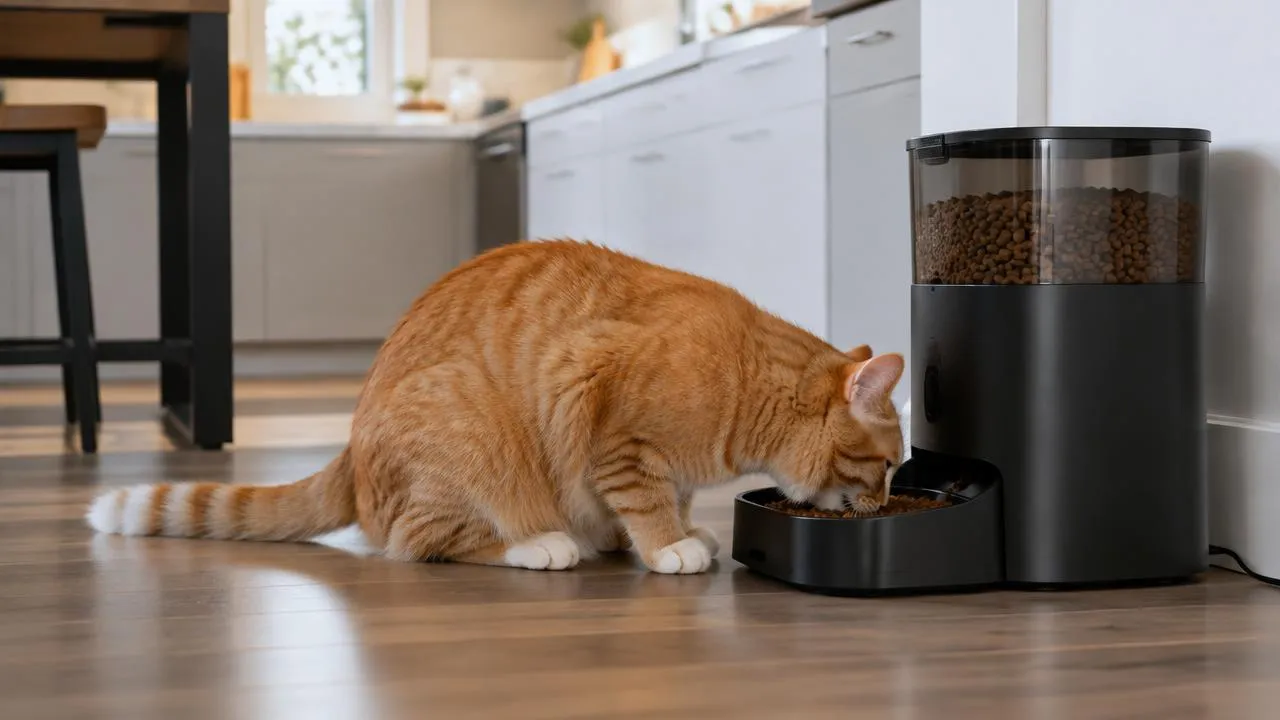
An automatic cat feeder serves meals at fixed times, even when you are away, and some models can be controlled via an app. Used properly, it can help divide your cat’s daily ration. However, if poorly adjusted or left unchecked, it can also mask a cat eating too much or too little. This guide draws on veterinary recommendations regarding feline feeding; the exact specifications of the model we are preparing remain to be confirmed.
What research says about how to feed a cat
The American Association of Feline Practitioners (AAFP) consensus on feeding programmes notes that cats are solitary hunters of small prey: they prefer eating frequently, in small quantities, and alone. In most homes, however, they receive one or two large meals, or a bowl left full for free-feeding, always in the same place.
According to the consensus, this routine meets neither the need to eat alone nor the need for multiple small meals. It can encourage inactivity or even distress, often leading to overeating and weight gain. Highly palatable biscuits that are swallowed quickly, alongside the boredom of an understimulated cat, further increase this risk.
The resulting recommendation is simple: divide the daily ration into several small meals over 24 hours, using puzzle feeders, kibble hidden around the home, and multiple feeding and water stations where possible.
What an automatic feeder offers, and its limitations
The AAFP consensus mentions automatic feeders as a helpful way to divide meals, while noting that they generally do not allow cats to forage or 'hunt' for food. A programmed feeder can provide a steady baseline, but it cannot replace play or sessions where your cat must make an effort to earn biscuits.
Nor can it replace your own supervision. The veterinary panel stresses that owners must ensure the cat actually eats a suitable amount and can reach its food. A device that dispenses on schedule does not tell you which cat ate the meal, or whether it was eaten at all.
Finally, a feeder is not a solution for leaving a cat alone for days without visits. Blockages, empty hoppers, mechanical faults, power cuts, or network failures can all occur; the only reliable safeguard is having someone check on your cat in person.
Rations, weight, and signs to watch for
The daily ration depends on the food, your cat’s age, activity level, and condition: follow the packaging guidelines, seek veterinary advice, and divide this amount by the programmed number of meals without adding extras. Weigh the kibble on kitchen scales during the first few days to verify what the machine actually dispenses.
The AAFP consensus recommends monitoring body weight and condition regularly, particularly in older, frail, or chronically ill cats, or those with specific needs. Keep an eye on behaviour too: a cat that constantly begs, guards the bowl, or suddenly stops visiting its feeding station warrants careful attention.
A cat that stops eating, loses weight unexpectedly, or shows an abrupt change in appetite must be examined by a vet, even if the feeder works perfectly. Remember water as well: dry food provides very little moisture, so clean water should be available nearby, though not placed right against the food bowl.
Before buying: points to verify on the exact model
A product listing is not enough: read the manual of the specific version delivered. Check accepted kibble sizes and shapes, true hopper capacity, number of meals, minimum portion size, dispensing accuracy, power options (mains, batteries, or both), behaviour during power cuts, lid closure security, removable dishwasher-safe parts, and food-contact materials.
For Wi-Fi models, check compatible network bands, the app, its language, required accounts, data collection, and crucially what happens if the connection fails: programmed meals must continue to dispense offline. Be cautious of product galleries mixing screen-operated and app-connected versions: they are not the same appliances.
If any of these details remain unclear, request the manual before ordering, and keep your regular bowl handy for the first few days.
In multi-cat homes, and during the first few days
The AAFP consensus highlights that cats eating side-by-side may not cope well: forcing them to share a feeding spot can cause anxiety, stress, and health issues. It recommends multiple, visually separated feeding stations in areas where each cat feels safe, away from litter trays. It also notes programmable microchip feeders to reserve portions for specific cats.
A standard automatic feeder serves whichever pet approaches: a dominant cat can easily eat another's portion. Watch who eats what, and set up a second feeding station in another room if needed.
For setup, place the device in a quiet area, trigger a first feed while present (some cats are startled by the noise), and leave the old bowl out for a few days. Check the hopper, served portion, and bowl cleanliness daily, cleaning parts according to the manual.
At Accessoires Chat, a black automatic kibble feeder in a Wi-Fi version is currently in preparation: it is not yet on sale, its price is not finalised, and its visual is illustrative. The seller’s galleries mix a connected version and a screen version; capacity, number of meals, minimum portion size, power supply, and offline operation remain to be confirmed against the manual of the model actually delivered.
Sources and further reading
This advice is for information only and does not replace your veterinarian's opinion.