
Kitten feeding: meal rhythms, behaviour, and hunting play
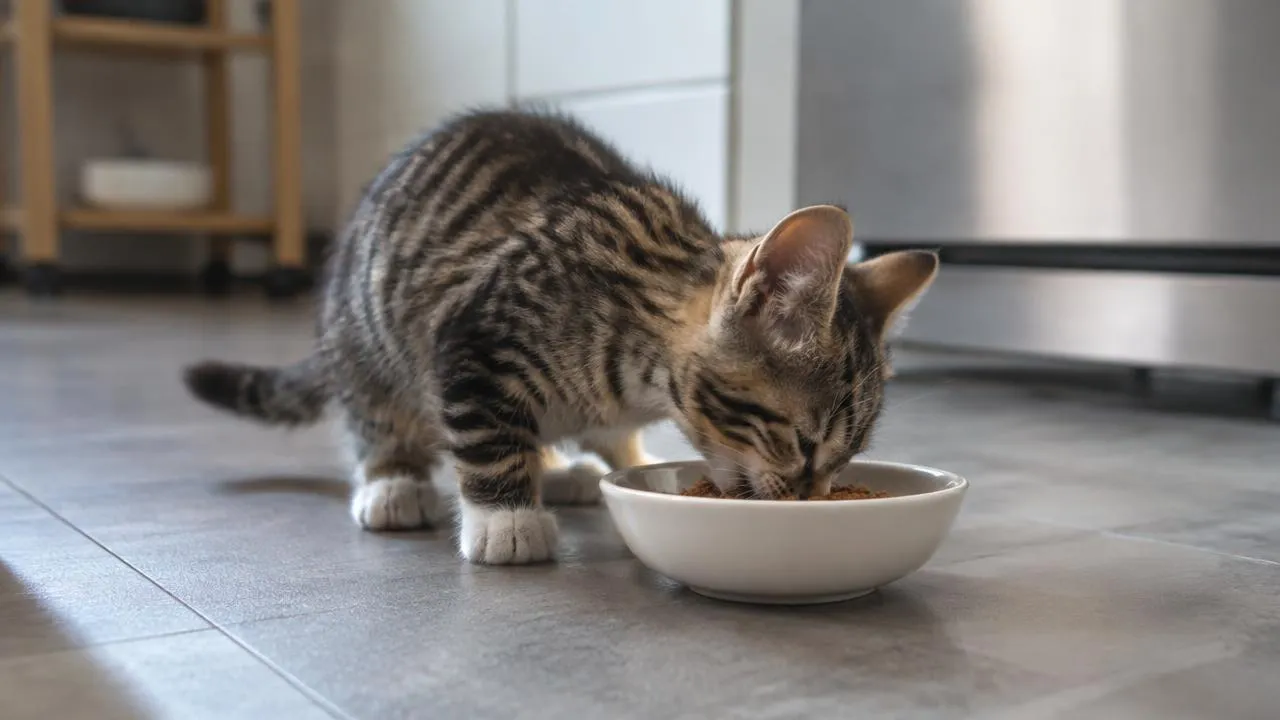
Feeding a kitten involves far more than simply topping up a food bowl: the way nourishment is offered matters just as much in their everyday routine. Felines are natural carnivores, and many domestic cats retain a strong predatory hunting instinct. Consensus recommendations from the American Association of Feline Practitioners (AAFP) describe cats as preferring to eat frequently, in small quantities, and entirely on their own. These behavioural benchmarks help caregivers reflect on mealtime rhythms and food-related activities, without replacing tailored nutritional guidance from a qualified veterinary surgeon. The following recommendations focus on the feeding environment and household meal habits rather than any specific food formulation. They encourage you to observe your young cat closely, ensure their portions remain comfortably accessible, and adjust the overall organisation based on what actually happens within your home.
Why the rhythm of meals genuinely matters
In the wild, felines catch small prey and must consume several catches daily to meet their nutritional needs. The AAFP consensus statement reminds us that foraging and securing food occupy a significant proportion of a cat’s daily time.
For a kitten, the key takeaway is dividing food into frequent small meals, rather than searching for a universal timetable, which the consulted recommendations do not provide. The appropriate daily portion and the exact number of meals depend on their diet and individual situation.
Leaving food out at all times is not automatically the best solution. The consensus stresses that free-feeding, much like offering large meals once or twice a day, can overlook a feline’s natural need to eat frequent small amounts alone.
Eating alone and feeling completely safe
Cats are solitary hunters by nature and generally prefer to eat well away from other animals. This natural preference deserves careful consideration as soon as several pets share the household, because a single shared dish or closely grouped feeding bowls can easily generate competition and subtle friction between them.
Tension between companion cats is not always loud or immediately visible. The AAFP guidelines explain that competition surrounding food resources can lead to social conflicts or heightened aggression in the moments leading up to mealtimes, even when the underlying signs of stress go unnoticed by owners.
Set up distinct, separated feeding areas and make sure each individual cat can comfortably reach their portion without being blocked, trapped, or challenged by another pet. The consensus statement specifically recommends providing multiple, separate food and water stations across the living environment.
Making foraging an engaging daily activity
In an indoor home environment, a cat depends entirely on humans to obtain food and may have very few opportunities to search, stalk, or hunt. The consensus points to a daily schedule that can easily become impoverished when nourishment is permanently and immediately accessible without any mental or physical effort.
One practical option involves placing a portion of their daily kibble inside a feeding puzzle, where the cat must manipulate the object to release the food. The statement indicates that these enrichment devices, along with hiding kibble around the house, increase physical activity while delivering valuable mental and sensory stimulation.
It is also possible to offer small rations in different or unfamiliar places to stimulate natural curiosity and exploratory behaviour. Elevated feeding spots can certainly be considered, but only if the kitten's physical condition, age, and coordination allow them to navigate these heights safely.
Hunting play complements, but never replaces, meals
A cat’s innate predatory instinct does not disappear simply because food is served inside an ordinary dish. According to the AAFP, hunting and foraging represent normal feline behaviours that living exclusively indoors can restrict, unless purposeful opportunities for enrichment are deliberately provided.
To maintain a reassuring routine, you can present part of the daily ration inside a food puzzle or in straightforward hiding spots, whilst monitoring the amount actually eaten. While an automatic feeder can help dispense several meals, the consensus specifies that such devices generally do not supply predatory searching and hunting experiences on their own.
Do not let feeding games become an insurmountable obstacle that causes frustration or prevents your kitten from getting proper nourishment. Choose an activity suited to the kitten's developing abilities, and always make sure they know how to access their portion easily.
Observing your kitten and adjusting with care
The consensus recommends routinely monitoring your pet’s weight and body condition score, with particular attention given to animals with specific dietary requirements. For a kitten, always have the daily portion and its progression approved by a veterinary surgeon: the dietary behaviour document does not specify exact feeding quantities for kittens, nor does it establish growth curves or weaning protocols.
Take time to observe how your kitten behaves both before and during their meal. Are they able to access their food calmly, securely, and without any distress or obstacle?
The AAFP recommendations are designed to bring domestic feeding practices closer to natural feline behaviours: small frequent meals, the opportunity to eat in peace, active foraging, and well-spaced resources. The goal is never to impose a single rigid system on every kitten, but rather to adapt these principles to your home.
At Accessoires Chat, a black automatic kibble feeder with Wi-Fi connectivity is currently in preparation and is not yet available for sale. Its retail price is not finalised, and the image provided is illustrative. The announced features and operational functions remain subject to confirmation on the instructions manual of the model that is actually delivered; be sure to check the programming guidelines and compatible foods in that documentation before using it to organise your kitten’s daily feeding schedule.
Sources and further reading
This advice is for information only and does not replace your veterinarian's opinion.