
Litter training a kitten: preparing an accessible setting and observing
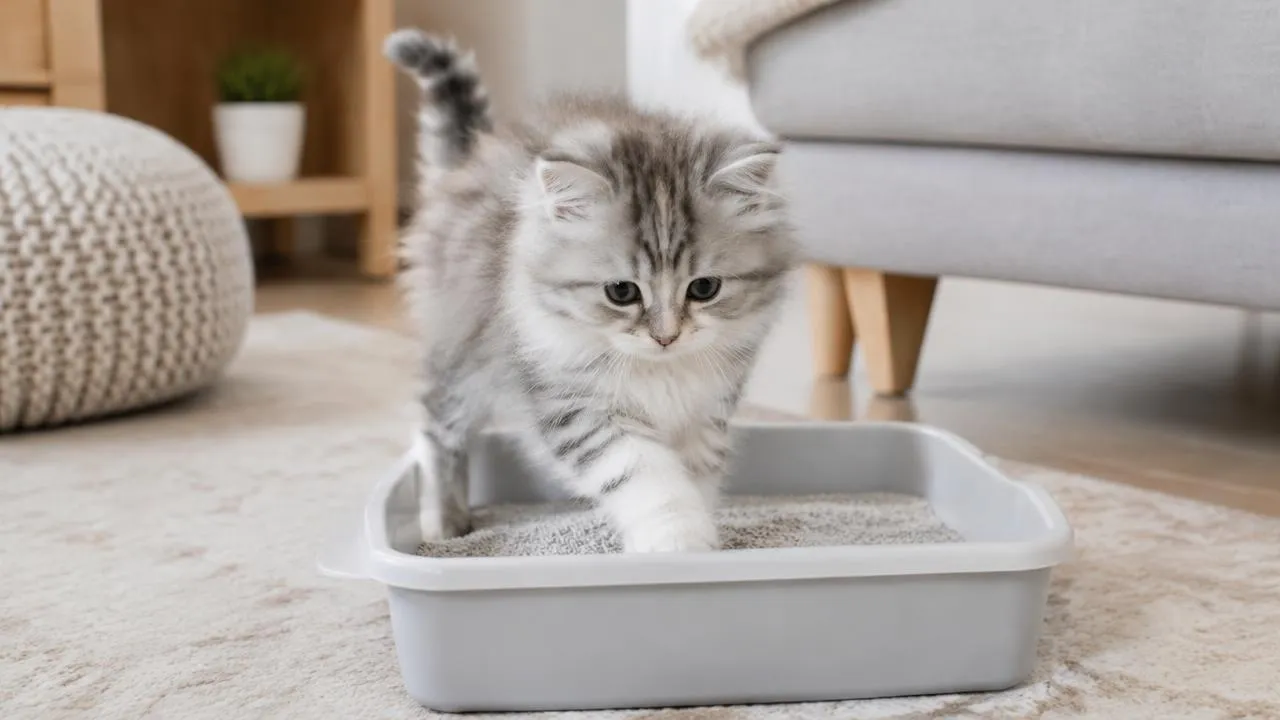
Welcoming a young cat raises many practical questions, including toilet use. To litter train a kitten, it is better to start by checking its environment rather than seeking an express method. The 2014 AAFP/ISFM guidelines focus on preventing and managing feline house-soiling; they provide criteria for trays and organisation, but not a universal kitten training programme. Here is how to use these benchmarks without making them say more than intended.
Preparing a toilet with simple access
The AAFP/ISFM guidelines state that the opening must allow easy access, regardless of the container's design. When setting it up, examine the entrance and interior space concretely rather than relying solely on a label intended for young cats. The key criterion is the ability to use the tray. The provided sources do not allow for setting a universal entry height based on the kitten's age or specific breed.
The text also insists on a sufficient size for elimination postures. Buying a very small tray because the animal is young does not, by itself, constitute a choice validated by these recommendations. Look at current usage possibilities and reassess the container when its situation changes. In case of hesitation regarding accessibility or persistent difficulty, seek advice from a veterinarian rather than trying to impose equipment chosen for its small footprint alone.
Installing several useful markers in the home
For a household with one cat, the AAFP/ISFM suggests two trays located in separate places. This benchmark concerns the general organisation of toilets; it does not depend on a training objective. Adjacent containers are considered a single large tray. Therefore, seek truly distinct locations, taking into account the journey required to reach them, and not just two objects that could be stored together in an available utility space.
Quiet areas are preferable to busy places, according to the document. Also separate toilets from food and water: their proximity can discourage elimination. In multi-storey dwellings, recommendations indicate at least one tray per level. If other cats are present, check that the newcomer can access the sites without an imposed encounter with them; the presence of a toilet does not guarantee its social accessibility for a timid kitten.
Choosing the substrate without making preference an obligation
The AAFP/ISFM generally suggests fine, unscented, clumping litter, noting that preferences differ between cats. This general advice must not become an age rule invented for the kitten. If you have a specific question about a substrate and your young animal, have it clarified by the veterinarian. The provided texts justify neither a special recipe for all kittens, nor a promise of accelerated learning linked to a specific material.
The recommendations describe comparing several trays and substrates as a way to evaluate preferences. They also signal that perfumes and deodorants can repel cats. In practice, try to understand what is being used rather than masking smells for your own comfort. A container attractive to its owner may remain poorly accepted by the animal, and a product presented as practical never removes the need for regular maintenance and cleaning.
Observing without punishing or promising a deadline
The guidelines advise against punishment due to its possible consequences on house-soiling difficulties. An accident should not trigger a confrontation. Instead, note where it occurred, which trays were accessible and what had just changed. The document emphasises a precise chronology of problems. This approach helps in asking the right questions instead of turning every deposit into proof of a training failure during the kitten's development.
No number of days to make a kitten clean can be established from the two sources used. Beware of rigid calendars and exercises presented as mandatory without support in these texts. Your benchmark is the effective use of the toilets and the observed comfort. If difficulties persist, provide the practitioner with a simple plan of resources and the notes collected, to examine together the possible causes and relevant adjustments.
Checking health and staying cautious with equipment
The MSD Veterinary Manual mentions frequent urination, urinary blood, straining and urinating outside the tray as possible signs of lower urinary tract diseases. In a young cat too, the explanation by training alone should not be automatic. Report these manifestations to the veterinarian. AAFP/ISFM recommendations require searching for medical causes in the evaluation of house-soiling, rather than assuming an exclusively behavioural origin for these specific incidents.
If you later consider an automatic device, no age or size limit should be extrapolated from another model. For these conditions, as well as for authorised substrates and operation, check the manual of the exact model. The equipment is not a guaranteed educational method. The priority remains a set of adapted and available toilets, with monitoring of usage and veterinary help when observations raise a health question or concern.
Accessoires Chat has a connected automatic litter box with a round format in development. It is not yet commercialised and its price is not validated. The image is illustrative; it confirms no specifications or usage conditions for a kitten. The characteristics must be confirmed on the manual of the delivered model, which will be the reference to consult before considering this type of equipment for your home.
Sources and further reading
- AAFP and ISFM Guidelines for diagnosing and solving house-soiling behavior in cats (Journal of Feline Medicine and Surgery, 2014)
- Manuel vétérinaire MSD — Lower Urinary Tract Disease in Cats
This advice is for information only and does not replace your veterinarian's opinion.