
Cat tree for a blind cat: creating safe landmarks
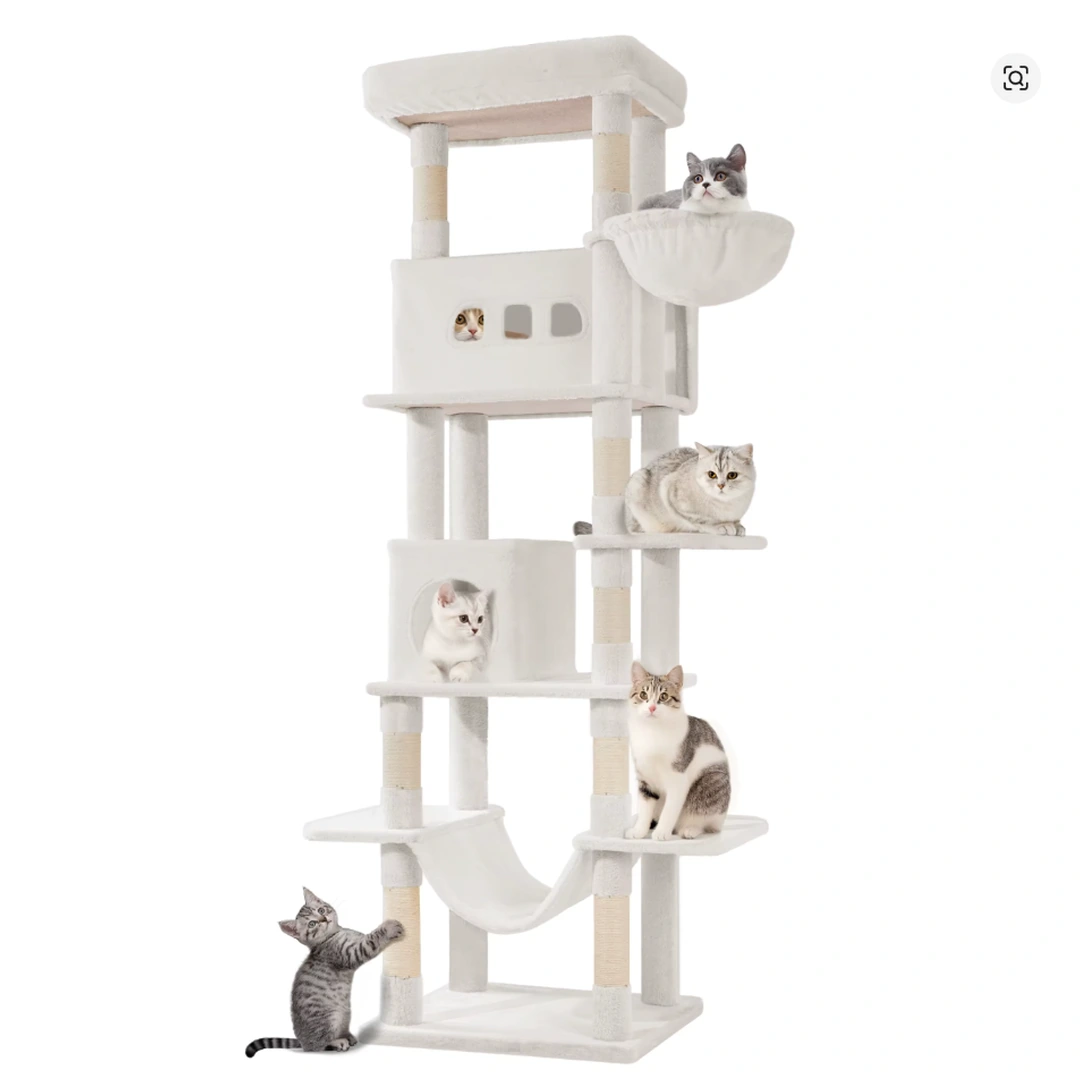
For a blind cat, discovering a cat tree is mainly about being able to find what it has already explored. A familiar surface beneath its paws, an arrival point that stays clear and a quiet presence can help it build routines. Searching for a “cat tree for a blind cat” therefore means thinking beyond height alone: how can each movement become predictable? The aim is not to push your cat to climb, but to offer a space it can understand, with stages it can accept, repeat or leave behind at its own pace.
Cat tree for a blind cat: keep the route consistent
Start by observing the route your cat naturally takes to reach the area. Keep it clear, especially on the approach to the tree. A basket temporarily placed in front of the entrance or a chair pulled out can alter its landmarks. Daily consistency matters more than a perfect arrangement on installation day alone.
Once your cat has discovered the route, avoid rotating the tree, swapping its components around or changing its access for variety. Something that seems trivial to a sighted person may require another exploration. Tell other household members too: nearby objects form part of your cat’s landmarks.
If a change becomes essential, limit it to one element and support rediscovery from the floor. Do not put your cat straight back onto its former sleeping spot. It needs to identify what has changed for itself, then find a familiar exit without being rushed or encouraged to go further.
Provide tactile landmarks that are easy to recognise
A tactile landmark helps identify a particular place; it is not about multiplying sensations. A surface with a distinctive feel, kept at the same approach point, can signal the start of the route. Choose something the paws encounter naturally, without a detour, and that will not slip as your cat passes.
On the tree, first use the textures already present: the first platform’s covering, the scratching area or the edge of a bed. Before adding anything, check the manufacturer’s instructions for permitted accessories and attachment requirements. Do not improvise markers using cords, dangling items or detachable pieces.
Keep the arrangement simple: the same feel in the same place. Covering every surface with identical material could remove useful differences. Instead, watch whether your cat finds the first foothold and stops in the right place. If it hesitates, allow time before adding another landmark that could make things harder to interpret.
Support discovery without taking control
Choose a quiet moment when your cat is awake and receptive. Gently signal your presence before approaching, then let it sniff the base and touch the surfaces. Speak from a steady position rather than calling from several directions. Your voice should accompany discovery, not prompt a jump.
Introduce the access from floor level, without placing your cat on an unfamiliar platform. Avoid moving its paws by hand or pulling it towards a level. Exploring may mean simply sniffing a post and walking away. That freedom to withdraw keeps the interaction respectful of its choices.
When your cat climbs independently, remain available without blocking its return. Do not lure it higher with a treat placed out of reach. The way down deserves as much attention as the climb: let your cat discover it, and end the session before encouragement becomes insistent.
Keep familiar scents and separate resources
The AAFP and ISFM guidelines on feline environmental needs (2013) highlight hiding places, elevated perches, separate resources, scratching, familiar scents and respectful interactions, among other considerations. They provide a general framework, not specific approval of any cat tree for a blind cat.
With this in mind, preserve familiar scents on items already in use, without adding fragrance to mark the route. If a familiar textile is intended for the bed, its use must follow the instructions and must not change the footing. Avoid replacing all items carrying familiar scents at once.
The tree should not concentrate all your cat’s needs in one place. Keep its usual drinking, feeding and toileting areas separate, with recognisable paths. Maintain a resting option at floor level too: enjoying a familiar refuge without climbing remains a valid choice, even with a perch right beside it.
Observe habits without imposing progress
Look for concrete signs: does your cat find the entrance, recognise its first platform and return voluntarily? It does not need to use the whole tree. One regularly chosen level may suit its preferences. Do not turn exploration into an exercise with a target height or deadline.
Check any technical questions about access, protective features or accessories against the manufacturer’s instructions. If a configuration requires a jump onto an unfamiliar surface, do not try to persuade your cat to attempt it. Favour the space it already understands over progress whose safety you cannot assess.
Consult a vet if you notice signs of pain, limping, a fall, parasites or changes in behaviour. New hesitation should not automatically be attributed to blindness. While awaiting advice, avoid further encouragement to explore and keep your cat’s familiar resources accessible at floor level.
VEYRULIS is preparing a 210 cm tall, multi-level tower cat tree that is not yet for sale. The price has not been approved, and the colour variant remains to be confirmed. Specifications will need checking in the instructions for the model delivered: for a blind cat, this height guarantees neither a predictable route nor suitability for its habits.
Sources and further reading
This advice is for information only and does not replace your veterinarian's opinion.