
Cat tree and child safety: living together peacefully
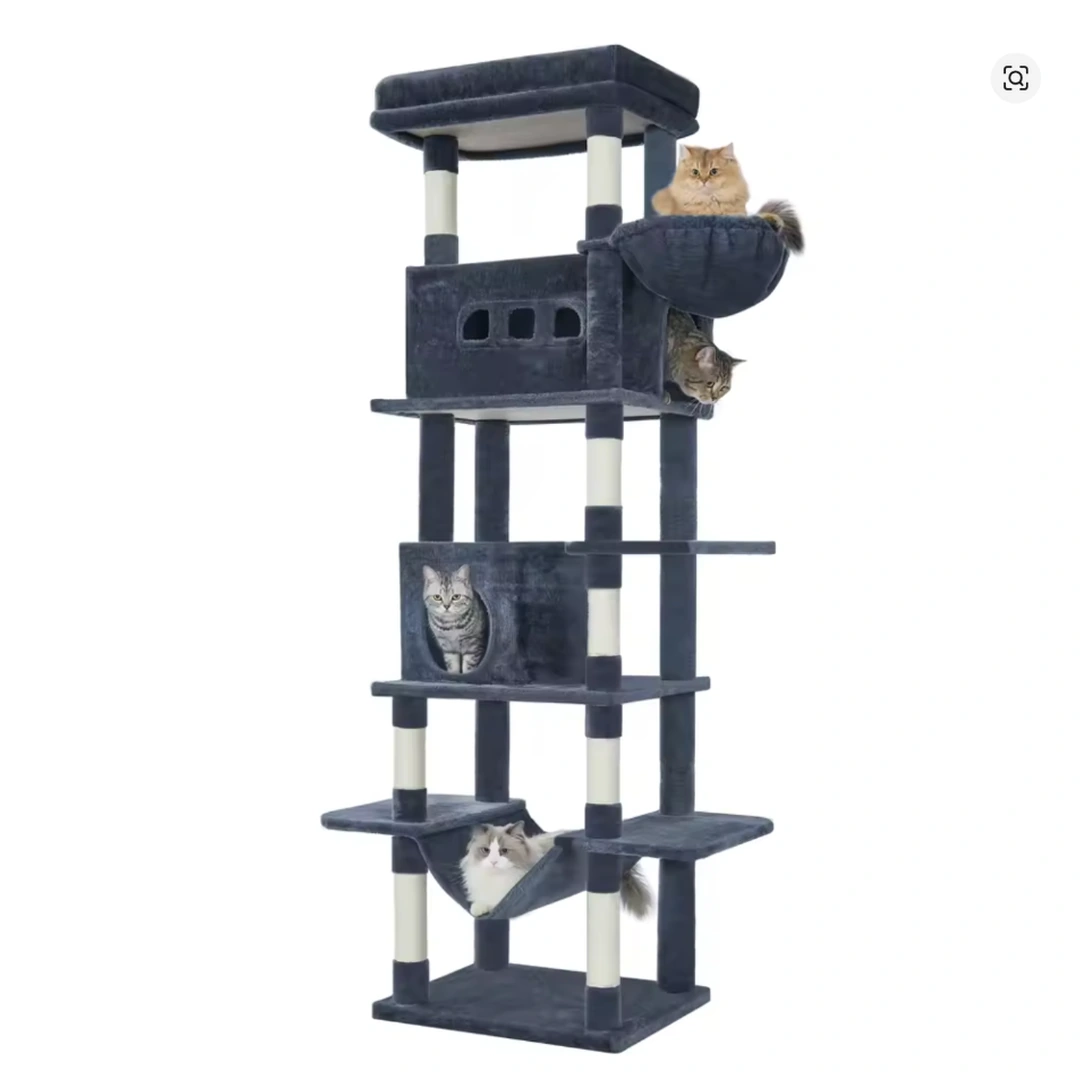
A young child sometimes sees a cat tree as a little playground: a step, a hiding place, something to grab. For the cat, the same structure is a territory for retreating, watching and scratching. Combining a cat tree with child safety therefore takes more than a reminder about the rules. The aim is to make climbing inaccessible whenever supervision is unavailable, protect the cat’s resting time and teach interactions that always leave the animal a choice.
Cat tree and child safety: prevent access rather than rely on a ban
Saying “you must not climb” is useful, but does not provide sufficient protection. A small child may try again out of curiosity, even after understanding the instruction. Whenever no adult can intervene immediately, physically separate the spaces: the child must not be able to reach the structure freely. The arrangement chosen must suit their stage of development.
A barrier is only appropriate if it genuinely prevents the child from getting through without creating another hazard. Check its intended use, installation and limitations in the manufacturer’s instructions. Do not assume that an improvised obstacle or a door left ajar is enough. The cat must retain independent access to its protected space without having to squeeze past the child.
Look for unintended climbing aids too: a small chair moved by the child, an upturned basket or a toy left on a platform. Put these objects away and offer physical activities elsewhere. Never try to test the cat tree’s strength by letting the child hang from it: this structure is intended for cats, not human play.
Make the refuge a place where nobody disturbs the cat
The AAFP and ISFM guidelines on feline environmental needs (2013) recommend, among other things, hiding places, elevated perches, separate resources, scratching opportunities, familiar smells and respectful interactions. In a family with a young child, this means the cat must be able to retreat without being followed or approached for attention.
State a short rule, using the same words every time: “When the cat is in its tree, we leave it alone.” This applies to adults too. Do not put a hand inside its hideaway, pull its tail or carry it onto a platform to engineer an encounter with the child.
Height alone does not guarantee peace if the child shouts underneath or hits the posts. Keep the area around the structure calm as well. Keep children’s toys outside this zone and avoid gathering all the cat’s resources there: it must be able to meet its needs without relying on a constantly occupied route.
Supervise encounters without holding the cat in place
The first observations should take place with an attentive adult close enough to interrupt a sudden movement. Being in the same room while looking at a phone is not enough. Encourage the child to watch the cat from a little distance, keeping their hands close to themselves, and speak softly rather than repeatedly calling it.
If the cat comes down and approaches of its own accord, you can offer an interaction without holding it or blocking its way back. Guide a gentle, brief stroke, then pause. A cat that stays may want to continue; one that moves away must be free to leave. The child learns that an encounter is not an automatic entitlement.
A tense body, flattened ears, a lashing tail or an attempt to withdraw are signals to stop. Calmly move the child away without scolding the cat. Do not expect a small child to interpret these signals alone: the adult remains responsible for maintaining distance and ending the interaction, even when everything seemed to start well.
Respond calmly to climbing attempts
If the child puts a foot on a resting platform, intervene immediately to stop the climb and return them safely to the floor without shaking the structure. Use a simple sentence: “This tree is for the cat.” Avoid lengthy explanations during the incident; afterwards, suggest an appropriate activity in another space.
Do not turn the ban into a chasing game. A dramatic reaction may encourage another attempt. The same calm response from every adult makes the boundary clearer. Explain to visitors and older children too that they must not encourage climbing or place an object high up to entertain the little one.
After an attempt, identify what made it possible: access left open, a distracted adult or an object used as a step. Correct the arrangements before allowing shared use of the space again. If the structure has undergone unusual strain, stop using it and consult the manufacturer’s instructions for the necessary checks; looking intact is not enough to draw a conclusion.
Reassess the rules as the child grows
An effective arrangement can become inadequate when a child learns to move a chair or open a fastening. Reassess access and habits, particularly after a new motor skill develops. It is better to strengthen separation at the first attempts than to keep repeating reminders in the hope that curiosity will disappear.
Watch the cat too: does it now avoid its refuge or seem hesitant to cross the room? Consult a vet about any behavioural change, sign of pain, limping, fall or presence of parasites. While awaiting advice, protect the cat’s peace and stop imposed interactions. The aim remains predictable coexistence, not constant closeness.
VEYRULIS is preparing a tall, multi-level cat tree measuring 210 cm, not yet on sale. The price has not been approved and the colour variant remains to be confirmed. Its specifications will need checking in the instructions for the model delivered. With a young child, this height will never replace suitable separation or supervision of interactions.
Sources and further reading
This advice is for information only and does not replace your veterinarian's opinion.