
Cat tree for a kitten: making those first explorations safer
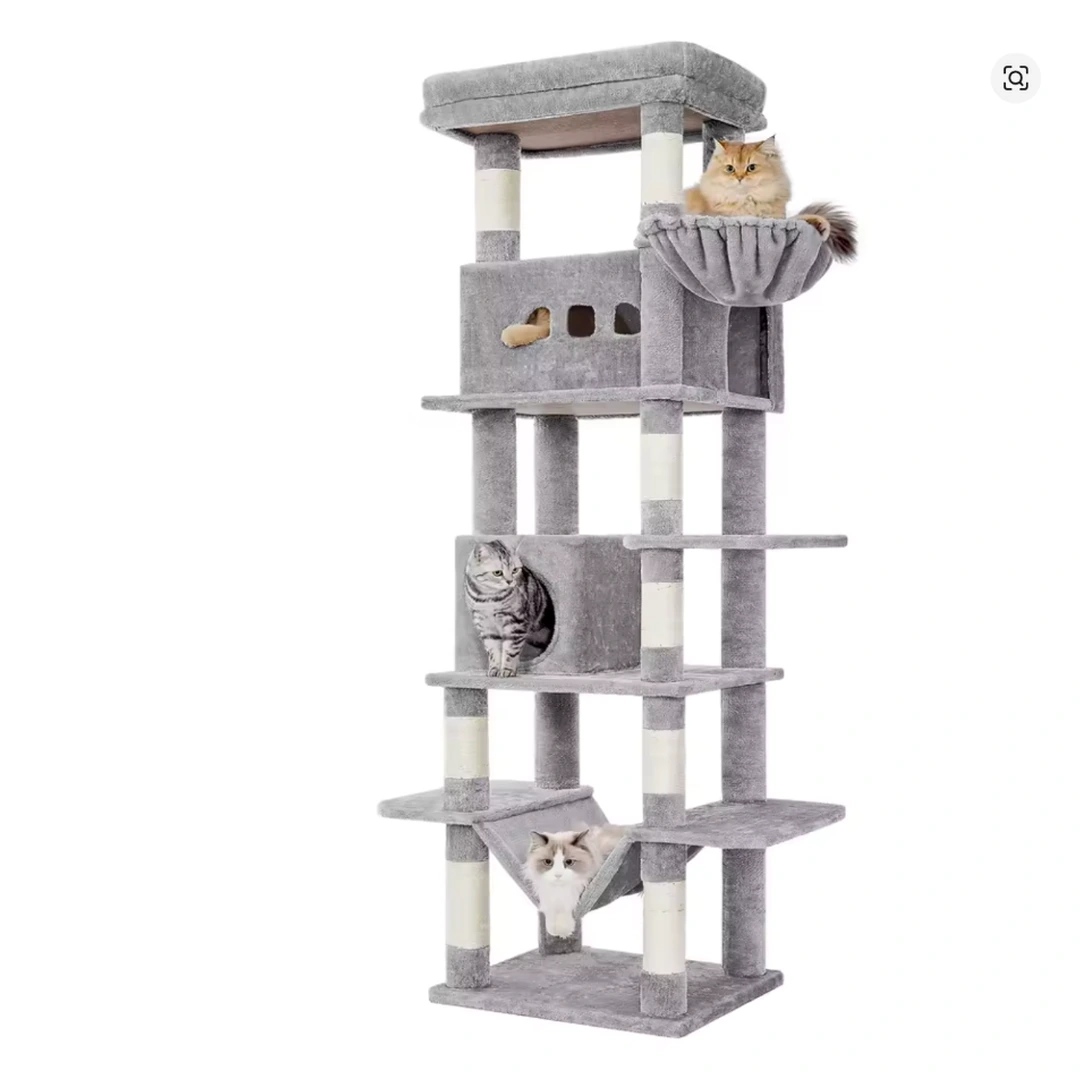
A kitten may climb enthusiastically, then hesitate when faced with the way back down. Its desire to explore does not mean it has already mastered every foothold. When introducing a cat tree for a kitten, it is therefore better to proceed at its pace, under supervision, rather than immediately encouraging it towards the top. The aim is not to teach it a feat of agility: it is to let it observe, scratch and rest, while keeping routes back down simple and avoiding risky encouragement.
1. Prepare an introduction at kitten height
Before the first approach, check the manufacturer’s instructions for conditions of use, any restrictions and necessary checks. Examine accessible surfaces: no loose part, damaged edge or poorly secured accessory should attract those little paws. If anything remains unclear, ask the manufacturer for clarification before allowing your kitten to explore.
Arrange this first encounter in a calm setting, without chasing or commotion around the cat tree. Keep the landing area clear of hard or bulky objects. Above all, prevent nearby furniture from becoming a springboard towards a section that is not yet accessible: the route actually available matters more than the one you imagined.
The AAFP and ISFM guidelines on feline environmental needs (2013) recommend, among other things, hiding places, raised perches, separate resources, scratching opportunities, familiar scents and respectful interactions. Here, those principles mean providing a reassuring environment without expecting the kitten to explore everything as soon as it arrives.
2. Introduce the kitten’s cat tree in stages
Start with the base of the tree and its lowest features. Let the kitten sniff, walk around the support or try a scratching surface. You can sit nearby and speak softly. Do not place it on a platform to provoke a reaction: it must be able to choose both its approach and its retreat.
When it climbs onto a first level of its own accord, also observe how it gets back down. Does it find its footing without rushing? Can it turn round without slipping? A successful ascent alone does not justify access to the next level. Repeat this familiar experience until movements seem fluent, without trying to speed things up.
To limit exploration temporarily, choose equipment that starts low or a configuration expressly permitted by the manufacturer. Do not improvise a barrier, add a platform or partially dismantle the tree. If upper levels remain freely accessible and seem premature, reserve use for times when you can intervene calmly.
3. Watch its footing rather than encourage climbing
During early sessions, stay close enough to notice hesitation, without following every movement with your hands. A kitten that stops may simply be observing. Give it time to decide, provided it remains safe. Avoid repeatedly calling from a higher level: this can turn quiet exploration into a rushed attempt.
Choose times when it is awake and receptive, rather than intensely excited. End exploration when it becomes distracted, repeatedly moves clumsily or tries to leave. To encourage a return, gently redirect its attention towards the floor, without waving a prey-like toy out of reach or asking it to jump to you.
Never test its ability to catch itself, and do not rely on its flexibility to compensate for a risky situation. In the event of a fall, pain, limping or a change in behaviour, consult a vet. Suspend access while awaiting their advice, even if the kitten seems keen to start climbing again immediately.
4. Keep early exploration separate from hanging toys
Initially, the tree itself already offers plenty of new experiences. It is better to discover footholds without simultaneously chasing a moving object. If the model includes a hanging toy, check the instructions for its use and removal. Do not leave a remaining cord accessible after removing only the dangling part.
During supervised sessions, watch whether the toy draws the kitten towards an open edge or encourages it to twist at the edge of a resting platform. If so, stop the game and return to an activity on the floor. The aim is not a spectacular leap, but movements the kitten genuinely controls.
A tie, loop or detachable part deserves particular vigilance. Do not let the kitten use an accessory alone if its safety or supervision requirements are uncertain. Instead, choose a separate toy, used with you on the floor and then put away, without adding homemade string attachments to the tree.
5. Extend access without rushing the stages
From one session to the next, notice what becomes easy and where hesitation remains. You can mentally note the level explored, how smoothly it returns and the kitten’s interest. These observations help you adjust opportunities for exploration, without setting a universal timetable or comparing progress with another animal’s.
Keep familiar reference points around this activity: a calm presence, interactions the kitten chooses and the option to leave. Do not move essential resources onto platforms to force it to climb. Access to water, food, rest and the litter tray must not depend on its feats of agility.
Before each new stage, check the condition of the parts being used according to the instructions, and reassess accessible accessories. If you notice parasites, consult a vet rather than applying an improvised treatment. Successful exploration remains reversible: returning to lower levels for a while is an adjustment, not a failure.
VEYRULIS is preparing a tall, multi-level cat tree measuring 210 cm, still at the draft stage and not yet for sale. Its price has not been approved and its colour variant remains to be confirmed. Specifications will need checking against the instructions for the model delivered: for a kitten, this height calls for gradual, supervised exploration, without assuming every level is immediately suitable.
Sources and further reading
This advice is for information only and does not replace your veterinarian's opinion.