
Cat tree cushion: choosing a washable model
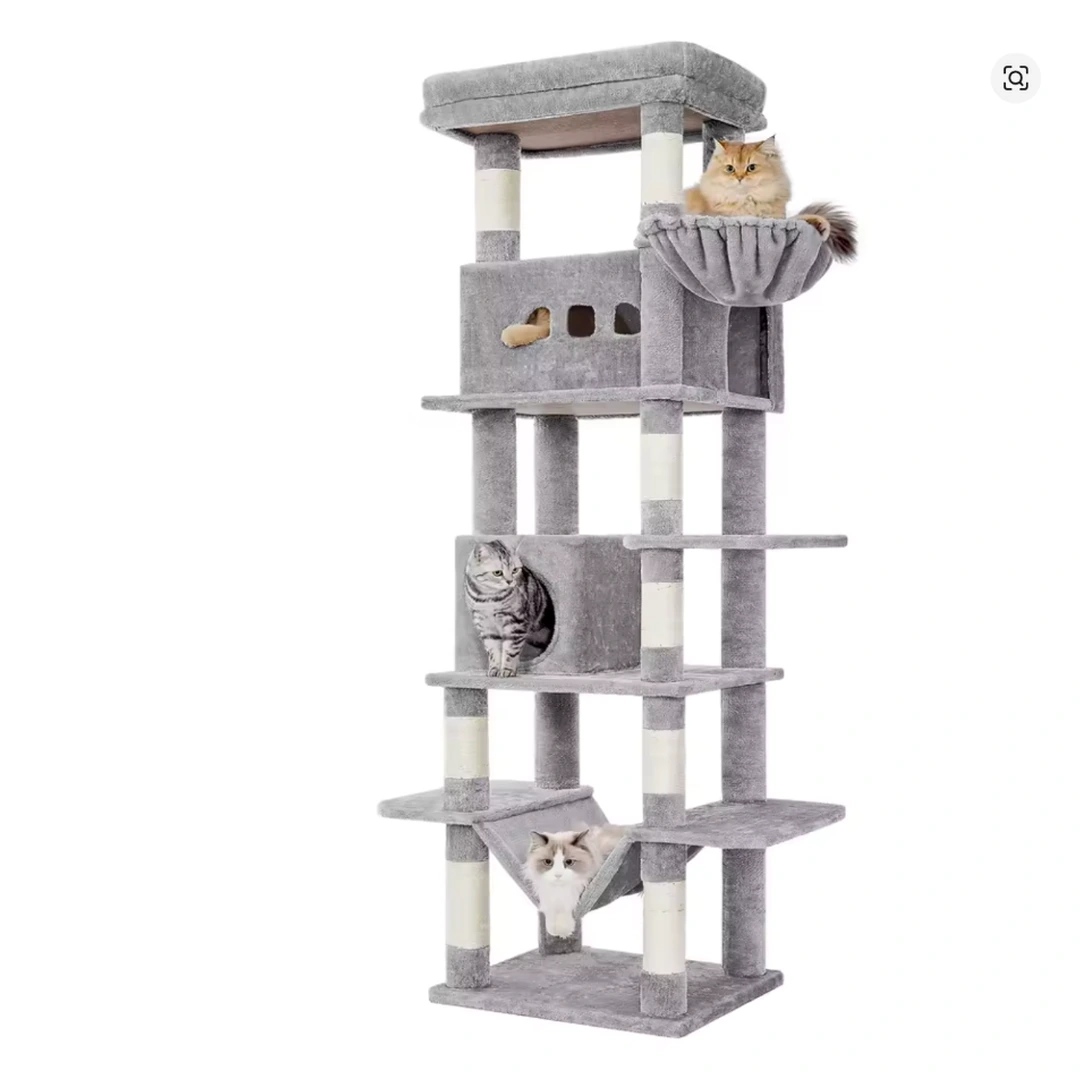
A cushion that feels soft in the shop can disappoint once in place: it overhangs the platform, slips at the first movement or comes out of the wash misshapen. When choosing a cat tree cushion, it therefore pays to look beyond the fabric. The important questions concern its fit, how it stays in place and what can actually be washed. The aim is simple: a familiar bed that is easy to remove and put back without lumps or displaced filling.
Measure the platform before choosing a cushion
Measure the surface actually available, not the dimensions of the whole cat tree. A raised edge, a post running through it or rounded corners can reduce the usable space. For an unusual shape, a paper template placed on the platform helps you visualise the outline, but must then be removed. Compare this outline with the stated cushion dimensions, checking whether these include padded borders. A photograph alone cannot tell you precisely how well the cushion will fit.
The cushion must rest properly on its support, without an unsupported section that your cat could mistake for a foothold. Check its thickness too: generous padding can conceal an edge or obstruct access to the platform. Do not try to squeeze an oversized cushion into place. Ask the seller for the usable dimensions and any compatible product references; replacement options and fastening arrangements must be confirmed in the manufacturer's instructions.
Washable cat tree cushions: look beyond the label
The word ‘washable’ deserves careful attention. It may refer only to the cover, to the whole cushion or to spot cleaning. Before buying, look for instructions specific to each component: the fabric casing, non-slip underside and filling. Check the instructions for the permitted washing method, spin cycle, drying method and any restrictions. A cover that comes off easily is not necessarily machine washable, and washable filling is not necessarily suitable for tumble drying.
Also look at how the cover opens. An opening that is easy to access makes it simpler to remove the padding without pulling on the seams, then put it back flat. The closure should remain protected and out of reach as far as possible when the cushion is installed. Avoid decorative accessories that can easily be pulled off. If care or composition details are vague, request written confirmation rather than improvising a first wash that could alter the fit.
Choose a fastening system designed for the support
An underside described as non-slip will not perform equally on every surface. Check its compatibility with the platform and its care requirements with the manufacturer. If the cat tree has fastenings, favour a cushion designed for that system. Hook-and-loop strips must align properly and remain covered once joined. Do not add dangling cords, accessible elastic or improvised fastenings to compensate for an unsuitable shape: looking for another model is the better option.
Before making the bed accessible, install the cushion according to the instructions and gently apply pressure in several directions. This practical check can reveal obvious slipping, but does not guarantee safety. Make sure nothing lifts around the edges and the fastenings do not create bumps. Then observe the first few uses without forcing your cat towards it. If the cushion moves out of position, remove it and reassess whether it is compatible.
Consider how the filling will hold up after washing
To maintain an even surface, examine the construction rather than softness alone. Filling divided into compartments or secured by stitching may move around less, without guaranteeing that it will retain its shape after every clean. Removable filling makes inspection and repositioning easier, provided the cover is suitable. Above all, look for precise guidance on permitted reshaping methods. A promise of softness tells you nothing about whether the fabric might shrink.
Before the first wash, record the original dimensions and take a photograph of the cushion in place, so you can compare its fit after drying. Follow the manufacturer's instructions and wait until every component is completely dry before reassembling. Then check the seams, closure, fastenings and distribution of the filling. If lumps remain, the cover pulls tight or the corners lift, do not force it into place; ask the seller for advice on a suitable solution.
Keep things familiar without neglecting checks
The AAFP and ISFM guidelines on feline environmental needs (2013) highlight, among other things, the importance of elevated perches and familiar smells. Take a gradual approach with this bed: return the cushion to its usual position and let your cat explore it freely. Avoid making several changes around the platform at the same time. If you plan to have a spare cover, check that it maintains the same fit and uses the intended fastenings.
Day to day, watch particularly for changes to the cushion: an opening seam, a fastening coming loose or exposed padding are reasons to remove it. A washable model is only useful if it regains a usable shape and stays properly in place after cleaning. Keep its product reference and care instructions for future washes. For any signs of pain, limping, a fall, parasites or behavioural changes, consult a vet rather than automatically attributing the problem to the new bed.
VEYRULIS is preparing a 210 cm tall, multi-level cat tree tower, which is not yet for sale. The price has not been approved and the colour variant remains to be confirmed. To consider a suitable removable cushion, the platform dimensions, fastenings and care requirements will need checking in the instructions for the model supplied.
Sources and further reading
This advice is for information only and does not replace your veterinarian's opinion.