
Cat tree by a window: making the lookout spot safe
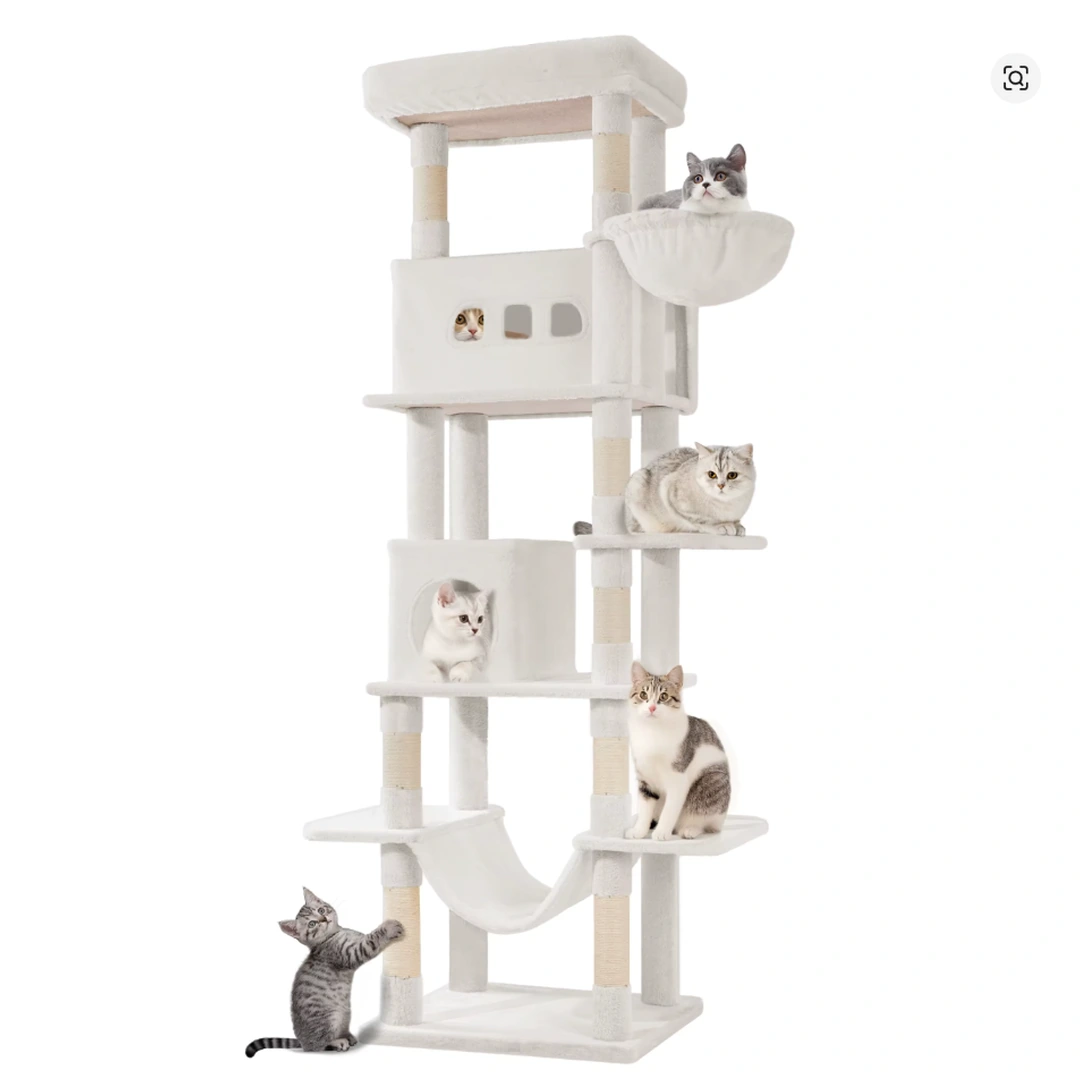
Watching birds, following passers-by and seeing leaves move: a window offers a spectacle that many cats enjoy. Placing a cat tree by a window gives them a comfortable viewpoint, but also brings their paws closer to openings and window accessories. Before making this spot accessible, examine the surroundings from the perch rather than from floor level. A handle, a loop of cord or a gap that was previously out of reach may suddenly become accessible to your cat.
Cat tree by a window: identify dangerous access routes
Start with the window closed and assess every platform. Can your cat reach the handle, slip behind a curtain or get onto the outside ledge as soon as the window opens? Check indirect routes too: nearby furniture may provide a stepping stone. Moving the tree slightly further away does not make an opening inaccessible. The right approach is to protect the opening itself, rather than relying on a distance you assume will discourage your cat.
The AAFP and ISFM guidelines on feline environmental needs (2013) recommend hiding places, elevated perches, separate resources, scratching opportunities, familiar scents and respectful interactions. This framework supports a lookout spot that the cat chooses, rather than an imposed exposure. Keep somewhere else in the room available for retreat. If the view causes persistent agitation, temporarily cover part of the window and allow your companion to move away freely whenever they wish.
Open windows: provide protection before allowing access
An open window does not become safe simply because you are in the room. Movement outside can prompt a sudden leap before you have time to intervene. If no suitable protection is installed, shut off access to the room before airing it, then close the window before letting your cat back in. Tell everyone else in the household: a clear routine prevents an occasional opening from turning the perch into a launch point towards the outdoors.
An ordinary insect screen is not necessarily designed to restrain an animal. For any device intended to secure a window, check the manufacturer's instructions for its intended use, compatibility with the window frame, fitting requirements and necessary inspections. Examine the edges as carefully as the centre: no accessible gap should remain. Do not improvise protection using fabric or an assembly whose strength and ability to stay in place have not been established for this purpose.
Tilt-and-turn windows: a small opening is not protection
A window in the tilted position needs particular care. The gaps created at the sides may attract a cat trying to get through, putting them at risk of becoming trapped where the opening narrows. A nearby cat tree makes this area easier to reach. Do not leave a window tilted open where your cat can access it, even for brief ventilation, and do not regard a narrow opening as a safety measure.
If you are considering a purpose-made guard, check that it covers every accessible area in your actual window configuration, including access from the highest perch. Consult the manufacturer's instructions about compatibility, fixings and conditions of use. If in doubt, keep the window closed whenever your cat can reach it. If a cat becomes trapped, contact a vet immediately and ask how to intervene without making the situation worse; do not try to free them by pulling forcefully.
Blinds and curtains: remove accessible loops
From a raised sleeping platform, a blind cord can become something to grab. Loops pose a risk of entanglement or strangulation, and operating chains need the same attention. Examine their position when the blind is raised, lowered and partly open. A cord that is safely stowed in one configuration may hang within your cat's reach in another. Also check any curtain tiebacks near the platforms, assessing them from the cat's elevated position.
Choose a way of managing the controls that leaves no accessible loop. Only use compatible storage or securing devices, following the blind manufacturer's instructions. A simple knot tied high up or a cord placed on a shelf can be displaced: neither is a reliable solution. Do not cut or alter a mechanism without instructions from the manufacturer. Each time you adjust the blind, check that its controls remain out of reach from every level.
Prolonged sunshine: keep a route into shade
A sleeping spot that feels pleasant in the morning may receive prolonged direct sunshine later. Watch how the light moves throughout the day, particularly during the hours when you are usually away. Glass does not remove the need to monitor how warm the spot becomes. Provide a genuinely accessible shaded area and allow your cat to move into another comfortable room. Do not shut them inside a glazed space assuming they will necessarily enjoy the warmth.
Before leaving, check the openings, blind controls and available shade. If you lower a blind to limit sunshine, check its cords again. Leave fresh water accessible without requiring your cat to stay beside the glass. Any sign of pain, limping, a fall, parasites or a change in behaviour warrants consulting a vet. The lookout spot should remain an enjoyable option, never somewhere your cat finds themselves forced to stay.
VEYRULIS is preparing a 210 cm tall, multi-level cat tower, a draft product not yet for sale on accessoireschat.com. The price has not been approved, and the colour variant remains to be confirmed. Specifications will need checking in the instructions for the model delivered; near a window, particular attention will be needed to openings and cords accessible from its platforms.
Sources and further reading
This advice is for information only and does not replace your veterinarian's opinion.