
Cat tree or scratching post: do you really need both?
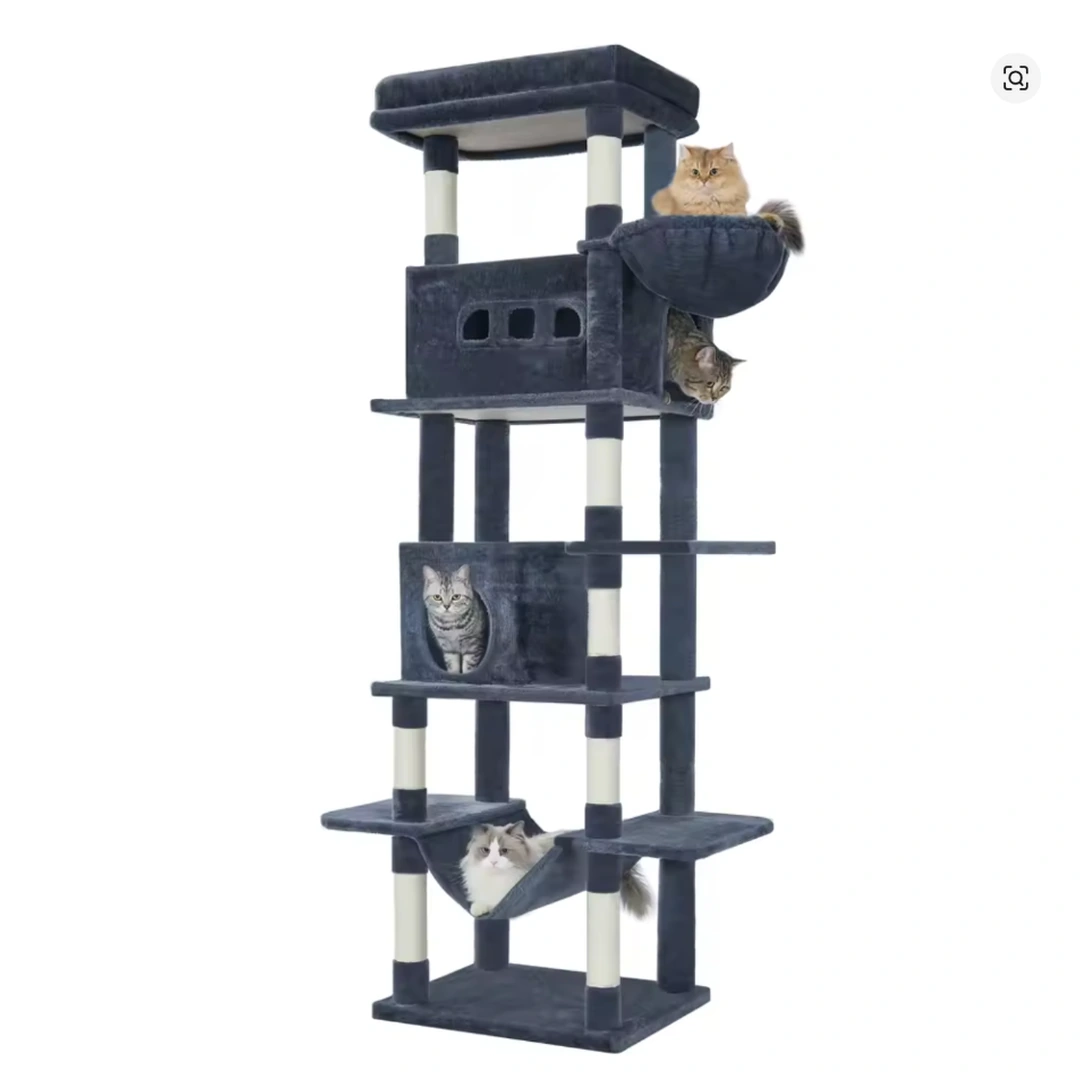
Should you choose a cat tree or a scratching post, or provide both? The answer depends less on how many accessories you have than on what your cat can actually do with them. Furniture with posts does not automatically fulfil every scratching need. Equally, another accessory might simply duplicate what is already available. To make a useful decision, separate three activities: scratching, watching from a perch and resting. You can then identify what is missing, rather than buying something just because you feel you should.
Three functions to distinguish before comparing
Scratching is an activity in its own right: a cat braces itself, stretches its body and marks its surroundings. It leaves visual and scent marks, among other traces. A scratcher provides a surface intended for this purpose. A cat tree may accommodate scratching too, while also offering platforms for watching and places to settle down. These functions share one piece of furniture, but that does not necessarily mean that each one is equally well provided for.
The AAFP and ISFM guidelines on feline environmental needs (2013) recommend providing hiding places, elevated perches, separate resources and opportunities to scratch. They also highlight the importance of familiar smells and respectful interaction. This approach helps you think about needs rather than product ranges: owning a cat tree does not demonstrate that every activity is possible, and buying a scratching post does not replace somewhere suitable for watching the surroundings.
Cat tree or scratching post: when one is enough
A cat tree may be enough if your cat readily scratches on it, watches its surroundings from it and rests there. Pay particular attention to the movement: does your cat confidently use the intended surface, or seem to look elsewhere for more comfortable support? A scratching area listed in a product description is not necessarily one your cat actually uses. Daily use remains the deciding factor, rather than the advertised number of posts or the furniture's generous-looking proportions.
Conversely, a scratcher may be the only accessory you need to buy if your home already provides suitable, accessible and safe places for resting and watching. That does not make it a miniature cat tree: it serves a different function. Before placing an order, take stock of what is already available. Your cat may already have a favourite perch and a peaceful retreat. In that case, providing only the missing scratching opportunity may make more sense than adding a large structure.
When an additional scratcher offers something useful
An extra scratcher becomes worthwhile when it offers a way of scratching that the cat tree does not. Some cats happily use a vertical surface; others also seek horizontal or angled surfaces. Observe the positions your cat naturally adopts, without deciding that one attempt reveals a permanent preference. If your cat rests on its tree but regularly chooses another angle for scratching, a separate scratcher may meet that different need. It does not have to reproduce the entire piece of furniture.
Another benefit is making scratching available independently of resting. A cat may enjoy its bed while preferring to scratch elsewhere as it moves around. An additional scratcher then offers another opportunity, without requiring a return to the cat tree every time. The point is not to fill every room with accessories, but to recognise a recurring activity. An addition prompted by a specific observation is more useful than a purchase made simply because these two accessories are often sold together.
Observe how accessories are used rather than counting them
Over several ordinary days, simply note what your cat uses for scratching, watching and sleeping. Distinguish regular habits from occasional exploration. A brief visit to a platform does not mean it has become a resting place; a few isolated scratches are not enough to judge a surface either. This small observation exercise helps avoid confusing your buying intentions with your cat's habits. Above all, it allows you to ask a practical question: which function is still not adequately provided for?
If you add a scratcher, let your cat discover it at its own pace. Do not take hold of its paws to impose the movement, and do not abruptly remove a familiar surface that is still usable. Then compare how things are used: does the new item offer a different angle or a scratching opportunity your cat actually takes? However, do not interpret behavioural change as merely an equipment issue: consult a vet, especially if your cat suddenly loses interest in a familiar activity.
Decide without overequipping or expecting a miracle
Start with the gap you identified. If scratching is already comfortable and places for watching and resting are available, a second accessory is not essential. If scratching is difficult to access or the desired angle is missing, an addition is worth considering. If watching or resting opportunities are missing, a scratcher alone will not solve that problem. This distinction also avoids expecting one purchase to change all your cat's habits by itself. Every item should have an identifiable purpose.
Before use, check installation requirements, intended use and all technical details in the manufacturer's instructions. Do not infer a product's possibilities from its photograph alone. Then let actual use guide your decision, without forcing interaction. If you notice signs of pain, limping, a fall, parasites or behavioural change, consult a vet. Adding an accessory never replaces veterinary advice and is not a medical response.
VEYRULIS is preparing a 210 cm tall, multi-level tower cat tree for accessoireschat.com. Still at the draft stage and not yet for sale, its price has not been approved and its colour variant remains to be confirmed. Its specifications will need checking against the instructions for the model supplied, particularly to establish whether its scratching options make an additional scratcher useful.
Sources and further reading
This advice is for information only and does not replace your veterinarian's opinion.