
Hanging cat tree toys: preventing accidents
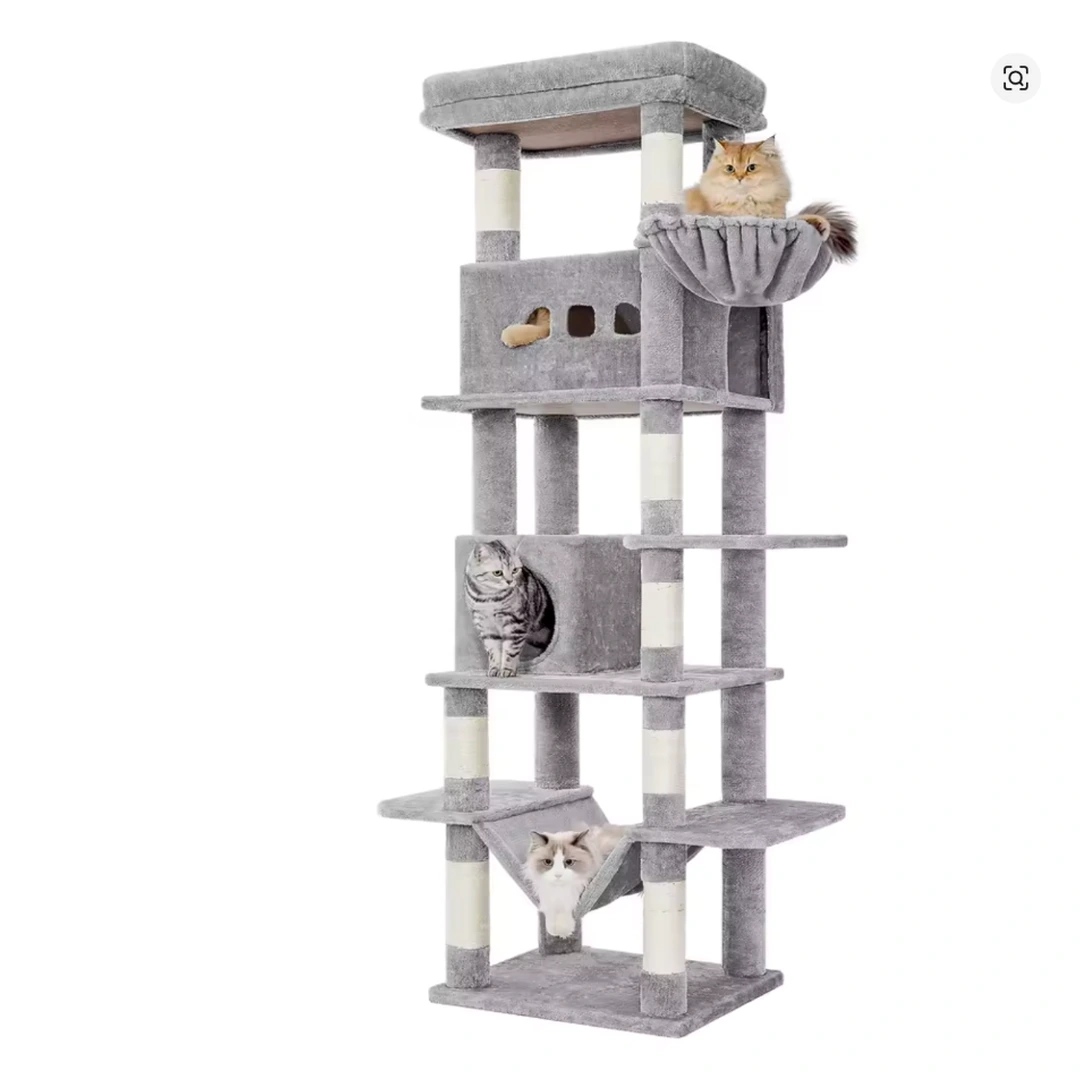
A dangling ball quickly attracts a paw, followed by teeth. Yet a hanging cat tree toy needs just as much attention when it is still as it does during play. A frayed cord, an accessible loop or a loose decoration can pose a risk of swallowing or entanglement. The aim is not to remove every source of stimulation, but to distinguish what can remain accessible from what needs removing. Here is an inspection method focused on hanging accessories, their wear and tear, and how your cat actually uses them.
Inspect every hanging cat tree toy
Before letting your cat approach, examine the whole accessory: its attachment point, connecting cord, outer covering and decorative elements. Consult the manufacturer's instructions for its intended use, precautions and conditions for removal or replacement. A toy appearing in a commercial photograph does not guarantee that it can remain available all the time. If instructions are missing or unclear, ask the seller for clarification and keep the accessory out of reach while you wait.
Next, inspect the parts normally hidden from view: underneath the ball, the seam beside the cord, or the join behind a feather. Handle it gently, without pulling sharply to test its strength. Look for an opening, a fastening coming undone or material crumbling away. Any doubt is enough to stop using it. Do not wait until a piece falls off: something still attached may already be damaged enough to come away between your cat's teeth.
Identify problematic cords and elastic
Follow the cord along its entire visible length. Separated fibres, a slipping knot, a split covering or cracked elastic justify removing the toy. Also examine its shape at rest and when moved: could it form a loop, wind around a paw or catch your cat as it passes? There is no universal length to recommend here; technical guidance must be checked in the instructions for the particular model concerned.
Do not shorten a connection simply by adding knots, or replace elastic with ribbon, string or sewing thread. These makeshift changes can create other catching points or accessible fragments. If the manufacturer provides for a removable accessory, follow its procedure to remove it completely. Cutting off just the toy while leaving its attachment dangling does not necessarily solve the problem. If you are unsure how to dismantle it, make the whole assembly inaccessible while awaiting the manufacturer's reply.
Look for small parts and fragments
Attached eyes, bells, end caps, feathers and decorations need particular attention when present. Check how securely they are held, but also inspect the material supporting them: an open seam can release previously hidden stuffing. Set aside any accessory with an unusually loose part or an outer covering that lets stuffing escape. An improvised repair using glue, adhesive tape or a staple can add things to pull off; it is not a cautious solution.
Inspect the area beneath the toy too. A fragment on the floor may reveal damage that is hard to see on the accessory itself. If a part is missing, remove the remainder and search for debris without assuming too quickly that your cat has simply moved it. If swallowing is possible, contact a vet promptly, even if no symptoms are apparent. If a thread protrudes from the mouth or anus, do not pull it; ask a vet immediately what to do.
Adapt access to your cat's play habits
A cat that gives a few taps with its paw uses a toy differently from one that chews it for a long time or tries to carry it away. Supervise early interactions, then reassess access whenever its behaviour changes. If it swallows fibres, takes the cord into its mouth or gets caught on it, calmly stop the session and remove the accessory. Your presence does not make an already damaged toy, or an arrangement where your cat could become entangled, acceptable.
An accessory intended for supervised play must genuinely be stored out of reach afterwards, following the manufacturer's instructions. Putting it on a higher perch is not enough. You can favour a suitable separate toy, offered during interaction and then put away. Keep one simple rule: no questionable accessory stays accessible while you are absent. For any pain, limping, fall, parasites or behavioural change, consult a vet rather than automatically attributing the problem to the toy.
Remove an accessory without impoverishing daily life
Removing a hanging ball does not remove everything interesting about the tree. The AAFP and ISFM feline environmental needs guidelines (2013) highlight the importance of hiding places, elevated perches, separate resources, scratching, familiar smells and respectful interactions. This framework reminds us that everyday wellbeing does not depend on a dangling object. Preserve opportunities for rest and observation, without trying to replace every removed accessory immediately with another one.
Finally, make a visual check part of your routine, particularly after energetic play or whenever you find debris. Compare its current condition with what you observed initially, and remove anything suspicious immediately. If considering a replacement, check the instructions to ensure it is intended for that use and attachment. A new toy also deserves inspection. Sometimes the right decision is to leave the position empty rather than retain an accessory whose safety seems uncertain.
VEYRULIS is preparing a tall, multi-level 210 cm cat tree, still at the draft stage and not yet for sale. Its price has not been approved, and its colour variant remains to be confirmed. Specifications will need checking in the instructions for the model delivered, particularly whether hanging toys are included, their conditions of use and how potentially risky accessories should be removed.
Sources and further reading
This advice is for information only and does not replace your veterinarian's opinion.