
Wall-mounted cat tree: creating a coherent route
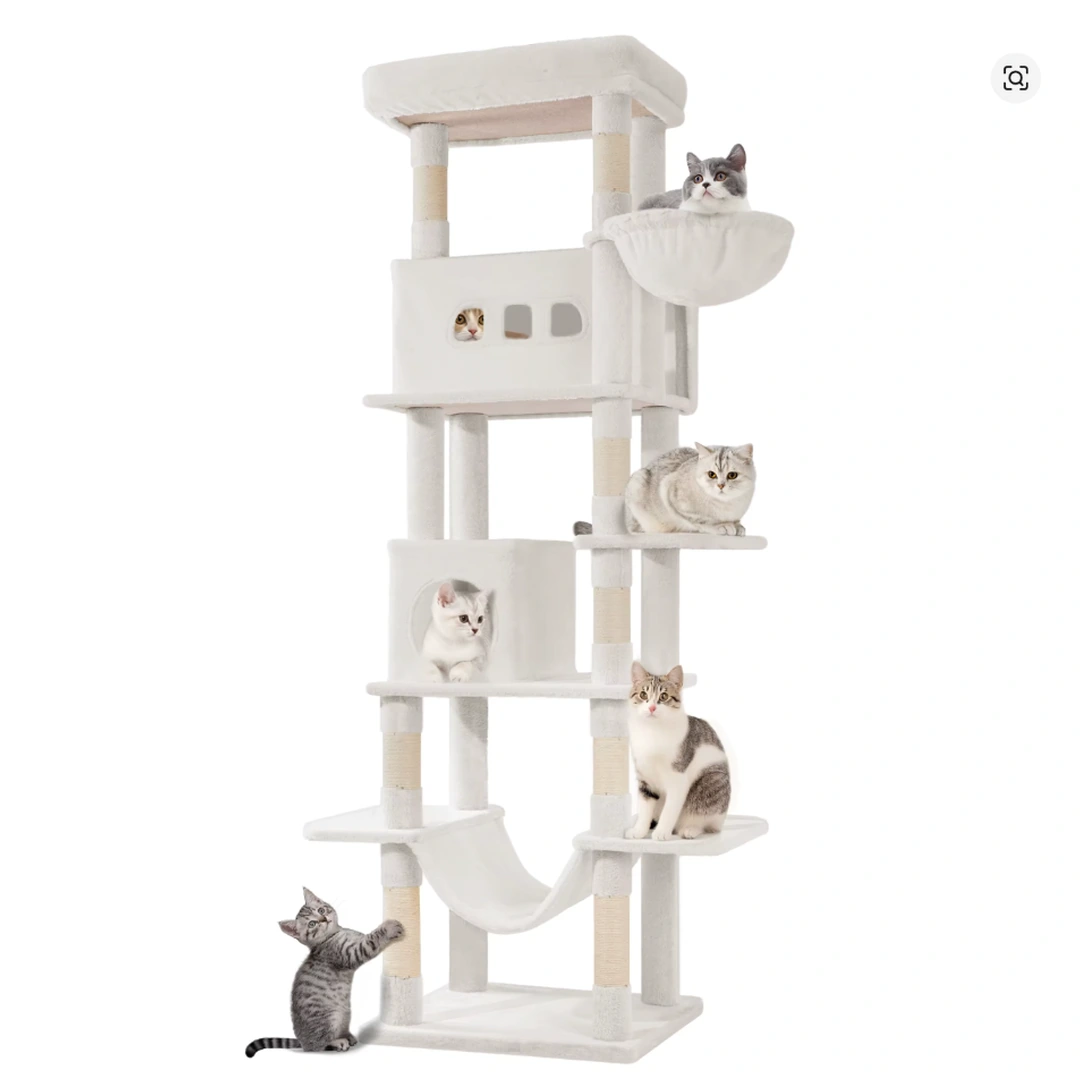
A wall-mounted cat tree is more than a succession of shelves leading towards the ceiling. For your cat, every element should point to a clear next step: where to place their paws, where to slow down, how to move on and which way to come back down. A good project therefore begins with a sketch of movement, rather than a decorative arrangement. Before choosing the modules, observe your companion’s natural routes and how they turn, jump or turn back. These observations will guide the route without making it an exercise you impose on them.
Sketch a wall-mounted cat tree as a route
On paper, represent the stages with simple shapes and connect them using arrows in both directions. Distinguish between platforms for passing through, places to change direction and sleeping areas. A module can serve several purposes, but not at the expense of a clear passage. Above all, identify places where your cat might hesitate: a landing hidden behind a bulky element, an immediate turn or a stage that seems to lead into empty space.
The AAFP and ISFM guidelines on feline environmental needs (2013) highlight, among other things, the value of hiding places, elevated perches and separate resources. They are not a wall-mounted construction plan. Keep this distinction in mind when drawing: moving around and retreating serve different purposes. So draw an easy-to-follow path alongside spaces where your cat can stay without having to keep watch over the next stage of the route.
Connect platforms without demanding large stretches
Think of each connection as a complete movement: take-off, trajectory, landing and preparation for the next move. Two platforms close together on paper may require an uncomfortable twist if their surfaces are offset in opposite directions. Prefer a sequence that keeps the next destination visible and allows your cat to face it calmly. An intermediate platform can make a change of direction clearer than a long diagonal, provided it does not become merely a cramped foothold.
There is no universal spacing suitable for every cat. Base your project on movements yours makes willingly, without trying to test their limits. Check the usable dimensions, permitted module orientation, combinations and any technical constraints in the manufacturer’s instructions. If a connection remains uncertain, redraw it before installation. The aim is not to multiply the stages, but to prevent a single transition from making the entire route difficult to use.
Position resting places beside the passage
A resting place benefits from being connected to the route without becoming its only way out. Imagine a short branch: your cat leaves the main path, settles down, then returns to a platform from which they can choose a direction. This arrangement clearly separates movement from rest. It also prevents an occupied bed or overhanging cushion from turning an essential stage into an obstacle. Keep the landing surface clear, even while the bed is occupied.
Distribute resting places according to the logic of the route, rather than at purely decorative intervals. After a change of direction, a quiet stage can let your cat observe what comes next before continuing. The highest resting place need not be the obligatory endpoint of every climb. Allow for stopping earlier as well. A coherent route offers choices, without making the maximum height a destination your cat must reach every time.
Plan the return from the very first sketch
Now read your drawing backwards. From each resting place, can your cat reach an identifiable descent without backing along an edge or making an awkward turn? An appealing climb can conceal an unclear return route. Draw the downward arrows separately to identify breaks: a next platform that is hard to see, an abrupt change of side or a landing on the floor that crosses a busy passage. Returning deserves as much attention as reaching the top.
Where the layout allows, imagine a loop rather than a line ending in a dead end. One branch leads upwards; another offers a different sequence for coming back. This does not mean assigning a compulsory direction to each path: your cat remains free to move as they choose. If a loop is not possible, provide places where they can easily turn around. Never use movable furniture as an essential link in a supposedly permanent return route.
Observe transitions and adjust the project
Before any use, check that the whole installation complies with the manufacturer’s instructions; fixing details cannot be inferred from the sketch. Then let your cat discover the first stages at their own pace, without placing them up high. Watch the transitions in particular: do they skirt a platform, always retrace their steps or look for another exit? These observations may reveal an unclear route, but cannot fully explain their behaviour.
If a stage raises concerns, stop access to the affected part while you reconsider the route and check the adjustment options in the instructions. Change one element at a time to understand what really makes movement easier. Do not try to encourage a jump with a toy to validate your drawing. For any sign of pain, limping, a fall, parasites or a change in behaviour, consult a vet rather than automatically blaming the arrangement.
VEYRULIS is preparing a 210 cm tall, multi-level tower cat tree, still at the draft stage and not yet for sale. Its price has not been approved, and its colour variant remains to be confirmed. When considering its place within a route, its specifications will need checking against the instructions for the model delivered, without assuming that it can provide a link to wall-mounted platforms.
Sources and further reading
This advice is for information only and does not replace your veterinarian's opinion.