
Cat tree ramp: key points to check before adding one
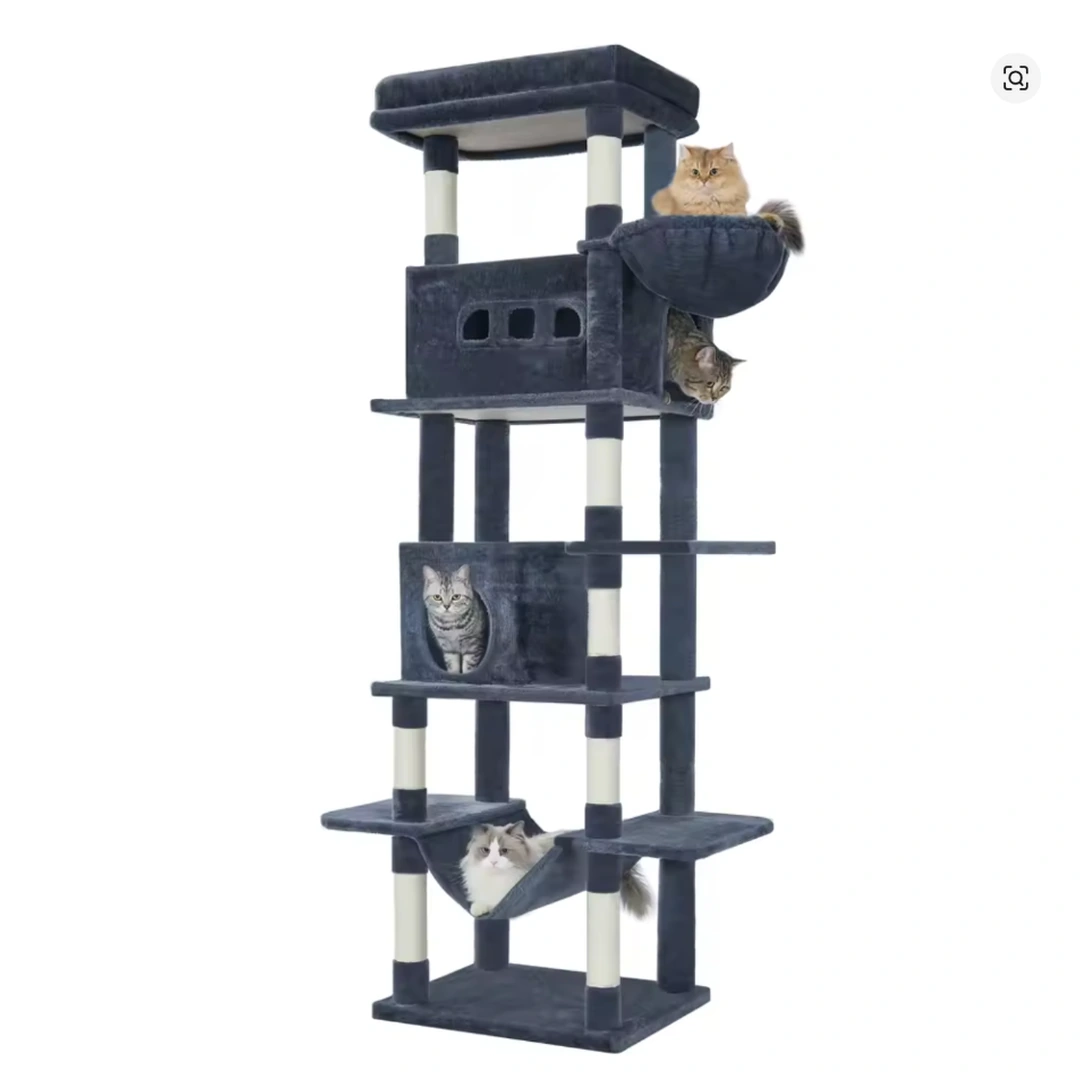
Adding a sloping access route seems straightforward: a board, a support, and the passage should be ready. Yet an unsuitable ramp can make reaching a platform harder or obstruct movement around the tree. When planning a cat tree ramp, examine the whole route, from the floor to the landing point, before choosing an accessory. The aim is to provide a usable passage that is compatible with the structure and installed according to the manufacturer's instructions.
Check cat tree ramp compatibility
Start by identifying the exact cat tree model and the platform you want the ramp to reach. Consult its instructions to find out whether a sloping accessory is предусмотрed and which points can accept fixings. A bed edge, fabric covering or post is not automatically a suitable support. If the documentation makes no provision for additions, ask the manufacturer for confirmation before drilling, screwing into or altering any structural component.
Next, sketch the proposed connection, marking the starting point, landing and nearby obstacles. The ramp must not cover an opening or block an existing route. The AAFP and ISFM guidelines on feline environmental needs (2013) highlight the importance of hiding places and elevated perches. However, they do not provide technical specifications for building a ramp: compatibility still needs to be checked with the manufacturer.
Plan a manageable slope and landing
Measure the height of the intended platform and the space available in front of it. These measurements let you assess the possible incline: for the same landing, a starting point further away creates a gentler slope. Do not adopt an angle presented as universally suitable. Check the permitted geometry, accessory length and support requirements in the instructions. If there is insufficient room, consider a lower landing platform rather than an excessively steep ramp.
Pay particular attention to what happens at the top. Your cat must be able to leave the slope and place its paws on the platform without immediately negotiating a post or an awkward rim. Reconsider any connection that leaves a gap or unexpected step. At floor level, the starting point must remain accessible without encroaching on a walkway used by people. Before buying, you can mark out the footprint with a flat template while your cat is elsewhere.
Choose a genuinely usable width
The advertised width does not always match the surface your cat can walk on. Edges, supports or a rounded shape may reduce the usable space. Compare the external dimensions with the actual walking area, then observe how your cat normally moves around. It should be able to walk forwards without being forced along an edge. Look for any accessory-specific dimensional recommendations in its instructions rather than inferring them from a photograph.
Examine both ends as well: a wide ramp leading to a narrow entrance does not solve the connection problem. Check that neighbouring components do not create pinch points and that the route does not pass beneath a platform with too little clearance. To visualise the space required, use a cardboard pattern solely as a measuring template, never as a trial walkway. This check helps identify interference with a hideaway or support before installation.
Examine grip along the whole route
A texture that feels pleasant to touch is not necessarily suitable for a sloping walkway. Look for a covering described as intended for this use, and check its compatibility with the ramp in the manufacturer's documentation. The surface must stay securely in place, without folds, lifted edges or anything that could catch a claw. Avoid laying an improvised mat over it: even a rough mat can slide on its support if its attachment is not designed for this use.
Check that grip is continuous at the bottom, middle and top. A smooth strip near the connection can affect footing as your cat steps onto the platform. If the model includes crosspieces or rims, check their assembly and intended use in the instructions rather than adding them arbitrarily. Prefer a solution whose covering is easy to inspect: you need to be able to spot peeling or localised wear before the next use.
Confirm secure fixing before allowing access
The upper fixing and lower support need to be examined together. Simply resting one end on a platform does not guarantee that it will stay in place. Use only attachments and fixing positions approved for the models concerned, following their assembly and tightening instructions. Do not improvise a tie around a post. Also check that fixing components do not protrude into the passage and that no accessible part could cause injury.
Before letting your cat approach, carry out the manufacturer's prescribed checks without using the animal as a test. If the assembly moves or the connection seems uncertain, stop using it. Once installation has been verified, let your cat explore at its own pace, without placing it halfway up or pushing it. Regularly inspect the attachments and covering. Any signs of pain, limping, a fall, parasites or a change in behaviour require consultation with a vet.
VEYRULIS is preparing a 210 cm tall, multi-level tower cat tree, still at the draft stage and not yet for sale. Its price has not been approved, and the colour variant remains to be confirmed. Before considering a ramp, check the specifications and fixing options in the instructions for the model supplied: its height alone cannot establish compatibility.
Sources and further reading
This advice is for information only and does not replace your veterinarian's opinion.