
Cat tree without carpet: benefits and limitations
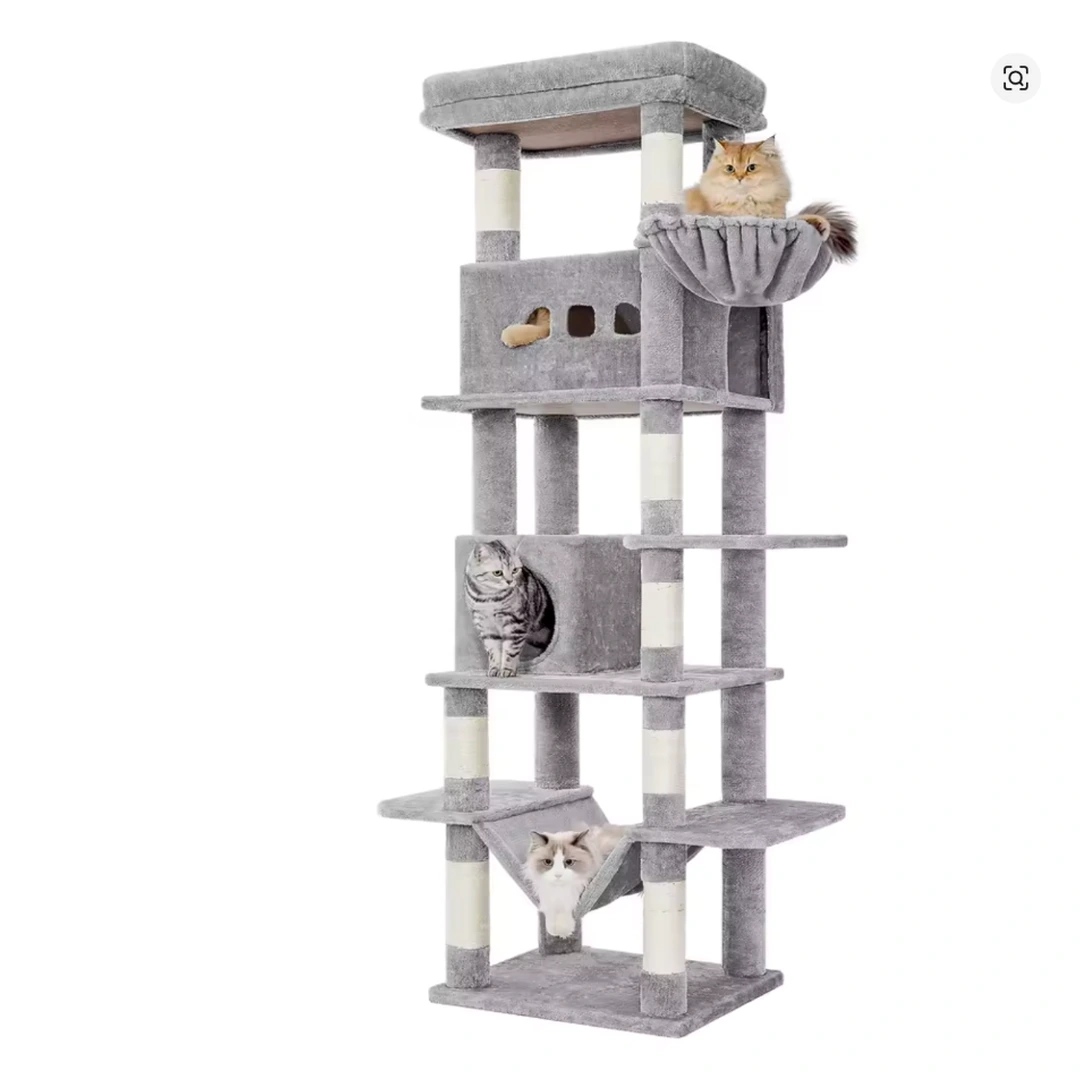
A cat tree without carpet often promises easier care and a less fabric-heavy appearance. Yet removing the covering alone does not make every platform pleasant to use. A surface that is easy to wipe may offer little grip; an inviting cushion may slide or leave an access route uncovered. To assess this compromise, it helps to separate three questions: what you can inspect, how your cat's paws find support, and how comfortable resting feels. The right choice depends on the details, rather than on a photograph alone.
Cat tree without carpet: what does the term cover?
This description mainly tells you what is missing: a carpet covering. It specifies neither the material used for the platforms nor their finish, nor whether fabric appears elsewhere. A model may combine exposed panels, detachable cushions and scratching areas. Before comparing two products, look at which parts remain bare: sleeping spaces, intermediate levels, edges or connecting surfaces. How these different parts are used determines both their benefits and their limitations.
The AAFP and ISFM feline environmental needs guidelines (2013) discuss, among other things, hiding places, elevated perches, separate resources, scratching, familiar scents and respectful interactions. They do not recommend any particular covering. Their relevance here is to remind us that a finish convenient for people must also allow cats to express their usual behaviours. Having no carpet therefore does not remove the need to provide suitable surfaces for scratching.
Hygiene: easier inspection, not a guarantee
Marks and small pieces of debris are generally more visible on an uncovered platform than within a thick covering. You can also examine the surface directly beneath a removable cushion. This visibility makes everyday monitoring easier, but does not mean the underlying surface stays clean by itself. Joints, edges and the undersides of fabrics still need attention. A tidy appearance alone cannot tell you about the condition of every area.
There is another limitation: smooth does not necessarily mean waterproof or suitable for every cleaning product. The finish and panel edges may require different precautions, which should be checked in the manufacturer's instructions. With cushions, distinguish between what can be removed and what can actually be washed: a removable cover does not automatically make its filling washable. The main benefit sought is being able to inspect components separately, without unnecessarily working on the whole cat tree.
Grip: check uncovered access routes too
An attractive, uniform surface may prove less welcoming when your cat pushes off, turns around or moves towards a sleeping space. However, you cannot assess the risk from a glossy or matt appearance alone. The actual texture, the finish and how securely fabric components stay in place all matter together. On a product page, look for views of platforms without cushions and details about their surfaces; a photograph of a furnished bed can leave these access routes hidden.
Next, watch your cat's spontaneous movements, without enticing them towards an area they hesitate to use. A cushion that shifts beneath a paw undermines the benefit of even a grippy texture. Check the instructions for the intended securing system and its conditions of use. Avoid improvising with an adhesive addition or an incompatible mat: it could lift up or interfere with footing. Consult a vet about any signs of pain, limping, a fall, parasites or changes in behaviour.
Comfort: allow for your cat's preferences
Comfort is about more than cushion thickness. Some cats readily choose a firm surface at certain times, then a more enveloping fabric surface for sleep. A bare platform can therefore be useful, provided that this choice is not imposed everywhere. Combining uncovered areas with cushioned beds lets you observe a preference without concluding that one material is universally better. Notice, in particular, whether your cat settles in a relaxed way or keeps changing position.
Removable cushions offer useful flexibility, but taking them away also changes the bed: firmer contact, a more noticeable edge and different support. Assess the model in both configurations. Familiar scents matter too, as the guidelines mentioned above remind us. Do not systematically try to eliminate every familiar scent trace. When a fabric item needs removing, keeping another usual resting place accessible can preserve a reassuring choice for your cat.
Decide which compromises are genuinely acceptable
Before buying, ask yourself which difficulty you want to reduce. If your priority is quickly seeing the condition of the platforms, uncovered surfaces make sense. If your cat mainly seeks contact with fabric, a largely bare model will require closer attention to sleeping spaces. And if cushions cover only resting areas, grip on connecting surfaces remains a separate question. None of these qualities automatically compensates for the others: ease of inspection, grip and softness need separate consideration.
To decide, compare photographs with the manufacturer's information: surface materials, the presence of fabric areas, cushion fastening and permitted care methods. Every technical point should be checked in the instructions rather than inferred from a commercial description. A carpet-free tree makes sense when its bare parts remain usable and its fabrics stay securely in place. Its main advantage then lies in separating functions: a visible base, dependable footing and inviting places to rest.
VEYRULIS is preparing a 210 cm tall, multi-level tower cat tree, which is not yet for sale. The price has not been approved, and the colour variant remains to be confirmed. To compare it with carpet-free models, its surfaces and any removable cushions will need examining; specifications must be checked in the instructions for the model delivered.
Sources and further reading
This advice is for information only and does not replace your veterinarian's opinion.