
Benefits of a Cat Water Fountain: Hydration and Practical Advantages
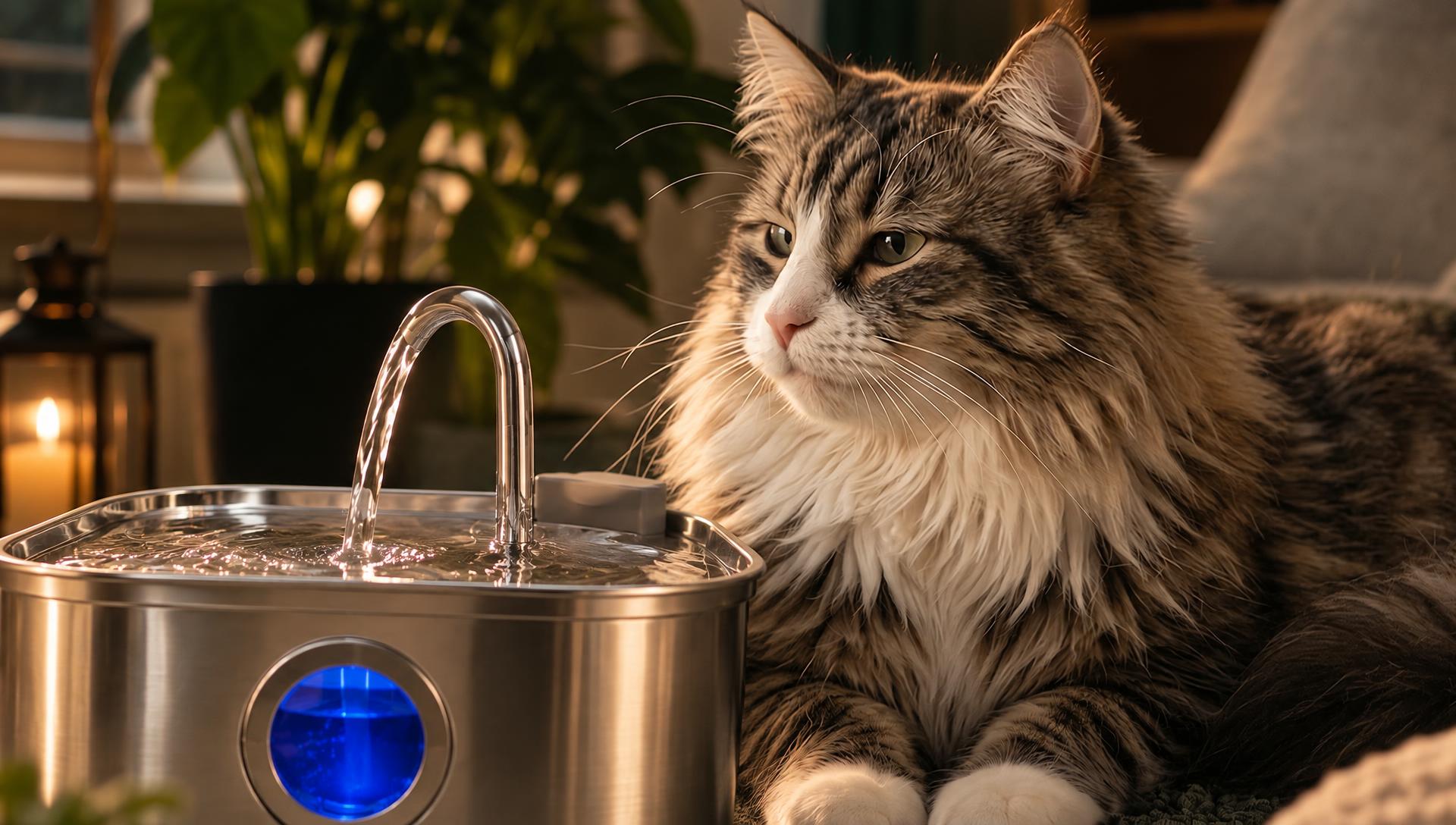
Cats are known for drinking very little, leading many owners to search for practical ways to encourage hydration. Water fountains are often suggested. What are the genuine benefits of a cat water fountain, and what are its limits? Here is an honest assessment, free of exaggerated claims, to help determine if this accessory suits your pet. We explain how a fountain can help; to compare models before buying, check our buying guide.
Constantly Circulating Water
Moving water also catches a cat's eye from across the room. It becomes a recognizable visual landmark, reminding them to pause and drink during their daily rounds.
Many cats are naturally fascinated by running water. A gentle stream catches their attention, appears fresher, and encourages them to drink small amounts more frequently, mirroring their natural behavior.
Animal behaviorists link this preference to ancient survival instincts. In the wild, flowing water is generally far safer and less prone to contamination than stagnant outdoor puddles.
This instinct also explains why many cats love drinking directly from bathroom taps. A fountain recreates that exact experience inside your home without requiring you to turn on a faucet.
Not all cats react identically; some still prefer a wide, simple bowl. Giving your pet a patient home trial remains the most reliable way to find out.
Filtered and More Palatable Water
It is a good practice to write down the installation date for each new filter to easily respect the manufacturer's recommended replacement schedule.
Most fountains use a filter that catches stray hairs, floating dust, and debris. Depending on the model, it may also include activated carbon to reduce odors and chlorine taste.
This filtration helps the water stay clearer between refills, which is especially important for an animal with such a sensitive and discerning sense of smell.
This benefit relies entirely on routine upkeep. You must replace the filter cartridge every two to four weeks and clean the entire fountain thoroughly each week.
Keep in mind that a filter does not sterilize water. It acts as an aid to basic hygiene, but it never replaces regular cleaning.
A Convenient Water Reservoir
In a multi-cat household, a fountain should not be the sole water source. Place extra bowls in other rooms to prevent territorial friction between pets.
A fountain provides a larger water capacity than a standard bowl. This capacity is especially practical when you work away from home or share your living space with multiple cats.
A clear viewing window or level indicator allows you to check remaining water at a quick glance, showing exactly when the reservoir needs topping up.
Remember that a generous capacity does not eliminate the need for fresh water. You must still empty and completely refresh the basin every two to three days.
Furthermore, a large reservoir never replaces essential human care and supervision when you leave home for several days at a time.
Why Choose Stainless Steel
Stainless steel withstands frequent washing with hot water exceptionally well, maintaining its clean appearance without tarnishing, warping, or deteriorating over time.
Food-grade stainless steel, such as 304 stainless steel, features a smooth, non-porous surface that is easy to wash and resists scratching. It imparts neither taste nor odor to drinking water.
Because it is heavier than plastic, a steel fountain provides superior stability on the floor, making it far more difficult for playful paws to nudge or tip over.
In contrast, plastic surfaces easily scratch with prolonged use, creating tiny crevices that trap mineral deposits, bacterial residues, and persistent odors over time.
Whatever material you decide to choose, easy disassembly remains a critical feature, ensuring that regular cleaning does not turn into an awkward chore.
Important Limitations to Keep in Mind
Before purchasing any model, verify the long-term availability and cost of replacement filter cartridges, as these represent an ongoing annual expense for your household.
A pet fountain requires an electrical outlet, periodic pump maintenance, and recurring filter purchases. It also produces a faint hum that may disturb cautious or sound-sensitive cats.
A poorly maintained fountain can quickly become less sanitary than a clean bowl, because the water circulates and stays inside the basin for several days.
Most importantly, no water fountain can cure medical conditions. A cat that suddenly drinks substantially more or less water should promptly be evaluated by a veterinarian.
For a cat that drinks sparingly, a fountain is merely one helpful tool, best combined with wet food and multiple water bowls placed throughout the home.
Getting Started with a Fountain
If your cat is initially wary of the subtle motor sound, leave the unit turned off for a day or two so they investigate it like a standard dish.
Wash all individual parts thoroughly before the first use, then place the assembled fountain in a calm spot, well away from litter trays and food bowls.
Keep your cat's familiar bowl nearby throughout the transition period, allowing them to inspect and approach the flowing water at their own comfortable speed.
Some confident felines embrace a running fountain within minutes, whereas more cautious pets might take one to two weeks before feeling completely comfortable drinking from it.
Observe their daily drinking habits carefully during this introductory stage to make certain that they continue to consume sufficient water each day.
If you wish to provide moving water, the Veyrulis fountain combines a 3.2-liter SUS 304 stainless steel reservoir, filtration that captures hair and impurities, quiet operation, and an illuminated window to check the level. It does not replace an appropriate diet or your veterinarian's advice.
Sources and further reading
- Cornell Feline Health Center — Hydration (besoins en eau, signes et causes de déshydratation)
- International Cat Care — Encouraging your cat to drink: a guide for caregivers (PDF)
This advice is for information only and does not replace your veterinarian's opinion.