
How to Choose a Cat Water Fountain: The Complete Buyer's Guide
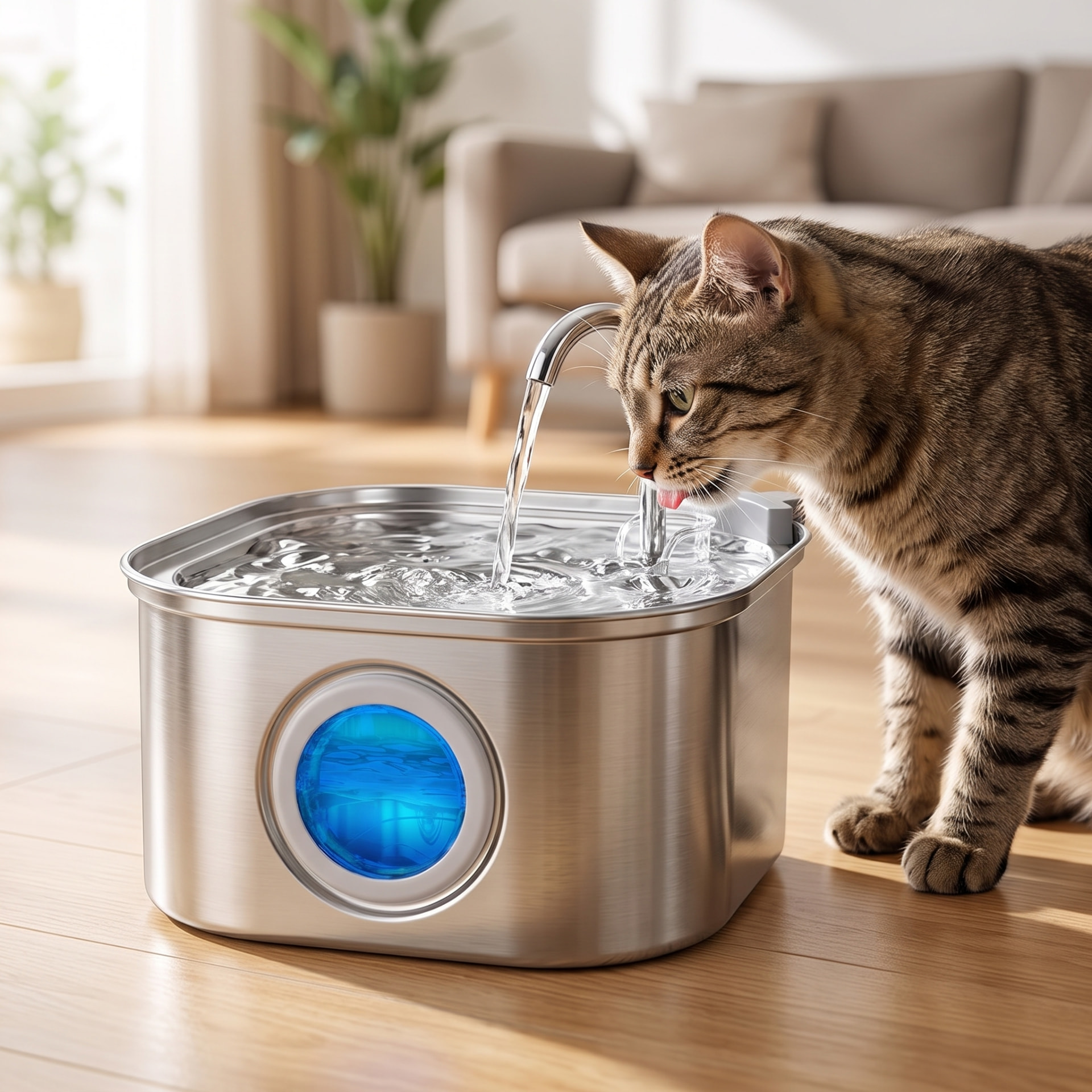
Choosing a pet drinking fountain can feel confusing when models look almost identical in product photos. However, a few straightforward criteria will show you how to choose a cat water fountain suited to your pet, your home, and your routine. Here are the key factors to evaluate before buying, without marketing jargon or unrealistic claims. While this complete buying guide covers all the essential criteria, bowl material and motor noise also deserve careful individual attention.
Bowl Material and Durability
The reservoir material is usually the first criterion to evaluate when shopping. Plastic fountains are lightweight and inexpensive, but their porous surface scratches easily over time, trapping mineral residue and bacteria. Conversely, stainless steel and ceramic fountains are heavier, more stable, and significantly easier to deep clean without degrading.
Food-grade stainless steel, such as grade 304, is common in professional kitchens because it resists corrosion and leaves no chemical taste in the water. Ceramic is popular for its clean, modern look, though it can chip if dropped. Glass models are uncommon and require particularly delicate handling.
Whichever material you choose, make sure all parts in contact with water disassemble easily. A fountain that is awkward to open or reassemble will inevitably be cleaned less thoroughly, compromising the ongoing cleanliness of your cat's drinking water.
Reservoir Capacity for Your Household
Capacity dictates how frequently you must refill the water tank. A small reservoir suits a single cat living in an apartment, provided you inspect the water level daily. In multi-cat homes, or if you work away all day, a capacity of two to three liters offers much greater peace of mind.
Keep in mind that a generous capacity does not eliminate the need for fresh water. Even in a large reservoir, the water should be renewed completely every two to three days, and even more frequently during hot summer weather to prevent stagnation.
Choose a capacity that fits your actual daily routine rather than buying the largest tank available. An oversized reservoir for a single cat simply keeps standing water sitting around longer than is ideal for good feline hygiene.
The Filtration System
Most pet fountains include a replaceable filter that traps loose fur, dust, and food debris, often pairing fine mesh with activated carbon to reduce unpleasant odors. An effective filter also protects the submersible pump from clogs, helping the small motor run smoothly for longer.
Before purchasing any model, check the availability and price of replacement cartridges, which generally need changing every two to four weeks. A fountain with hard-to-find or expensive proprietary filters quickly becomes an impractical and frustrating ongoing choice.
Remember that while a filter visibly improves water clarity and freshness, it does not sterilize it. Filtration complements your normal cleaning routine; it never replaces regular thorough washing and complete water changes.
Operating Noise and Fountain Placement
Every electric water pump produces a low hum, varying according to design quality, water level, and upkeep. Sensitive cats may avoid fountains that vibrate noticeably or splash loudly. If your cat is cautious, look for quiet models and read customer reviews regarding actual sound levels.
Consider your intended fountain placement as well: you need a nearby wall outlet, a level surface, and a quiet spot away from busy litter boxes. Power cords trailing across open hallways create tripping hazards and might invite chewing from curious pets.
Finally, the drinking bowl height and surface shape matter greatly. A wide drinking area where sensitive whiskers do not press against the sides is generally preferred, preventing the sensory discomfort that can cause cats to avoid drinking altogether.
Daily Maintenance and Durability
Ease of cleaning may be the most crucial factor of all. Plan on a full wash about once a week, including taking apart the pump mechanism. Dishwasher-safe parts, simple construction, and minimal tight corners will save you substantial time and effort.
A clear water level window or indicator lets you see when to top up without lifting the lid. This practical detail prevents the pump from running dry, an accident that can permanently damage the electric motor.
Always remember that a water fountain is simply a helpful tool. If your cat suddenly drinks significantly more or less than usual, seek advice from your veterinarian rather than relying on a new fountain model to solve the underlying issue.
Common Pitfalls to Avoid
The first common mistake is buying solely for aesthetics. An attractive fountain with awkward internal nooks is harder to maintain, which may eventually deter your cat from drinking. Always check how many pieces must be detached to reach the pump and clean them thoroughly.
The second mistake is abruptly discarding the old water bowl. Even with an appealing new fountain, cats often need an adjustment period of up to two weeks. Keep their usual bowl nearby until they drink confidently from the fountain, then remove it gradually.
The third mistake is overlooking ongoing filter costs. Tally up annual replacement costs when comparing models; a budget fountain can cost more over time if replacements are expensive. Finally, ignore exaggerated health promises: no fountain cures illness, but it can certainly make fresh water more appealing daily.
If you wish to provide running water, the Veyrulis fountain features a 3.2-liter SUS 304 stainless steel tank, filtration that catches hair and impurities, quiet operation, and an illuminated level window. It does not replace a balanced diet or guidance from your veterinarian.
Sources and further reading
- Cornell Feline Health Center — Hydration (besoins en eau, signes et causes de déshydratation)
- International Cat Care — Encouraging your cat to drink: a guide for caregivers (PDF)
This advice is for information only and does not replace your veterinarian's opinion.