
Stainless Steel, Ceramic, or Plastic Cat Water Fountain: Which Material Is Best?
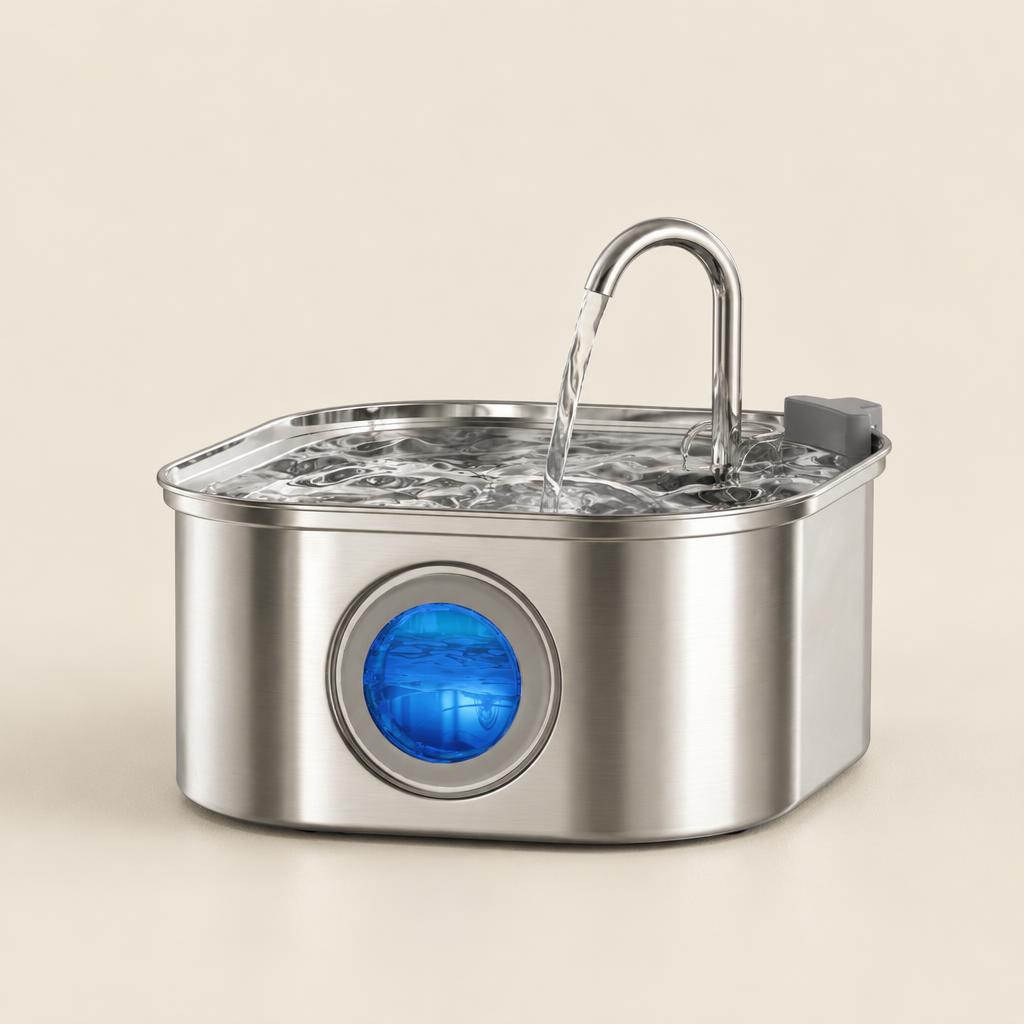
When shopping for a cat water fountain, pet parents frequently debate whether to choose stainless steel, ceramic, or plastic. Price is not the only factor to consider. The material directly influences daily hygiene, ease of cleaning, weight, and longevity, and even affects your cat's willingness to drink. Here is an objective comparison to help you decide.
Plastic: Lightweight and Economical, but Prone to Surface Wear
Plastic fountains are the most common and accessible option. They are lightweight, come in numerous styles, and typically cost less. For first-time buyers, plastic offers an inexpensive way to test whether your cat actually enjoys drinking from running water before you invest more.
The main drawback of plastic is surface vulnerability. Over time, regular washing and scrubbing cause micro-scratches where mineral scale, lingering odors, and biofilm, which is a slimy bacterial layer, readily accumulate. These microscopic grooves make thorough sanitization increasingly difficult over months of daily use.
If you opt for plastic, always choose certified BPA-free models. Clean the surfaces using a soft sponge rather than an abrasive pad, and be prepared to replace the fountain once the basin looks dull, cloudy, or noticeably scratched.
Stainless Steel: Superior Hygiene and Robust Construction
Food-grade stainless steel, such as 304 stainless steel, is widely used in commercial kitchens. Its smooth, non-porous surface cleans effortlessly and resists everyday scratches, which dramatically reduces the spots where stubborn debris, bacteria, and limescale can cling over time.
Stainless steel will not impart chemical smells or strange tastes to drinking water, which is essential for sensitive feline noses. It also provides extra weight for greater stability against playful paws and withstands accidental drops without chipping or cracking.
The primary disadvantage is a higher purchase price compared to plastic. Keep in mind that on most stainless steel fountains, the pump and internal fittings are still plastic. These small parts are completely normal, but they require the same diligent weekly cleaning.
Ceramic: Aesthetic Appeal Requiring Careful Daily Handling
Glazed ceramic fountains offer an attractive, heavy design that complements home decor. The substantial weight prevents cats from sliding or overturning the bowl. As long as the smooth protective glaze remains fully intact, ceramic does not harbor bacteria or absorb unpleasant water odors.
However, ceramic can easily chip, crack, or shatter if dropped during washing. Even a microscopic hairline crack in the glaze creates a porous crevice where grime accumulates, making thorough cleaning impossible and requiring you to replace the fountain for safety.
Ceramic models are best suited for calm households where owners can handle the heavy pieces carefully during maintenance. Take extra care when washing them in the sink to avoid knocking the basin against hard faucets or solid stone countertops.
What Truly Matters Most for Feline Hydration Health
Regardless of material, water safety depends first and foremost on routine maintenance. You should replace the water every two to three days, wash the parts weekly, and change filters on schedule. A neglected stainless steel fountain quickly becomes less hygienic than a well-maintained plastic one.
Plastic bowls are frequently linked to feline chin acne. While veterinarians recognize multiple causes for this condition, bowl cleanliness is certainly a contributing factor. If your cat develops black spots or pimples on its chin, consult your veterinarian rather than jumping to conclusions.
Finally, observe your cat's behavior. Some felines feel unsettled by metallic reflections or cold surfaces, while others do not care at all. Your cat's personal acceptance matters just as much as the hygienic benefits of any specific fountain material.
Practical Guidance for Selecting the Right Fountain
If you want a durable, stable, and easily sanitized fountain that lasts for years, stainless steel is generally the best all-around choice. If your budget is tight, a quality plastic unit works well, provided you replace it once scratches or dullness appear.
No matter which material you choose, examine how easily the parts disassemble, check the availability and price of replacement filter cartridges, and ensure the base is stable. These practical functional details make a tremendous difference in your daily cleaning routine.
During the first few days with a new fountain, keep your cat's old water bowl nearby. Offering both options lets your cat explore the running stream comfortably, ensuring a smooth, stress-free transition to the new drinking station.
Frequently Asked Questions About Fountain Materials
Can stainless steel rust? High-grade 304 food-safe stainless steel resists corrosion remarkably well under ordinary household use with tap water. Simply avoid harsh chlorine bleach and abrasive steel wool, which can damage the protective finish and cause surface discoloration over time.
Is BPA-free plastic safe enough? BPA-free plastic is an improvement, but it does not prevent scratching. Once scratched, BPA-free plastic still traps bacteria and biofilm in tiny grooves, making it much harder to clean thoroughly than smooth steel or intact ceramic.
Could my cat reject a stainless steel fountain? Some cats are temporarily startled by bright reflections or the cool feel of metal. Most adapt within a few days if you place the fountain in a quiet location away from litter boxes and high-traffic areas.
If you want to provide running water, the Veyrulis fountain features a 3.2-liter SUS 304 stainless steel reservoir, filtration that traps hair and impurities, quiet operation, and an illuminated window to monitor the water level. It does not replace a balanced diet or the advice of your veterinarian.