
How to Clean and Maintain a Cat Water Fountain: Complete Routine
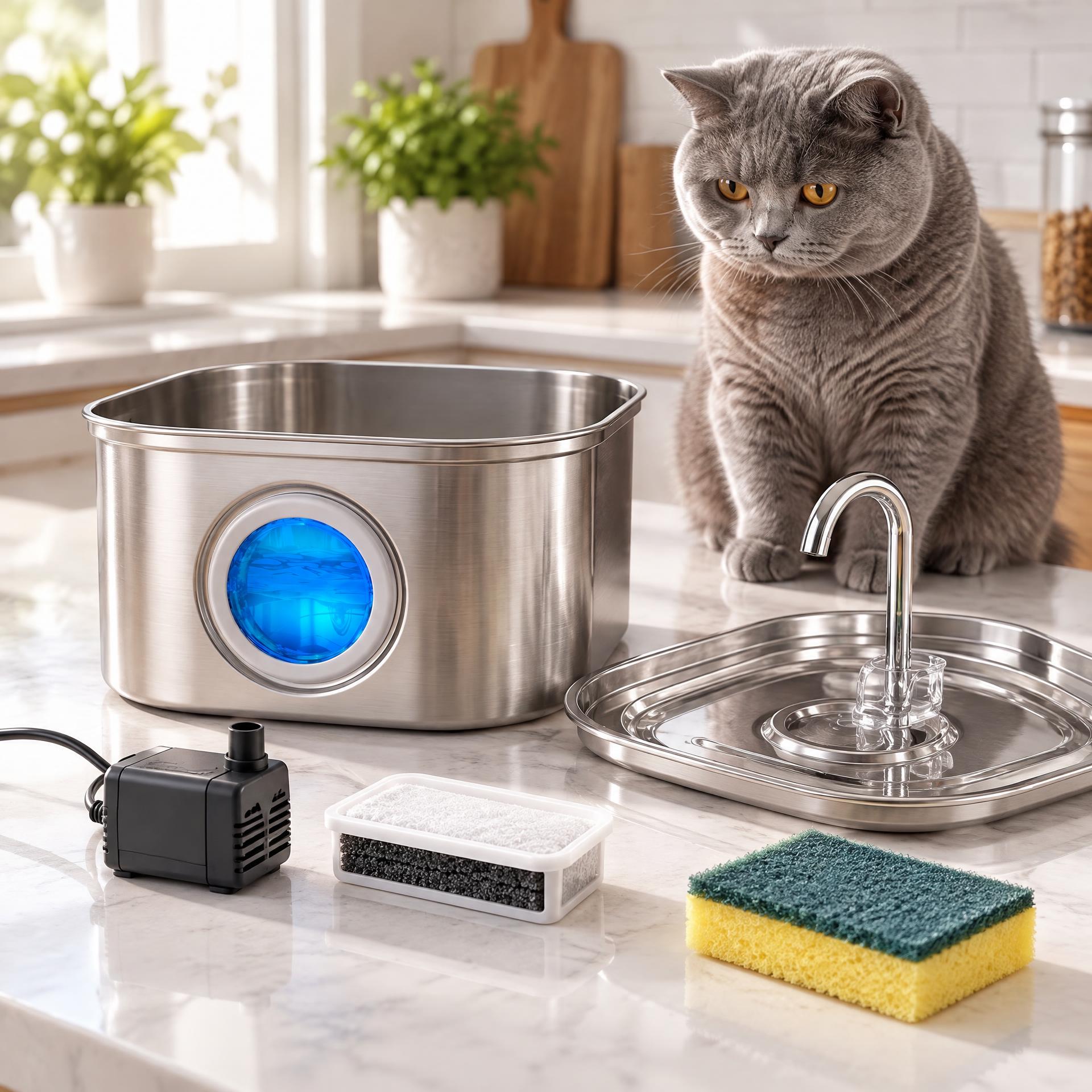
A well-maintained water fountain provides clean, appealing drinking water for your cat while helping the device last significantly longer. When neglected, it quickly clogs with grime, becomes noisy, and loses all of its appeal. Fortunately, knowing how to clean and maintain a cat water fountain requires only a few simple, regular habits. Here is an easy daily and weekly schedule to keep the water fresh without spending hours doing it. This is our general routine guide; limescale, pink slime, and internal pump care are each covered in separate detailed articles.
Every Day: Check the Water Level and Visual Appearance
A transparent viewing window or built-in level indicator makes this daily check straightforward without lifting the top lid or moving the fountain.
Take a quick look at the water level every day, ideally when serving your cat their morning meal. Top it up before it reaches the minimum mark, as a pump running dry produces loud buzzing noises and wears out prematurely.
Carefully inspect the water surface: floating pet hair, scattered food crumbs, cloudiness, or an unpleasant odor mean the water must be refreshed immediately.
Confirm that the water circulates smoothly and that the drinking spout produces a steady, unobstructed stream across the tray.
During warm summer months or in active multi-pet households, this quick inspection may be needed both morning and evening to keep water clean.
Every Two to Three Days: Renew the Drinking Water
Taking care of this routine step takes barely a minute and keeps the drinking water fresh, clean, and noticeably more appealing to your cat.
Even when filtered, the water should be refreshed completely every two to three days. Always empty the entire reservoir rather than simply topping it off, as pouring fresh water over old water fails to make it truly clean.
Take this opportunity to quickly rinse the reservoir with clean tap water and wipe down the surfaces where the water continuously trickles.
Always fill the fountain with clean potable water you would drink yourself. Standard municipal tap water is perfectly suitable in the vast majority of homes.
If tap water in your area is particularly hard, filtering it through a pitcher first can help reduce chalky mineral deposits inside the basin.
Every Week: Deep Clean the Entire Fountain
Whenever possible, let washed parts air-dry for several minutes before reassembling; a dry surface helps delay the rapid return of slimy biofilm.
Unplug the fountain, empty all water, and disassemble every piece: reservoir, lid, spout, filter, and pump. Wash each item with warm water and mild dish soap, rinsing thoroughly to remove every trace of soap residue.
A flexible bottle brush for the reservoir and a small detail brush or cotton swab for narrow spouts help reach hidden corners where biofilm collects.
Open the pump cover to remove trapped pet hair wrapped around the magnetic impeller. Rinse the impeller chamber thoroughly with clean water before reassembling.
Reassemble the components securely, fill the reservoir with clean water to the indicated line, and plug the unit back into the electrical outlet.
Replace the Filter at the Right Time
With a long-haired cat or during seasonal shedding periods, the filter cartridge clogs faster, so inspect it carefully during every weekly cleaning session.
Replace the disposable filter according to manufacturer guidelines, usually every two to four weeks depending on your total pet count and local water quality.
A filter that looks discolored, covered in hair, or smells bad should be replaced immediately. A noticeably weakened water flow also signals that the filter media is saturated.
Rinse the new filter thoroughly under running cold water prior to installation if the manufacturer packaging instructions direct you to do so.
Always keep one or two spare replacement filters at home so you are never caught unprepared when a cartridge change is due.
Every Month: Descale Mineral Buildup When Necessary
Use this regular descaling session to inspect the electrical cord and adapter, replacing them promptly at the slightest sign of wear, fraying, or chew marks.
In hard water areas, soak disassembled parts, excluding the filter, in warm water and white vinegar for thirty minutes, then scrub them gently and rinse thoroughly.
Limescale buildup strains the pump motor and causes unwanted noise; routine descaling prevents mechanical damage and substantially prolongs its working lifespan.
Never clean fountain parts with harsh commercial descalers, pure bleach, or scented products, as chemical residues can irritate your cat or repel them completely.
Never add essential oils or scented extracts to the drinking water under any circumstances, as several common plant oils are toxic to felines.
Common Maintenance Mistakes to Avoid Entirely
Finally, avoid placing the fountain in direct sunlight, because ambient warmth accelerates the growth of green algae and bacterial biofilm between routine cleanings.
Regularly topping up water without full changes, skipping the pump during cleaning, and reusing expired filters make a fountain far less sanitary than a simple bowl.
While cleaning the fountain or letting parts soak, always leave out an alternative bowl of fresh water so your cat remains hydrated without interruption.
Note cleaning and filter replacement dates on a calendar or set recurring smartphone reminders to keep your pet care maintenance routine consistently on schedule.
If your cat avoids their clean fountain, check for lingering soap odors; if their drinking habits change drastically over several days, consult your veterinarian for guidance.
If you want to offer moving water, the Veyrulis water fountain combines a 3.2-liter SUS 304 stainless steel basin, filtration that catches hair and impurities, quiet operation, and an illuminated window to monitor the water level. It does not replace an appropriate diet or advice from your veterinarian.