
Limescale in Your Cat Water Fountain: How to Prevent and Remove It
White chalky marks on the walls, a crust around the spout, and an electric pump that hums louder than usual are familiar sights in hard water areas. Limescale in your cat water fountain is a very common issue. While it is generally not dangerous for your pet, it clogs the device and makes water far less appealing. Here is how to eliminate it and prevent it from returning too quickly.
Where Limescale Comes From and Why It Builds Up
Limescale consists of minerals, primarily calcium carbonate, that are naturally present in tap water. The harder your household water is, the more minerals it contains. As water circulates through the unit and gradually evaporates, these minerals settle onto surfaces, particularly wherever water constantly trickles and dries.
In a pet fountain, water circulates continuously while a small portion evaporates every single day. The dissolved minerals do not evaporate; instead, they stay behind and become increasingly concentrated. This steady process explains why visible deposits form much faster in a fountain than in a simple drinking bowl.
You can determine the exact hardness of your tap water by checking public sanitary reports. These water quality results are published by local health authorities and are usually available at your municipal offices or directly on your local water supplier's official website.
Is Limescale Dangerous for Your Cat?
For an otherwise healthy cat, drinking hard tap water that meets standard safety criteria is not considered dangerous. The minerals ingested through everyday drinking water represent only a minor fraction of their overall intake compared to what they absorb from their daily food.
However, the question is quite different for cats that have previously suffered from urinary stones. In those situations, veterinarians adjust the animal's diet and encourage higher fluid consumption. If your cat has experienced urinary issues, ask your veterinarian whether they recommend a specific type of drinking water.
The real trouble with limescale is therefore primarily mechanical. Mineral buildup damages the submersible pump, restricts water flow, and makes the entire fountain much harder to keep clean over time.
How to Descale the Fountain Step by Step
For difficult corners such as the drinking spout or lid grooves, an old soft-bristled toothbrush is extremely handy. Pay special attention to areas where water streams continuously, as this is usually where the chalky crust becomes thickest.
Start by unplugging the fountain, emptying any remaining water, and disassembling all separate components, including the pump if the user manual allows it. Be sure to remove the filter cartridge, which should never be soaked in vinegar.
Soak the washable parts in a solution of equal parts warm water and white vinegar for thirty to sixty minutes. After soaking, scrub away the loosened deposits with a soft brush, taking care to avoid metal scouring pads that scratch smooth surfaces.
Rinse every part thoroughly with clean water multiple times until the vinegar smell has completely vanished. Reassemble the device, refill it with fresh water, and insert a new filter cartridge if the old one was already saturated.
Taking Proper Care of the Pump
The pump is the component most vulnerable to limescale damage. Mineral deposits stick to the impeller and settle inside its housing, slowing rotation and creating an annoying buzzing sound. Remove the outer cover following the instructions and clean the impeller using a cotton swab dipped in diluted vinegar.
Never immerse the power cord or electrical plug in vinegar, and avoid forcing sealed plastic parts. If the pump fails to restart after careful descaling, its internal mechanism may simply be worn out.
Routine descaling significantly extends the operating life of your fountain pump, particularly if you live in a region with notoriously hard tap water.
Preventing Limescale From Coming Back
Pay attention to how rapidly white streaks reappear between cleanings. This rate shows the actual hardness of your household water and helps you adapt your maintenance schedule without descaling more frequently than necessary.
Replace the water entirely every two to three days instead of merely topping it up, as this prevents dissolved minerals from concentrating. Wipe down the stream paths each time you change the water.
Using a household filter jug often decreases the amount of limescale in the water. If you choose bottled water, pick one with low mineral content rather than water heavily loaded with dissolved minerals.
Finally, schedule a full descaling roughly once a month if your tap water is hard, and whenever you notice new white marks beginning to develop on the fountain.
Cleaning Products to Avoid
Never use commercial household descalers designed for electric kettles or bathroom fixtures, as their chemical residues can cause irritation. You should also avoid undiluted bleach, perfumed cleaning agents, and essential oils, some of which are toxic to cats.
White vinegar and diluted citric acid are straightforward, safe options, provided you rinse everything meticulously. Any lingering smell is enough to make a sensitive cat steer clear of the fountain.
If your cat suddenly avoids the fountain after cleaning, rinse it again thoroughly. Should your pet drink less for several consecutive days without an obvious explanation, consult your veterinarian.
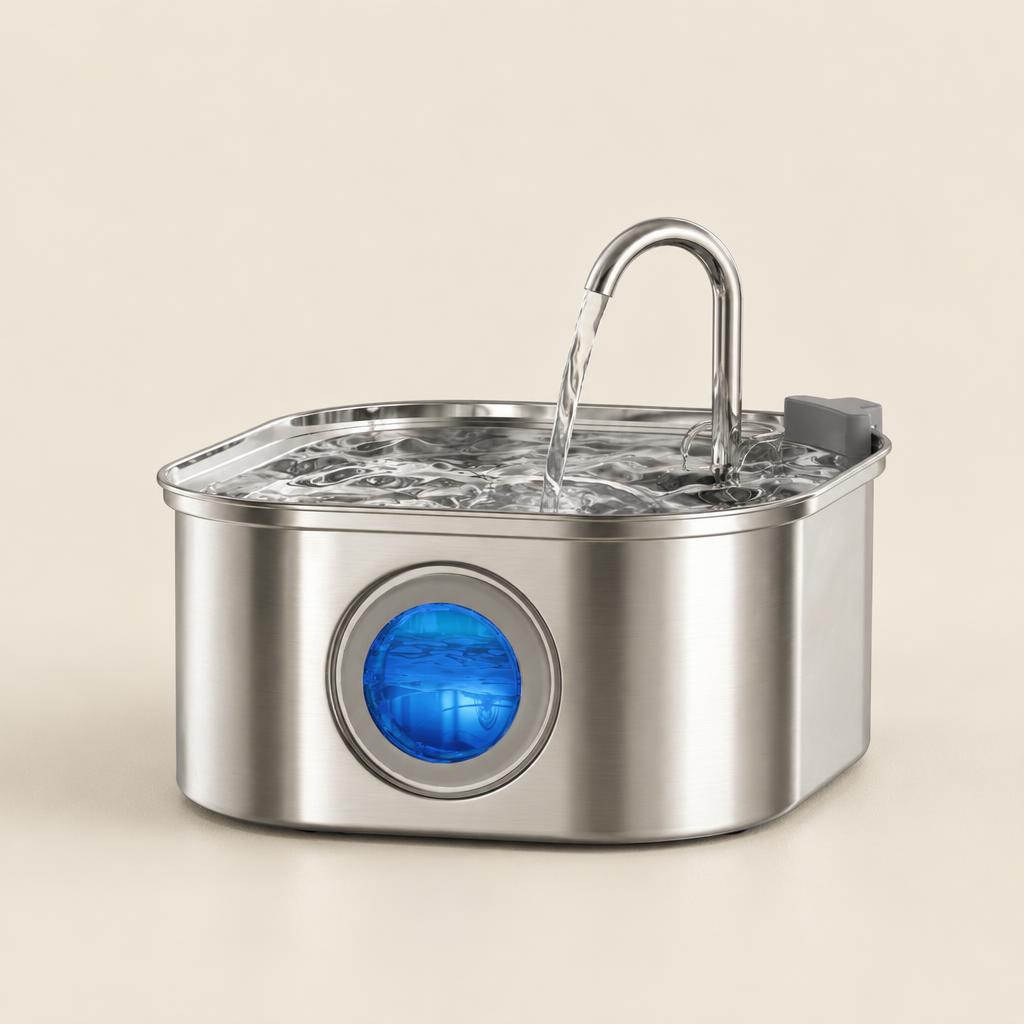
If you want to provide running water, the Veyrulis fountain features a 3.2-litre SUS 304 stainless steel tank, filtration that catches hair and debris, quiet operation, and an illuminated window to monitor the water level. It does not replace an appropriate diet or advice from your veterinarian.