
What Water to Put in a Cat Water Fountain: Tap, Filtered, or Bottled?
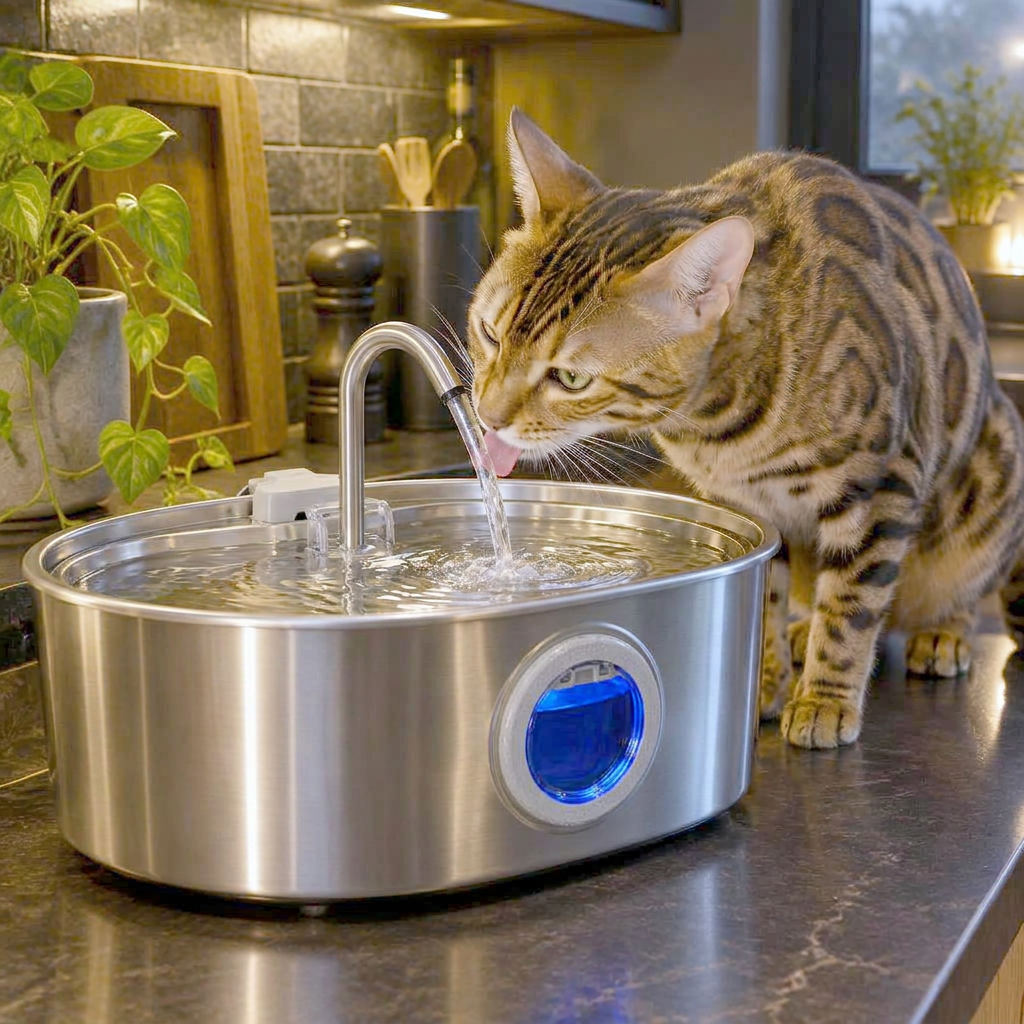
What water should you put in a cat water fountain? While the question seems simple, it comes up frequently among cat owners, particularly in regions with hard water or a pronounced chlorine smell. Should you purchase bottled spring water, invest in a filter pitcher for tap water, or simply leave things as they are? Here are clear, practical recommendations to help you easily select the most suitable water for your cat without complicating your everyday routine.
Tap Water Is Suitable in Most Everyday Cases
You can easily check the quality of your local tap water through municipal reports or official public health websites, where routine sanitary test results are published. These official findings provide details about local water hardness, nitrate concentration, and overall sanitary compliance. Consulting these records helps you determine whether any pre-filtration is genuinely useful before filling your cat's fountain.
In most developed regions, municipal tap water is strictly tested, completely potable, and safe for human consumption. If you can drink it comfortably yourself, it is generally well suited for your cat as well. Using tap water is by far the simplest, most budget-friendly choice, and it creates no unnecessary single-use plastic waste for your household.
If your tap water has a noticeable chlorine smell, an easy trick is to let it sit in an open glass pitcher for several hours at room temperature before pouring it into the reservoir. This resting period allows a significant portion of the chlorine to dissipate naturally into the surrounding air. Some cats are sensitive to chemical scents, whereas others drink without hesitation.
In a few specific circumstances, such as non-potable supplies, untested private well water, or older residential plumbing with lead pipes, you must obviously rely on an alternative water source. Clean, dependable drinking water is just as vital for your feline friend as it is for the human members of your family.
Filtered Water: A Practical Choice for Limescale Buildup
A domestic water filter pitcher can noticeably improve the taste of tap water while reducing limescale deposits inside your cat's drinking fountain. While limescale itself is not dangerous for a healthy cat, it gradually clogs the motor pump over time, reduces water circulation, and forces you to descale the entire fountain far more frequently.
Be sure to change the pitcher cartridge in accordance with the manufacturer's recommendations, since an expired filter loses its effectiveness over time. Remember that the built-in fountain filter primarily captures loose hair, dust, and food debris; it does not replace a filtration pitcher and must also be replaced on a regular schedule.
Bottled Water: Which Options Are Best for Cats?
If you prefer using bottled water, select natural spring water or bottled brands with very low mineral content. Mineral waters with high mineral concentrations, especially elevated levels of calcium and magnesium, are not advised as daily drinking water for cats, particularly those with a history of developing urinary crystals or bladder stones.
Every pet has distinct nutritional and metabolic needs. If your cat follows a prescription urinary diet or has been diagnosed with chronic kidney issues, ask your veterinarian which bottled water is safest. Your vet knows their clinical background best and can offer personalized advice regarding mineral levels.
Types of Water and Additives to Strictly Avoid
Do not use carbonated water, flavored water, or water treated by salt-based domestic water softeners, which often contain excessive sodium levels. Similarly, avoid offering distilled or demineralized water as your cat's everyday beverage, unless you have received specific instructions to do so from your veterinary surgeon.
Never pour milk, meat broths, sugar, or household cleaning detergents into the fountain reservoir. These substances encourage rapid bacterial proliferation, gum up the delicate pump mechanism, and certain culinary ingredients like onion or garlic commonly found in prepared broths are toxic to cats and pose severe health hazards.
During hot summer weather, adding a couple of ordinary ice cubes can help refresh the water, provided you do not make the water uncomfortably icy for your pet.
Refreshing the Water Regularly Whatever You Choose
Even the highest-quality water loses its appealing freshness when left standing for too long. With a pet drinking fountain, empty and completely refresh the water every two to three days, or even more frequently during summer heat or in multi-cat households. Top up the level between full changes whenever necessary.
Take advantage of each full refill to rinse out the tank thoroughly, and clean the entire fountain carefully roughly once a week. Offering clean water in a properly maintained device remains the most effective way to keep your cat happily drinking throughout the day.
Water Quality and Health: Managing Special Cases
For young kittens, elderly felines, or pets living with kidney disease, urinary conditions, or heart problems, water quality is an important topic to discuss with your vet. Specific therapeutic diets often come with precise advice regarding dietary mineral content, and following professional guidance is far safer than switching water types at random.
In the same way, if you notice your cat suddenly drinking substantially more or noticeably less water after a change in water supply, revert to their previous water source and monitor them closely. An abrupt shift in daily water consumption always warrants a prompt veterinary consultation, regardless of what seems to have caused it.
Finally, aim for day-to-day consistency, because cats quickly grow accustomed to the familiar taste and aroma of their water. If you wish to switch from tap water to filtered water, do so progressively by blending the two for several days to prevent your cat from rejecting the fountain.
With the Veyrulis water fountain, you can simply use your tap water: its 3.2-liter SUS 304 stainless steel reservoir does not alter the taste of the water, its filtration captures hair and impurities, and its luminous indicator window shows you when it is time to top up the level.
Sources and further reading
This advice is for information only and does not replace your veterinarian's opinion.