
How to Clean a Cat Water Fountain Pump Step by Step
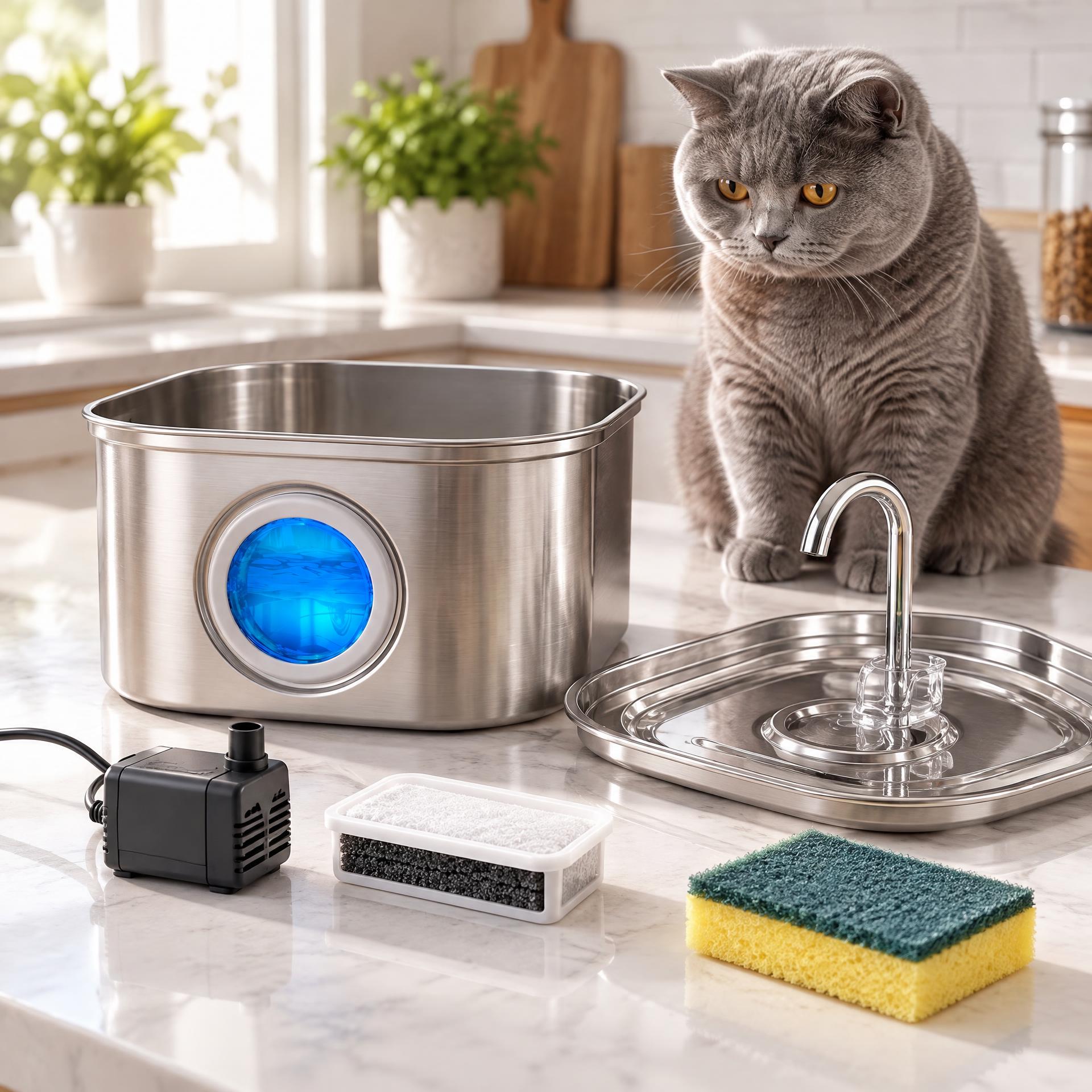
The pump is the part people forget most often, even though it is the heart of the fountain. Stray hair, biofilm, and limescale accumulate quietly inside, eventually slowing the flow or making the motor noisy. Knowing how to clean a cat water fountain pump keeps the water fresh and extends the life of your device. Here is the complete method to do it thoroughly in just a few minutes.
Why the Pump Gets Clogged
Cats that eat close to their fountain often scatter dry kibble crumbs or wet food residue into the basin. These organic particles break down in the water and nourish slimy biofilm. Moving food bowls a short distance away from the water bowl already eliminates a significant amount of this buildup.
All the water in the fountain circulates through the pump several times each hour. Loose hairs that bypass the filter wrap tightly around the impeller, the small magnetic rotor that drives water circulation. Biofilm steadily coats its housing, while mineral scale deposits directly onto the moving parts.
These accumulated layers create resistance against rotation. The pump is forced to work harder, warms up slightly, produces noticeably more noise, and pushes out a weaker stream. Given enough time and neglect, the motor can stall completely.
Regular cleaning is therefore the most reliable way to prevent mechanical failure and keep drinking water appealing to your cat. A quick weekly rinse prevents costly wear and tear.
How Often to Clean It
Quick and frequent maintenance is far more effective than a massive overhaul every two months. Freshly formed slime and recent deposits wash away in mere seconds before they have time to harden.
Cleaning the pump about once a week, at the same time as the rest of the fountain, works well for most homes. If you have several cats, a longhaired companion, or a pet experiencing heavy shedding, checking the pump more frequently is very helpful.
Certain warning signs show that you need to act without delay. Look for a weaker flow, an uneven or sputtering trickle, an unusual humming sound, or an unpleasant smell developing in the reservoir.
Jot down the date of each deep clean on a calendar. This simple habit helps you determine the ideal maintenance rhythm for your specific fountain design and local tap water hardness.
Disassembling the Pump Without Damage
Take a photo with your phone before taking the pump apart for the first time. It serves as an easy reference when reassembling the pieces in the correct order. Place all small components inside a small bowl so they cannot slip down the drain.
Always disconnect the fountain from the power outlet before handling any parts. Empty the water, take off the top cover and filter, then detach the pump from the bottom of the basin, where suction cups typically hold it in place.
Locate the outer pump faceplate, which usually slides or pulls off with gentle pressure. Removing it reveals the impeller cover, which gives you access to the rotor so you can slide it out of its well. Check your product manual if you encounter unexpected resistance.
Never try to take apart the sealed motor housing itself, and never submerge the electrical plug or external cable in water.
Cleaning the Impeller and Chamber
Handle the magnetic impeller gently, as it features a delicate central shaft and a magnet that can crack or warp under force. Never scrub it with rigid metal objects, and guard it carefully so it does not tumble into the sink drain.
Pull away trapped fur by hand or with tweezers, then scrub the impeller using a small brush or cotton swab with a drop of gentle dish soap. Pay special attention to the central spindle where pet hair winds most tightly.
Next, clean the internal impeller chamber and the intake opening, which is often protected by a small plastic grate. A narrow brush, such as a reusable drinking straw brush, is ideal for reaching down into the output tube.
If you see limescale, soak the disassembled washable parts in a solution of warm water and white vinegar for roughly thirty minutes. Scrub gently afterward and rinse everything thoroughly with clean tap water.
Reassembly and Testing the Flow
Slide the impeller back into its housing, replace the inner cap to ensure it clicks firmly into position, and press the pump flat against the base of the tank. Reattach the silicone riser tube if your model uses one.
Fill the basin with fresh water up to the recommended level mark before plugging the cord back into the wall. A fountain pump must never run dry, as friction can overheat the motor. Fit a fresh filter cartridge if it is time for a replacement.
Watch the water circulate for a couple of minutes. A steady, quiet flow confirms that all parts are correctly aligned. A clicking or buzzing sound usually points to a misaligned impeller or trapped air.
What to Do If It Stops Working
If the pump fails to start after cleaning, first verify the wall connection, the power adapter, and the water level. Remove the faceplate briefly to check that the impeller spins freely by hand without jamming.
If the unit still will not turn on, the motor may simply be worn out. Get in touch with the seller or brand to check for replacement pump availability or to review your warranty terms.
In the meantime, set out a clean bowl of fresh water for your cat and change it daily. Cats must never be left without access to clean drinking water, even for a few hours.
If you want to offer moving water, the Veyrulis fountain features a 3.2-liter SUS 304 stainless steel basin, filtration that catches hair and debris, quiet operation, and an illuminated window to monitor the water level. It does not replace an appropriate diet or veterinary advice.