
Changing litter gradually: organising a choice-based transition
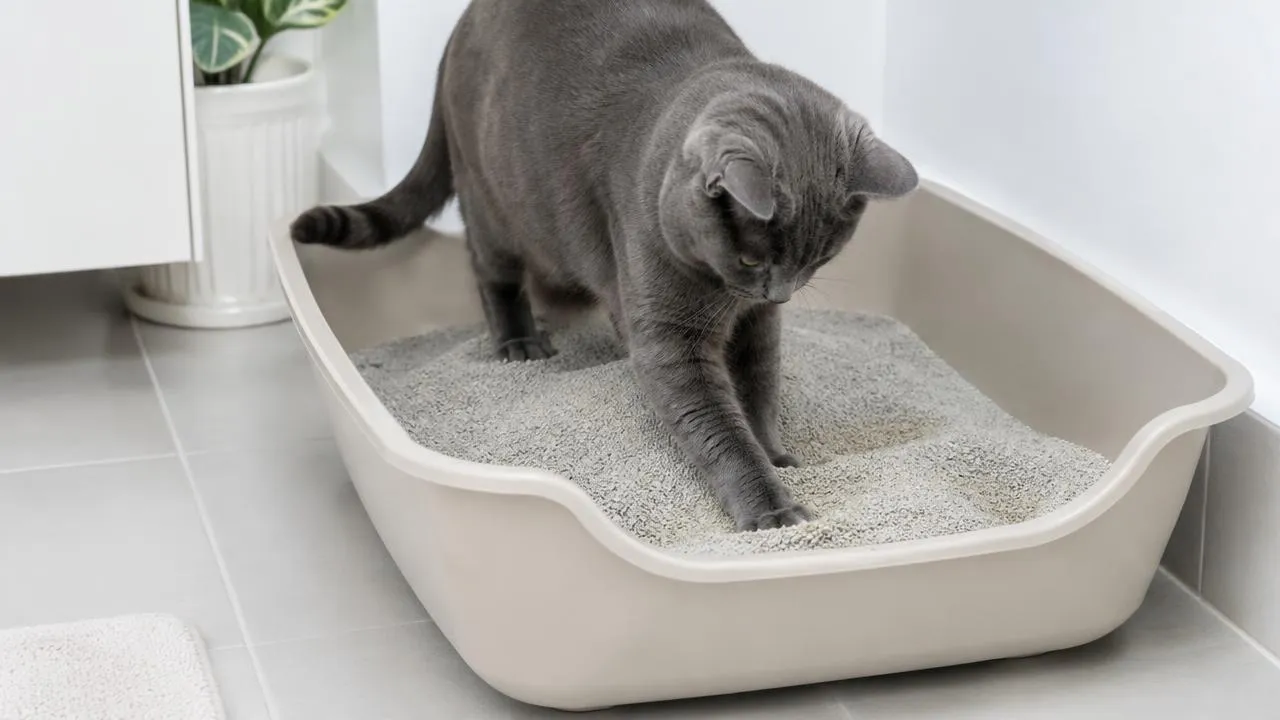
Changing litter gradually does not necessarily mean applying a numerical mixture over several days. The supplied veterinary texts do not give a universal recipe for proportions or duration. AAFP/ISFM guidelines primarily suggest recognising individual preferences through choices of materials, depths and containers. They also mention gradually adding a chosen substrate for cats accustomed to outdoor elimination. One can adopt a cautious method: separate modifications, preserve usable access and observe before proceeding.
Define what you actually wish to replace
The word litter often covers two objects: the material and the toilet containing it. Before the transition, clarify your objective. Do you want to change only the granules, try another depth or also modify the tray? This clarification allows for following the AAFP/ISFM logic of evaluating preferences instead of attributing the cat's reaction to an unidentified novelty. Precision helps distinguish between environmental factors and the specific substrate used.
Note current conditions: material used, location, container shape, maintenance and access habits. You thus have a starting point to compare proposals. If outdoor deposits already existed, mention them to the vet before considering them a simple reason for purchase. The guide highlights that inappropriate elimination can mix medical causes and environmental factors; a transition does not distinguish between them on its own. Accuracy is essential for any professional diagnosis.
Organise a comparison rather than an imposed replacement
AAFP/ISFM recommendations suggest trials with multiple trays containing different substrates and varying levels. For a clear first trial, you can keep a used toilet and present another option. The idea is to observe where the cat eliminates, without immediately removing all its usual possibilities. This is an application of individual choice, not a protocol guaranteeing rapid adoption. Respecting the animal's pace is central to these veterinary guidelines.
The text mentions gradual incorporation of the desired substrate when the cat prefers an indoor material comparable to that used outdoors, such as sand or soil. This indication provides neither a percentage nor a schedule valid for every commercial change. Do not transform the principle of progressivity into a mandatory formula. If a mixture is considered, discuss its relevance within the specific context of your animal with a qualified professional.
Choose characteristics to compare with discernment
The starting point generally advised by AAFP/ISFM is a sandy, fine, unscented and clumping material, with a minimum thickness of three centimetres. Preferred depths may nevertheless vary. Deodorising powders, liners and double bottoms are discouraged. These markers serve to select reasoned trials; they do not allow for promising that a given texture will please everyone. Individual variation remains the primary factor in determining success during any litter transition process.
Maintenance must remain consistent during the comparison. Remove soiled materials daily and top up as needed, as the document recommends. An option used less but also maintained less does not properly inform on texture preference alone. For the container, the advised washing uses soap and hot water, notably avoiding ammonia products and strong chemical agents. Cleanliness ensures that reactions are based on the substrate rather than hygiene levels.
Read reactions without fixing a success date
Observe concrete usage: elimination in each tray, posture, potential scratching and new deposits elsewhere. Guidelines associate a posture balanced on the edges with possible aversion to the substrate or its dirtiness. If this appears, note it as a clue to explore, not as proof that your cat must simply "get used to it" for longer. Monitoring these physical cues helps identify discomfort before the animal completely rejects the new area.
A trial can also be disrupted by its location. The authors explain that toilets must be accessible without confrontation with another cat and away from noisy or busy areas. If the new option is in a less secure passage, its low usage does not isolate a material preference. Restart the organisation with this limitation in mind, rather than concluding on the granules alone. Placement is as critical as texture choice.
Knowing when to suspend trials and request an evaluation
The MSD Veterinary Manual describes frequent urination, straining, blood and urine outside the box as characteristic signs of lower urinary tract diseases. Their appearance during a transition does not prove it is the cause. Contact a vet; repeated attempts without visible urine require immediate advice, without waiting for the end of an adaptation schedule. Medical emergencies must take precedence over any environmental adjustments or new litter trials being conducted.
For stools, AAFP/ISFM recommends an evaluation of outdoor episodes including notably the search for constipation or diarrhoea. Do not continue changes as if it were necessarily a disagreement with the texture. A report separating trial dates and observed manifestations will help the practitioner place events in order, without confusing succession and explanation. Clear documentation is vital for the veterinarian to assess the situation correctly and rule out underlying health issues.
Once a proposal is actually used, take time to document this use before a new modification. The goal remains obtaining suitable toilets, not respecting a transition speed. And if the change includes an automatic device, check the manual for the exact model: no mixing method or preference observation dispenses with confirming the specific characteristics of this equipment. Safety warnings and technical specifications must be followed precisely to ensure animal welfare.
At Accessoires Chat, the project for a round-format connected automatic litter box remains in preparation, with no current sale. The price has not received validation. The image is illustrative, while specifications must be confirmed in the manual of the delivered model. This presentation therefore remains distinct from a commercialised offer and a fixed technical description. The product remains a draft not for sale with illustrative imagery. No new claims or prices.
Sources and further reading
- AAFP and ISFM Guidelines for diagnosing and solving house-soiling behavior in cats (Journal of Feline Medicine and Surgery, 2014)
- Manuel vétérinaire MSD — Lower Urinary Tract Disease in Cats
This advice is for information only and does not replace your veterinarian's opinion.