
Why Does My Cat Drink from the Toilet and How to Stop It
Have you caught your cat leaning over the toilet bowl or found wet paw prints on the seat? If your cat drinks from the toilet, you are not alone. While this habit seems strange, it stems from natural feline instincts. However, it also introduces serious health risks from chemical cleaners. Here is why cats do it and how to guide yours toward safer hydration.
Why Are Cats Attracted to Toilets?
Toilet water often stays cooler than standing water in a standard bowl placed in a heated room. Because the tank refills with fresh tap water whenever someone flushes, and bathrooms are typically cooler, the bowl remains consistently refreshing to a thirsty pet.
The wide porcelain bowl also provides a generous surface where cats easily judge water depth. Unlike narrow dishes, this wide opening prevents their sensitive whiskers from brushing the sides, eliminating whisker fatigue while they drink.
The swirling motion and distinct sound of a flush naturally trigger feline curiosity. Many cats quickly learn to associate that rushing noise with an influx of fresh water and will deliberately arrive right after someone uses the restroom.
Finally, poor bowl hygiene drives cats to seek alternatives. If an ordinary water bowl gathers dust, sits directly beside a litter box, or remains stale for days, a cat instinctively searches for a fresher supply.
Potential Health Risks of Toilet Water
The primary danger comes from cleaning products, including bleach, limescale removers, disinfectant sprays, and toilet gels. Even when diluted, these harsh substances can cause chemical burns to the mouth and inflame the digestive tract.
Drop-in cistern tablets and rim blocks present a continuous threat, leaching chemicals and dyes directly into the standing water. A cat drinking from the bowl regularly faces repeated exposure to these toxic ingredients.
Stagnant toilet water also harbours bacteria that may trigger gastrointestinal upset. Furthermore, kittens or frail cats risk falling into the slippery bowl, creating a serious danger of accidental drowning if they cannot climb out.
If your cat drinks treated toilet water and shows signs like drooling, vomiting, lethargy, or breathing difficulty, contact your veterinarian or an animal poison control centre immediately for professional guidance.
The Simplest Fix: Close the Lid
Getting into the habit of keeping the toilet lid closed is the most effective solution. Remind family members and houseguests to keep it down, or post a small reminder note in the bathroom until everyone complies.
You can also keep the bathroom door shut when the room is not in use. Restricting access entirely stops curious pets from investigating the plumbing or jumping onto slippery porcelain surfaces.
Avoid using rim hangers or cistern tablets while your cat can access the toilet, and rinse thoroughly after scrubbing. Keeping the water chemical-free prevents accidental poisoning if someone forgets to close the lid.
While closing the lid removes the danger, it does not address your cat's underlying need for appealing hydration. You must also provide an attractive, clean water source that satisfies their natural preferences.
Creating a More Appealing Water Bowl
If your cat enjoys the cool bathroom environment, place a designated bowl there, provided the litter box is elsewhere. Your pet will enjoy the familiar atmosphere while drinking clean water free of chemicals.
Set up drinking spots in quiet areas away from litter trays and food dishes. Choose wide, shallow bowls made of ceramic, glass, or stainless steel that do not trap odours or irritate sensitive whiskers.
Refresh the water daily by emptying the bowl completely, cleaning it, and refilling it with cool water. Water that gathers dust or room odours quickly loses its appeal to a discerning cat.
Place multiple drinking stations throughout your home. When your cat regularly encounters fresh water on their daily routes, they feel far less tempted to search for it in the toilet.
Moving Water: An Effective Solution
Give your cat time to adjust to any new fountain. Some cats adopt it within minutes, while others need several days. Never force them, and keep their old bowl nearby during the transition.
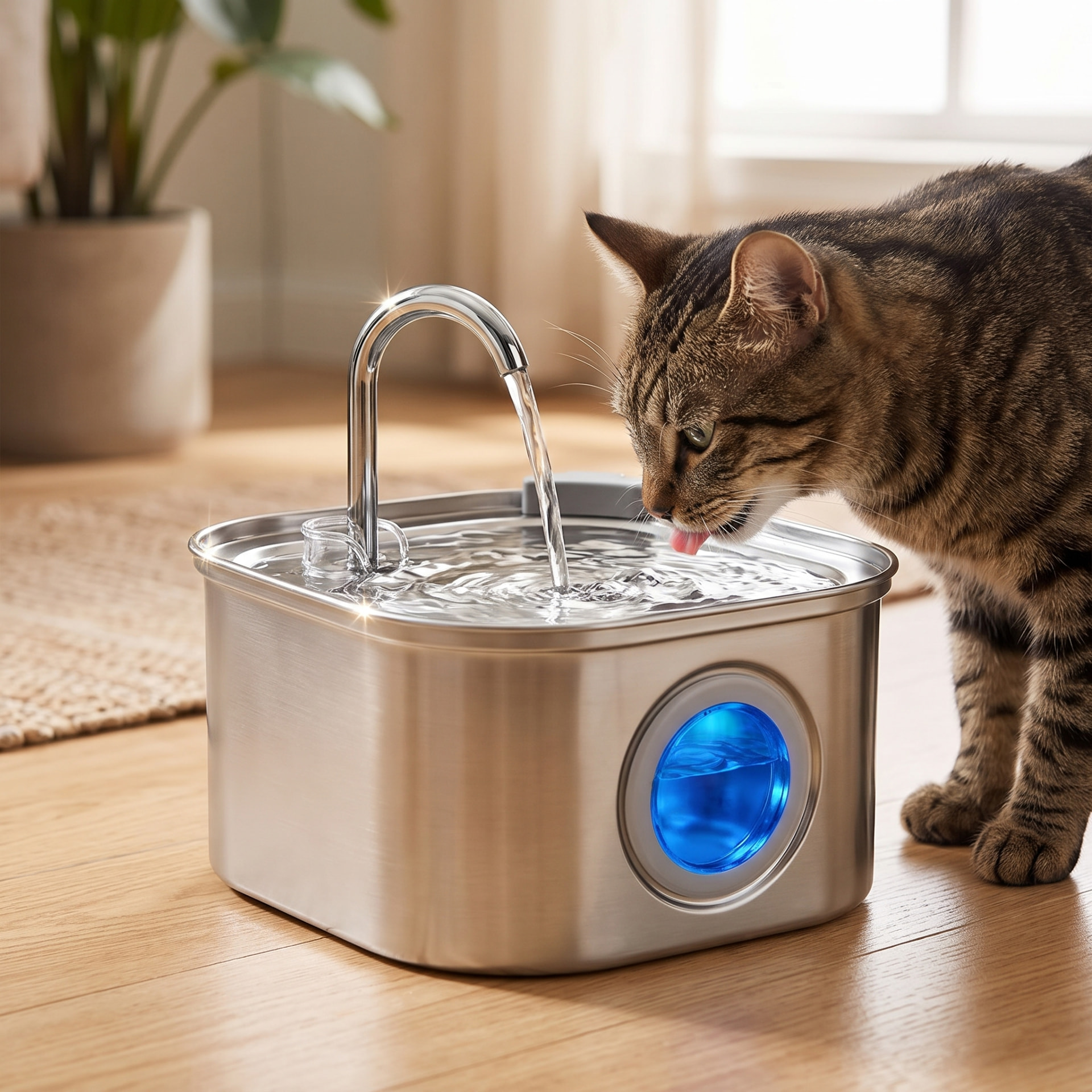
Many cats that drink from toilets crave running, oxygenated water. A pet drinking fountain replicates this fresh movement hygienically, satisfying their preference without exposing them to bathroom germs or cleaning chemicals.
Place the fountain near where your cat usually drinks, perhaps even in the bathroom initially. Once your pet drinks from it confidently, you can gradually move it to a more convenient location.
Maintain the fountain regularly with thorough washings and filter changes. A neglected fountain with stagnant water or a clogged pump quickly loses its appeal, driving your cat back to unwanted water sources.
When to Consult Your Veterinarian
A few days of careful observation is usually enough to clarify whether your cat's drinking habit is behavioural or a sign of an underlying medical problem.
If your cat suddenly seeks water everywhere, drinking from sinks, glasses, or toilets, they may have an increased thirst. Polydipsia can signal conditions such as chronic kidney disease, diabetes, or hyperthyroidism.
If this behaviour represents a sudden shift, measure their daily water intake over several days and discuss it with your veterinarian. Tracking their consumption helps the vet assess their condition accurately.
Increased urination, unexplained weight loss, or changes in appetite also warrant a veterinary consultation. Prompt evaluation ensures underlying conditions are diagnosed and managed early.
If you wish to offer running water, the Veyrulis fountain features a 3.2-litre SUS 304 stainless steel reservoir, filtration that captures hair and impurities, quiet operation, and an illuminated window to monitor the water level. It does not replace a suitable diet or veterinary advice.
Sources and further reading
This advice is for information only and does not replace your veterinarian's opinion.