
Why Does Your Cat Prefer Drinking from the Tap? The Appeal of Running Water
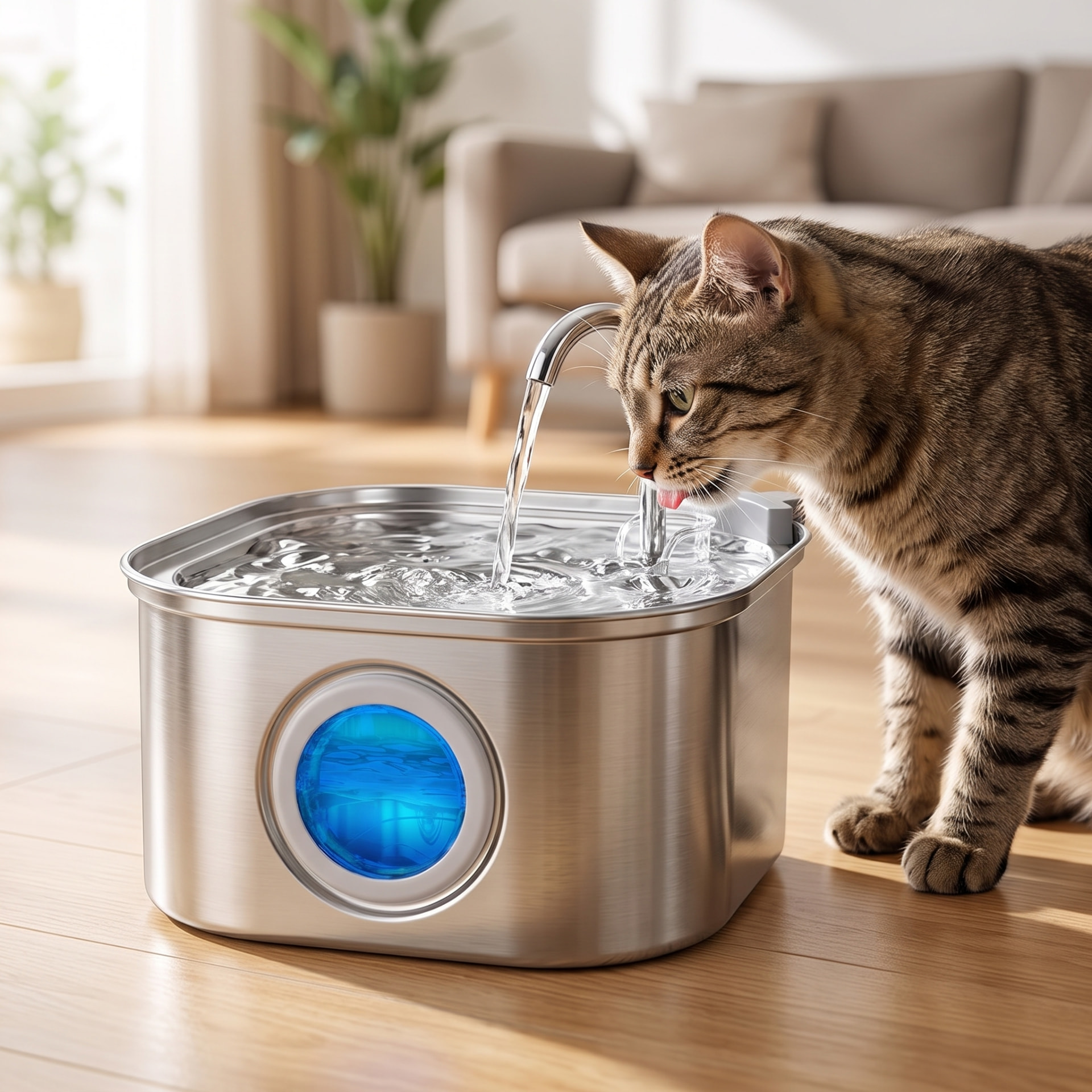
Your cat follows you into the bathroom, perches on the sink, and stares at you expectantly until you turn on the faucet. If your cat prefers drinking from the tap rather than from a water bowl, this is actually one of the most common feline behaviors. Far from being a mere whim, it reveals a great deal about how cats perceive water in their environment. Let us explore why this happens and how you can work with this natural preference. Here, we focus specifically on the attraction of running water; the question of water renewal and temperature is addressed in our article on cats that will only drink fresh water.
Running Water Naturally Attracts Cats
Movement immediately captures a cat's attention. A slender trickle of water catches the light, makes a soft sound, and changes constantly, stimulating sharp predatory senses. Where a motionless bowl easily goes unnoticed on the floor, an open faucet turns into a captivating event that engages feline curiosity.
Animal behaviorists also link this preference to an ancient wild instinct. In nature, running water is generally safer and less contaminated than standing pools. Even when your household bowl is cleaned and refreshed daily, your domestic cat can remain deeply attached to this protective survival reflex.
Water Perceived as Fresher and Cleaner
Water straight from the faucet flows cool, without dust or loose fur floating on top, and without the stale odor that sitting water can develop after a few hours. For an animal with such an extraordinary sense of smell, this difference is immediately noticeable and highly appealing.
Cats also see a moving liquid surface much better than completely still water, where depth can be difficult for them to judge. Some cats dip a paw into their bowl before drinking for this very reason. At the tap, they can see exactly where the stream is without needing to test it first.
A Daily Habit Connected to You
Visiting the faucet is often tied to a moment of bonding. A smart cat quickly learns that jumping onto the sink gains your full attention and prompts you to turn on the water. This pleasant interaction can develop into a daily ritual they look forward to, particularly if they spend hours alone during the day.
Physical height also matters a great deal. Up on a kitchen counter or bathroom vanity, a cat sits elevated, enjoys a clear view of the surrounding room, and feels completely secure. By contrast, a bowl placed directly on the floor in a busy hallway or near a litter box feels far less comfortable.
The Limitations of the Tap in Daily Life
Allowing your cat to drink from the sink is not dangerous in itself, provided your tap water is safe and potable. However, this routine brings practical drawbacks: your cat becomes entirely dependent on your presence to drink, which can reduce their fluid intake whenever you are away from home or busy.
This habit also causes water waste and can raise hygiene questions if your pet walks across kitchen food prep counters. Furthermore, you need to stay mindful of household cleaning agents, hand soaps, or cosmetic products that might leave residues around the sink basin.
An important health consideration: if your cat suddenly starts asking for water much more frequently than before, do not assume it is merely an increased fondness for the faucet. A marked rise in thirst can be a sign of illness and justifies a visit to your veterinarian.
How to Offer an Alternative Your Cat Accepts
The goal is not to ban the tap overnight, but to provide an equally enticing alternative. Place a fresh water station in a calm, quiet area, ideally slightly raised off the floor, and keep it well away from both their food dish and their litter box.
Select a wide, shallow container that does not press against their whiskers, and make sure to empty, wash, rinse, and refill it at least once a day. Setting up multiple water stations throughout your home provides extra opportunities to drink and supports good daily hydration.
To recreate the enticing movement of a faucet, a running water source is often the most effective solution. Set it up initially near the spot where your cat already likes to drink, allow them to investigate at their own pace, and never force them. The transition usually takes just a few days.
Should You Stop Your Cat from Drinking at the Tap?
You do not necessarily have to eliminate this habit completely if it does not bother you and the water is safe. What matters most is that your cat always has constant access to clean, appealing water so they do not rely solely on you. If you want them off the counters, avoid scolding; instead, reward them with gentle praise, petting, or playtime when they use their proper water station.
Finally, keep an eye on regular habits. A cat that drinks willingly throughout the day, urinates normally, and shows good energy is properly hydrated, regardless of their favorite drinking spot. If you ever have doubts about their actual water intake, your veterinarian can help you evaluate their hydration.
It is precisely for cats that prefer drinking from the tap that we chose the Veyrulis fountain: its spout releases a continuous stream of water reminiscent of a sink faucet, while filtration traps hair and impurities. Its 3.2-liter SUS 304 stainless steel reservoir keeps water accessible even when you are away, and its quiet operation goes unnoticed in the home.
Sources and further reading
- International Cat Care — Encouraging your cat to drink: a guide for caregivers (PDF)
- Cornell Feline Health Center — Hydration (besoins en eau, signes et causes de déshydratation)
This advice is for information only and does not replace your veterinarian's opinion.