
How to Keep Your Cat Hydrated in Summer and Heatwaves
Cats often handle warm weather better than dogs, but intense summer heatwaves remain demanding for them, especially seniors, overweight pets, sick cats, or flat-faced breeds. During hot periods, cats lose more water while standing water bowls warm up quickly and become unappealing. Here is practical advice on how to keep your cat well-hydrated and comfortably cool when high summer temperatures arrive.
How Cats Regulate Body Heat
Outdoor cats generally adapt to climbing summer temperatures by resting in the shade during the hottest parts of the day. In contrast, indoor apartment cats depend entirely on the temperature of the home, particularly on upper floors or directly under the roof.
Cats sweat very little, releasing moisture almost exclusively through their paw pads. To cool down, they seek out cool areas, reduce their activity, stretch out across tiled floors, and groom themselves more frequently: saliva evaporating from their coat helps dissipate body heat.
These natural cooling mechanisms have clear limits. When temperatures soar, especially inside poorly ventilated housing, a cat can quickly become dehydrated or suffer from life-threatening heatstroke.
Senior cats, young kittens, obese cats, those with heart or respiratory conditions, and flat-faced brachycephalic breeds such as Persians face the highest risk during summer heatwaves.
Keeping Drinking Water Fresh and Appealing
Keep a bottle of water in the refrigerator during hot weather. Having chilled water on hand lets you quickly refresh your cat's bowl with water that is pleasantly cool, making it much more tempting.
In summer, change your cat's drinking water at least twice a day. Lukewarm water filled with dust or stray insects will quickly be ignored. Place water bowls in shaded spots, well away from sunny windows.
Set up multiple drinking stations throughout the coolest rooms in your home. You can drop a few ice cubes into a bowl; some cats enjoy batting them around and end up drinking more. Keep the water cool, never ice-cold.
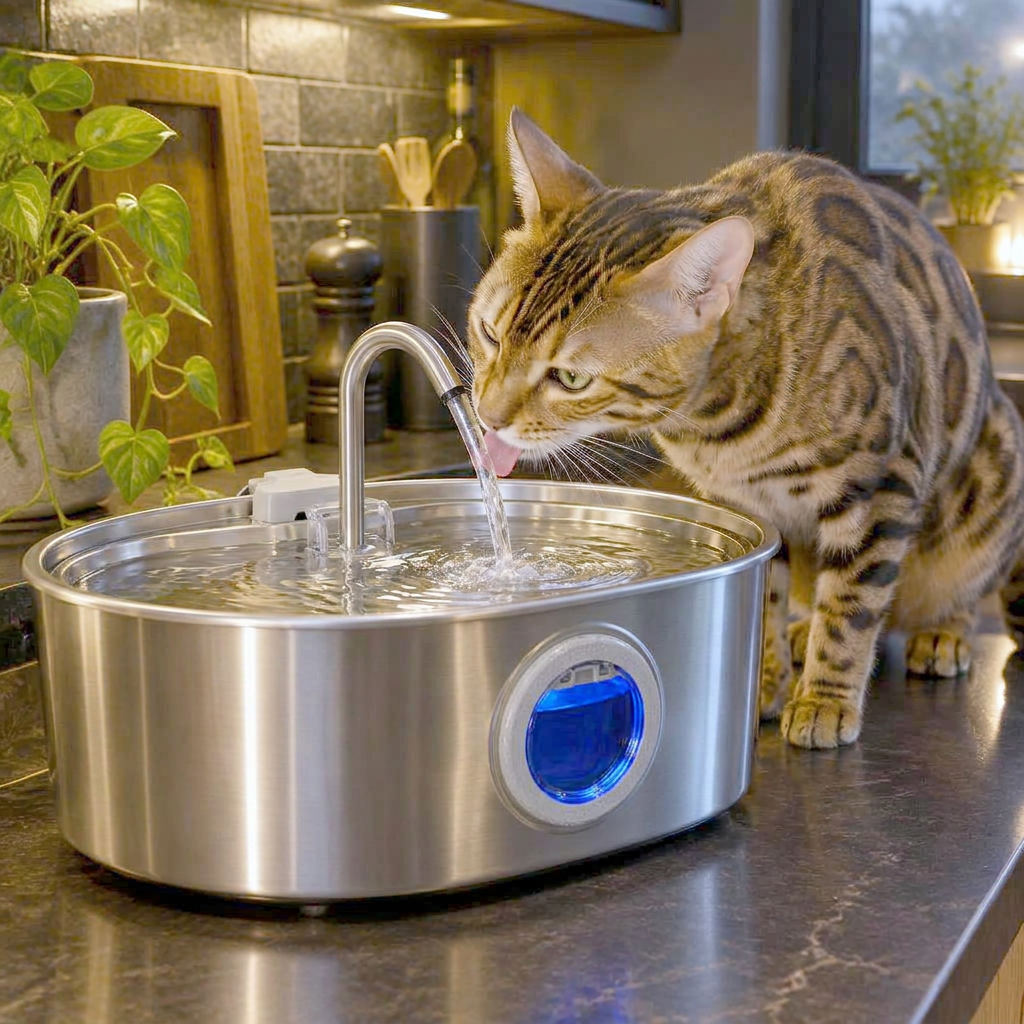
A well-maintained pet fountain provides running water that appeals to many cats. Hot weather speeds up evaporation, so check the water level more often and clean the fountain regularly, as biofilm forms much faster in warm conditions.
Cooling Down Your Living Space
Pay close attention to open windows during hot spells. A cat searching for a cool breeze might try to squeeze through an open or tilted window. Fit screens or protective netting to prevent falls, which occur frequently in summer.
Keep shutters and curtains closed during the hottest hours of the day, and air out your home early in the morning and late in the evening. Allow your cat free access to cooler spaces, such as tiled bathrooms or clean basements.
Placing a damp cloth over part of your cat's bed or offering a cool ceramic tile can give them a soothing spot to rest. A fan helps circulate stagnant air, provided your cat is free to move away from the breeze.
Never leave a cat inside a car, even for just a few minutes, nor in a conservatory, sunroom, or unventilated attic room that traps intense heat.
Adjusting Diet, Grooming, and Activity
Brush your cat more frequently throughout the summer, particularly if they have long fur. Removing dead undercoat helps air circulate close to the skin, allowing your pet to cope with the heat much more comfortably.
Wet food contains high moisture levels, making it an excellent way to boost your cat's fluid intake in summer. Serve smaller portions, since wet food spoils rapidly in heat, and clear away any leftovers after a few hours.
Avoid vigorous play sessions during the hottest parts of the day. Save interactive games and activity for early mornings and cooler evenings, when temperatures drop and your cat feels naturally more active.
For cats with outdoor access, make sure reliable shade and fresh drinking water are always available in the garden, and ensure they can come indoors freely to rest in a cool room.
Recognizing the Signs of Heatstroke
A cat suffering from heatstroke will pant with an open mouth, which is very unusual for felines. They may appear restless or heavily lethargic, with bright red gums, excessive drooling, an unsteady gait, or vomiting.
Heatstroke is a critical veterinary emergency. Move your cat to a cool location immediately, moisten their coat with cool but not icy water, offer fresh water without forcing them to drink, and call your veterinarian right away.
Never apply ice directly onto your cat's skin, and do not wrap them in a soaking wet towel, as damp fabric traps heat against their body rather than releasing it into the air.
Monitoring for Feline Dehydration
During a heatwave, check on your cat several times a day. Any cat that stops drinking, refuses to eat, remains prostrate, or displays dry, sticky gums should be examined promptly by a veterinarian.
Keep a close eye on the litter box as well. Very infrequent urination or passing dark, highly concentrated urine can signal that your cat is not receiving enough fluids to stay properly hydrated.
If your cat lives with a chronic health condition, consult your veterinarian before summer arrives to find out what specific precautions and protective measures you should put in place.
If you would like to offer moving water, the Veyrulis fountain features a 3.2-litre SUS 304 stainless steel reservoir, filtration that captures hair and impurities, quiet operation, and an illuminated window to monitor the water level. It does not replace a suitable diet or advice from your veterinarian.
Sources and further reading
This advice is for information only and does not replace your veterinarian's opinion.