
Cat balancing on the litter box edge: what to check?
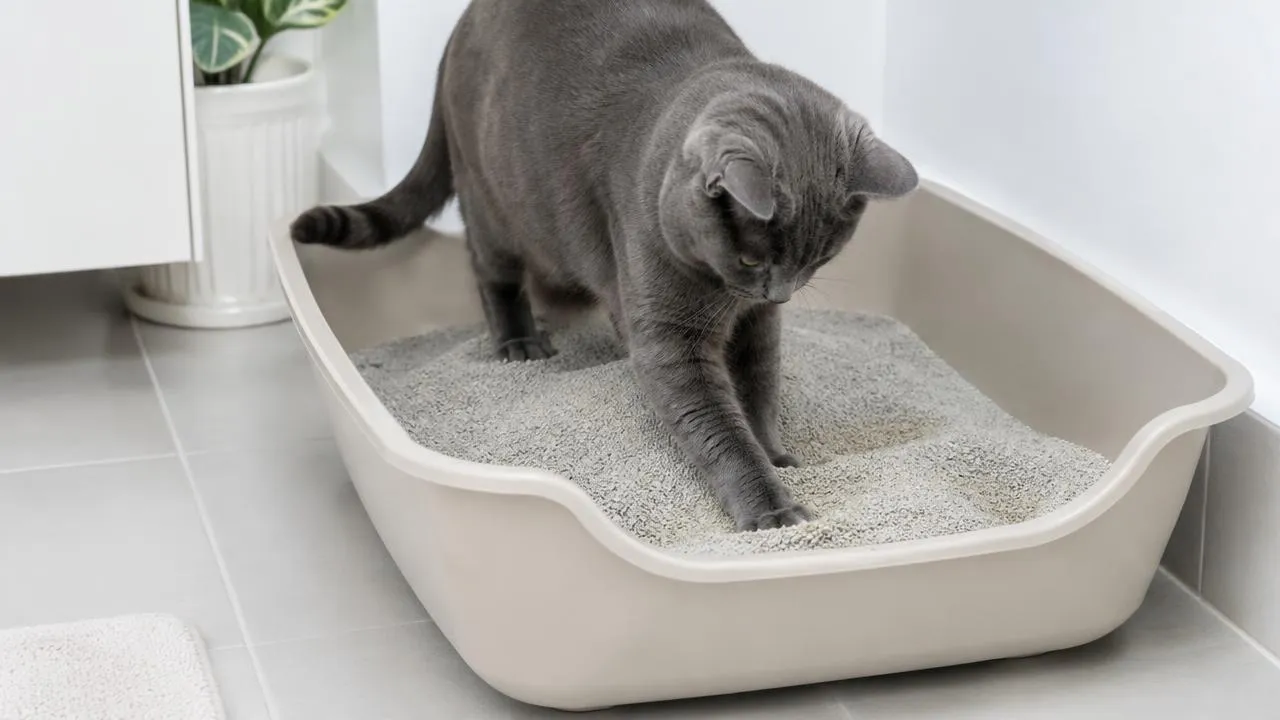
Your cat places its paws on the rim and only leaves a cautious foothold in the granules. This position deserves attention, even when nothing overflows. AAFP/ISFM guidelines specifically mention the cat balancing on the litter box edge: this attitude may indicate aversion to the substrate or soiled material. The key word is 'may'. The posture opens an investigation into toileting and health; it does not allow for immediately choosing a new litter.
Observe foot placement and the sequence of the visit
Describe what the animal does before modifying its installation. How many paws remain outside? Does it enter entirely at certain times? Does the posture appear on all trays or only one container? These questions put into practice the individualised evaluation advocated by the AAFP/ISFM. They separate the behaviour actually seen from assumptions about what the cat feels. Accurate observation is essential before making any changes to the current setup.
The document also reports that cats without elimination problems tend to dig more before eliminating than those presenting difficulties. This does not turn an absence of scratching into a diagnosis. Instead, associate this observation with foot placement, tray usage, and any external deposits to provide a complete description to the professional following your animal. These details help form a clearer clinical picture of the feline's daily interaction with its environment.
Examine the material before seeking an accessory
The AAFP/ISFM emphasises the possible gap between arguments appreciated by humans and feline preferences. A scent or attractive mention on the packaging does not guarantee the cat's comfort. The authors specifically discourage deodorisers, scented powders, liners, and floor bags. Real contact with the surface matters more than its commercial presentation. Understanding the cat's tactile experience is vital for ensuring long-term acceptance of the chosen litter material and container.
Generally, they suggest a fine, sandy, clumping, and unscented material, with at least three centimetres of depth. However, depth preferences vary according to individuals. To explore them, the text advises providing several trays offering different substrates and levels. Present this possibility as a preference trial, not as a certainty that all cats will choose exactly the same combination. Every cat may react differently to various textures and depths offered.
Make cleanliness a distinct verification
Reluctance to place paws may also concern a soiled litter box. Recommendations require removing waste at least daily, topping up the material when necessary. No product eliminates this maintenance requirement. Before blaming the texture, verify how the tray is actually used and maintained, rather than relying solely on its general appearance. Proper hygiene is the first step in addressing any perceived aversion to the chosen bathroom area or substrate.
Regarding the container, the guide indicates washing every one to four weeks depending on the situations and approaches described, using soap and hot water. It recommends avoiding strong chemical substances and ammonia-based cleaners. This maintenance review must remain identifiable in your tracking: if you also change the tray and granules, the interpretation of the results will be less clear. Consistency in cleaning methods helps isolate the cause of behaviour.
Check interior space and ease of entry
The rim is not the only element to look at. The AAFP/ISFM text warns that a small covered tray may prevent a large cat from adopting its usual posture. The recommended length generally corresponds to one and a half times the distance from the nose to the base of the tail. Evaluate the usable space for the body, not just the external footprint of the installed container. Size constraints matter.
Joint pain can also make a very low opening necessary. The authors suggest moving a toilet closer to the recovery area when pain or weakness limits movement. It is not about asserting that every perched position reflects osteoarthritis: this possibility must be assessed clinically, and not deduced from an amusing image or a single visit to the tray. Physical comfort influences how the cat interacts with the box daily.
Maintain urinary vigilance and compare trials
The MSD Veterinary Manual cites straining, frequent urination, blood, and urine deposited outside the toilet among signs of lower urinary tract diseases. If these manifestations accompany the posture, the evaluation should not be limited to the substrate. A repeated attempt without visible urine requires immediate veterinary contact, rather than a new trial of granules while waiting. Prompt medical consultation is vital whenever these specific physical signs are observed regularly.
For material adjustments, note which option was offered and how the cat uses it. Guidelines invite offering choices adapted to its preferences and reviewing household factors. Calm access, without forced passage near another cat, remains important even if the material seems suitable. Paw comfort does not exhaust the question of toilet comfort. Environmental stress can be just as significant as the texture of the litter under the cat.
Are you considering motorised equipment because waste is difficult to track? Keep the two subjects separate: the posture requires observation, while the characteristics of a device must be documented. Check the manual for the exact model. The shape of the container or its automation is not enough to demonstrate that it will suit this specific cat and its way of eliminating. Technical features do not replace behavioural observation.
Accessoires Chat presents a project in preparation: a round-format connected automatic litter box. It is not yet commercialised, and its price remains to be validated. The image is provided for illustrative purposes only. Specifications must be confirmed by the manual of the delivered model; this announcement therefore does not allow its technical characteristics to be taken as definitive. It remains a draft product not for sale with illustrative imagery.
Sources and further reading
- AAFP and ISFM Guidelines for diagnosing and solving house-soiling behavior in cats (Journal of Feline Medicine and Surgery, 2014)
- Manuel vétérinaire MSD — Lower Urinary Tract Disease in Cats
This advice is for information only and does not replace your veterinarian's opinion.